Edward Dmytryk put the camera down among the men and let them talk, and when the men were frightened and the budget was small, that was enough. The 1940s thrillers are the reason to seek him out; the later, larger films are carpentry.
Fi1m perspective
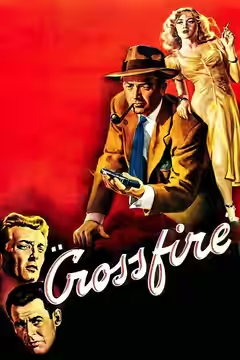
Crossfire (1947) opens with two shadows fighting across the wall of a rented room. A lamp goes over, a man is dead on the carpet, and we have not properly seen anyone. That is Dmytryk at his best: a cheap set, one light, and a film with better things to do than show off. He shot it in twenty days with a hundred and forty setups, it runs 86 minutes, and not one of those minutes looks as though it wanted to be longer.
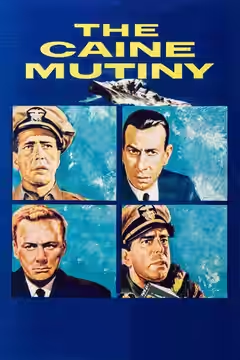
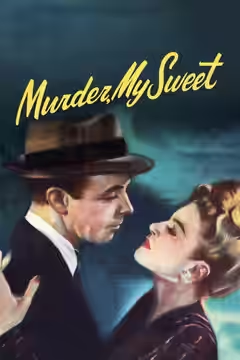
He came up as a cutter. He started as a messenger at Paramount, rose to editor, directed his first feature in 1935 and joined RKO in 1942, and the editing shows in everything he made there. Murder, My Sweet (1944) gave Dick Powell a second career, and did it as much with lighting and pace as with Powell. Crossfire, made with producer Adrian Scott and writer John Paxton, said out loud that a man had been killed for being Jewish, a subject American studios had not touched. The gap that follows belongs to the biography below. When he came back it was under Stanley Kramer, from 1952, and the films got bigger: The Caine Mutiny (1954), then The Young Lions (1958) with Marlon Brando and Montgomery Clift. He taught film from the mid-1970s.
The method never changed. Dmytryk sets the camera down among the men and leaves it there while they talk. In a wardroom or a police station that is right, because it puts the weight on the actors, and he was good at choosing which actor to put it on. Robert Ryan in Crossfire frightened us more than the murder did, because he plays the killer as an ordinary soldier who believes he is being reasonable, and Dmytryk never cuts away to tell us otherwise. Humphrey Bogart in The Caine Mutiny, tired and frightened, is the one remarkable thing in a solid film, and the direction has the sense to stand back and let him come apart.
The flaw is that he trusted speeches. Crossfire stops to explain its point about hatred more than once and gets a little worse each time. The Caine Mutiny wants to be against its captain and for the Navy at the same time, and settles the matter with a late speech that only changes the subject. Once the budgets grew the speeches grew with them, and most critics have found the films of the 1950s and 1960s short on the nerve of the RKO years. We think that is fair. He once said that "Technical skill counts for nothing if it is used only to manufacture films which have little to do with humanity," and the later work proves him right.
Start with Crossfire, go on to Murder, My Sweet, and come to The Caine Mutiny for Bogart and forgive it the romance. Anyone who knows Dmytryk only from the big adaptations has met the carpenter and not the cutter.
Biography
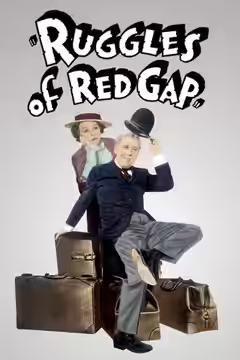
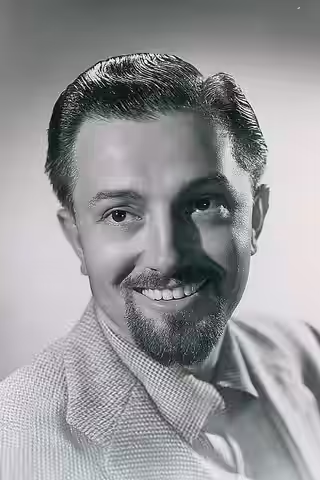
Edward Dmytryk (4 September 1908 – 1 July 1999) was a Canadian-born American film director and editor. He began his career in the editing department at Paramount studios in the late 1920s and edited Ruggles of Red Gap (1935) before making his directorial debut the same year with the low-budget western The Hawk.
Dmytryk directed several notable films in the 1940s, including the film noirs Murder, My Sweet (1944) and Crossfire (1947), the latter earning him an Academy Award nomination for Best Director. He was one of the Hollywood Ten, blacklisted after refusing to testify before the House Un-American Activities Committee in 1947; he served a prison sentence and testified again in 1951, naming others.
Later credits include The Caine Mutiny (1954), The Young Lions (1958) and Mirage (1965). He also taught film at the University of Texas at Austin and the University of Southern California.