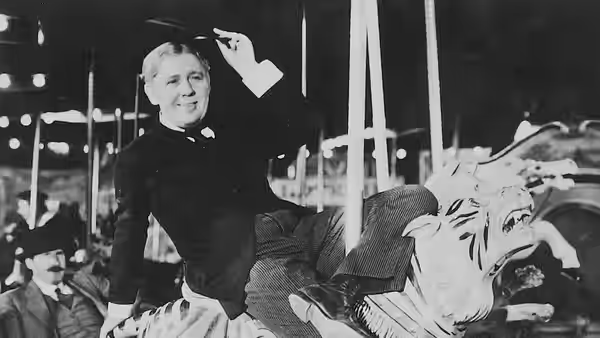
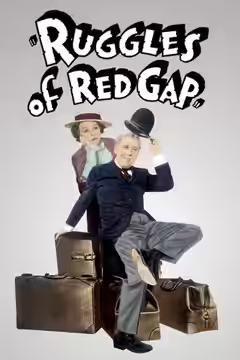
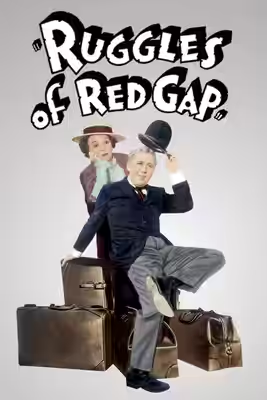
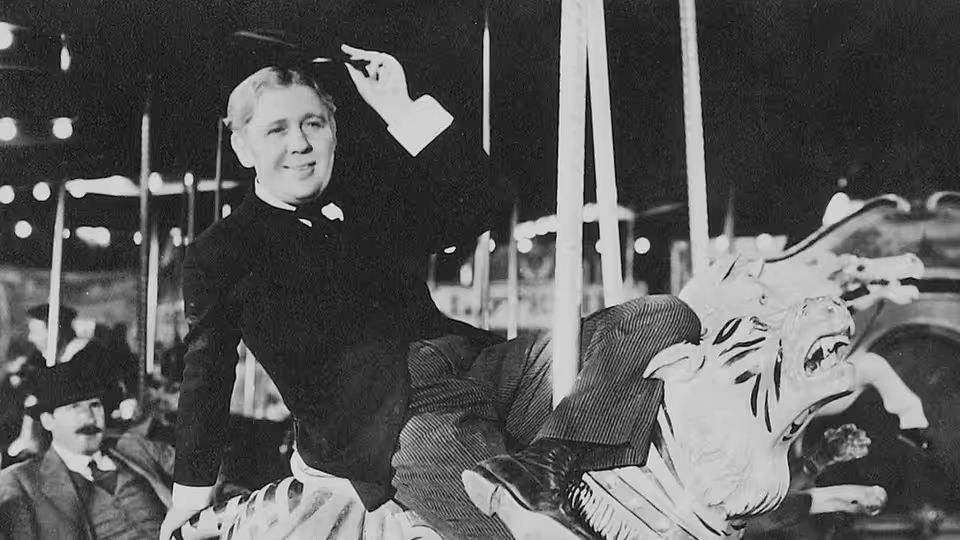
Marmaduke Ruggles (Charles Laughton) tipping his hat on a carousel tiger
Film review

Ruggles of Red Gap

1935 · Directed by Leo McCarey · 1h 30m · MPA NR

In a sentenceA butler lost at cards, won by a cowboy and rescued by Abraham Lincoln

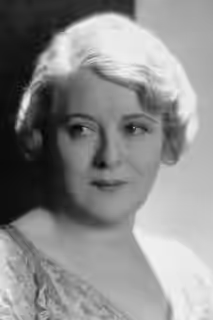
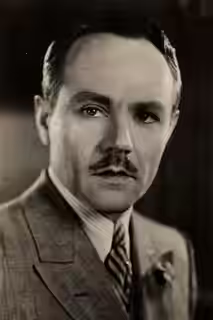
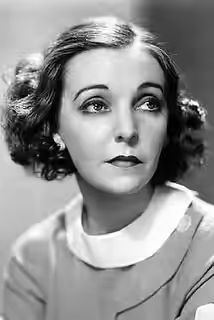
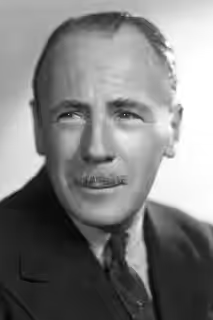
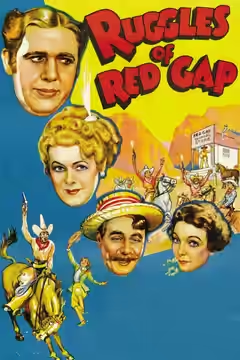
Paris, 1908. Marmaduke Ruggles (Charles Laughton), valet to the Earl of Burnstead (Roland Young), is lost by his master in a card game and handed over to Egbert Floud (Charles Ruggles), a cattleman from Red Gap, Washington. Egbert’s wife Effie (Mary Boland) wants her husband polished for society, and a proper English servant is the first step. Egbert wants none of it: he takes Ruggles to a café, gets him drunk and starts calling him Bill. Ruggles wants only to serve correctly and be left alone. Then the Flouds take him home across the Atlantic to Red Gap, where the town takes the stiff Englishman for a gentleman rather than a servant, Effie finds the mistake too useful to correct, and a widow, Mrs. Judson (Zasu Pitts), takes an interest in him.

Fi1m review

Leo McCarey’s comedy about an English valet won in a card game by a cattleman from Red Gap is gentle, slow and funny, with Charles Laughton at his most likeable. The plot runs thin in its second half, and we did not much mind.

Marmaduke Ruggles has been in service all his life and has never once asked himself whether he enjoys it. In the first minutes of Leo McCarey’s comedy he is lost in a card game in Paris by the Earl of Burnstead (Roland Young), who is apologetic about it, and handed over to Egbert Floud (Charles Ruggles), a cattleman from Red Gap, Washington, who does not want a valet and would much rather have someone to drink with. What follows is slow, kind and funny, a film about what happens to a man when nobody asks him to bow. We liked it a great deal and we recommend it, with the caveat that the plot is thin and gets thinner.

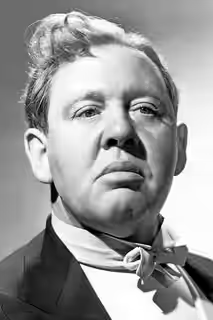
Charles Laughton is the reason. Two years earlier he was Henry VIII with his mouth full; here he is buttoned to the collar and barely moves his face for the first half hour. Watch what his body does over ninety minutes. The change starts in the eyebrows, moves to the shoulders, and by the time half a Washington town is calling him Bill he is standing on his heels like a different man. It is one of the finest pieces of physical acting in a Hollywood comedy of the period, and there is not a pratfall in it.

The scene everyone remembers is the Gettysburg Address. In a saloon, a room full of Americans discover that none of them can get past the first line, and the Englishman can. We expected to find it corny and we did not; it moved us. Laughton does not perform the speech. He says it, quietly, as a man who has read it alone in a hotel room and been changed by it, and the noise of the bar drops away because the people in it have stopped talking, not because the soundtrack has told them to. Alfred Gilks keeps the camera on him, and Robert Odell and Edward Dmytryk cut away only to faces going still. It is the whole film in two minutes.

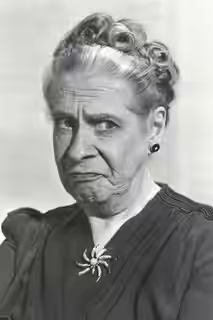
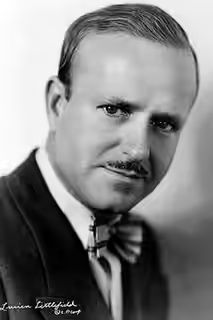
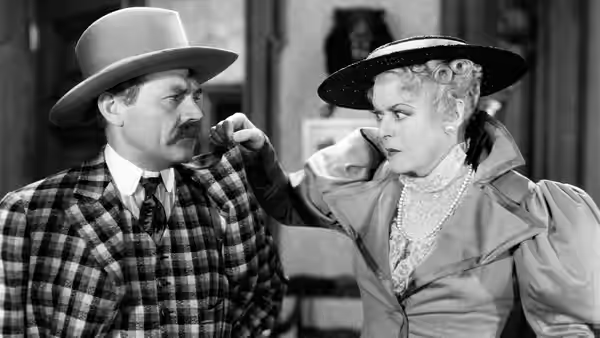
McCarey has cast the rest of it well. Mary Boland’s Effie Floud, who wants Egbert tidied up for society and cannot say Paris without adding a syllable, is a monster of small ambitions, and Boland never asks us to hate her. Charles Ruggles, hitching his trousers and calling everyone friend, is the film’s warm centre; the running joke in which he and the valet sneak off to get drunk is funnier the third time than the first. Zasu Pitts, as the widow Mrs. Judson, gets the film’s one romance and plays it with a flutter that ought to grate and instead is sweet, and Laughton around her is all elbows. Maude Eburne’s ‘Ma’ Pettingill gets laughs by looking unimpressed. Lucien Littlefield’s Charles Belknap-Jackson is the town snob who wants Ruggles put back below stairs.

Gilks shoots it plainly, at eye level, in the bright even light of a 1935 studio, and that plainness suits a comedy that lives in faces. Travis Banton buries Boland in feathers and fur and puts Laughton in a dark suit cut so exactly it reads as a uniform, so that when the collar finally comes loose you notice. Odell and Dmytryk let gags run past the point where a comedy made today would cut, and the laughs are in the extra second.

The trouble is the script. Walter DeLeon and Harlan Thompson, working from Harry Leon Wilson’s novel, have one idea, and once the film reaches Red Gap it circles that idea. The misunderstanding about who Ruggles is runs longer than it can bear, some of the situations were worn even in 1935, and the last half hour turns on a development we will not describe that arrives because the script needs it rather than because the story does. At ninety minutes none of this is fatal. It is why we like the film rather than love it.

Set beside McCarey’s other work, it sits between Duck Soup and The Awful Truth in temperament as well as date: less anarchic than the first, less elegant than the second, warmer than either. Watch it on a wet afternoon with someone who thinks old comedies are slow. It is slow. About twenty minutes in you will stop noticing.
Critical consensus AI synthesised

81
Positive
6
Mixed
0
Negative
1

Most critics are warm about Ruggles of Red Gap, and the praise clusters on Charles Laughton. The reviews describe his butler, lost in a card game and carried west, as droll, transformative and plainly funny, a performance that shows a lighter side of him than usual. Leo McCarey’s direction is credited with keeping the pace quick and the handling fresh, and the supporting cast is thought to hold its own. The Gettysburg Address scene in the saloon comes up again and again as the moment critics remember.

The spread is narrow, with one exception. The New Yorker, writing on release, finds the gags and situations too familiar and calls the picture a disappointment, while conceding the performances and admitting the audience laughed. The later reviews are, if anything, fonder than the early ones, reading the film as a gentle picture of American equality and the kind of quiet comedy nobody makes any more.

Radio Times
★★★★★ · Robyn Karney
100

A brilliant, hilarious and fondly satirical look at Anglo-American relations and culture gaps, faultlessly directed by Leo McCarey with Laughton in masterly form. The supporting performances are every inch as good as film and star deserve.

Read the full review →
The Guardian
10 June 2012
90*

The critic describes the film as a sparkling comedy in which Charles Laughton plays a perfect English butler lost in a card game to an American owner and taken west to civilise the frontier. A highlight is the classic scene where he recites the Gettysburg Address to saloon patrons.

Read the full review →
The New York Times
7 March 1935
90*

The film is rapturously funny and a brilliant showcase for Charles Laughton's droll and irresistible performance as the valet Ruggles, who embodies an American ideal of equality.

Read the full review →
Variety
31 December 1934 · Variety Staff
90*

Leo McCarey delivers a fast and furiously funny film with fresh handling of the story; Laughton's performance stands out as plain comedy that widens his appeal.

Read the full review →
Slant Magazine
29 March 2012 · Joseph Jon Lanthier
80*

The critic praises the film's inclusive vision of American democracy as a forgiving frontier, contrasting it with Capra's work, and highlights Charles Laughton's transformative performance as the butler assimilating into Western life.

Read the full review →
Time Out
3 April 2012
80*

This is the archetypal film they don't make any more, with its quiet drollery and nuanced comedy. Laughton enjoys himself enormously in the lead role.

Read the full review →

Straight answers AI written, from our review

Is Ruggles of Red Gap worth watching?
Ruggles of Red Gap is worth watching for anyone with patience for a gentle, slow 1930s comedy, and we scored it 84. Charles Laughton's performance as the English valet won in a card game is the reason to see it, and his quiet Gettysburg Address in a saloon moved us. The plot runs thin once the film reaches Red Gap, and we did not much mind.
How long is Ruggles of Red Gap, and what is it rated?
Ruggles of Red Gap runs 1h 30m and is rated NR by the MPA in the US. It is a comedy film.
Where can I watch Ruggles of Red Gap in the US?
Ruggles of Red Gap is available to rent from Amazon Prime Video and Apple TV from $3.99. Availability is checked daily; the links above go straight to each service.
How does Ruggles of Red Gap compare to The Awful Truth?
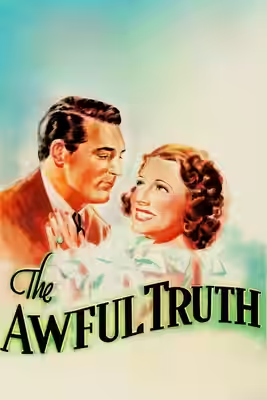
Ruggles of Red Gap is the warmer and slower of Leo McCarey's two comedies, and The Awful Truth is the faster and sharper. The earlier film lives in Charles Laughton's face and body as a servant learning to stand on his heels; the later one runs on Cary Grant, a dog in dispute and pace. Choose Ruggles for kindness, The Awful Truth for speed.
Is Ruggles of Red Gap based on a true story or a book?
Ruggles of Red Gap is based on Harry Leon Wilson's novel, not on a true story. Walter DeLeon and Harlan Thompson wrote the script from the book, and in our view they took one idea from it and circled it for the second half. You do not need to know the novel to follow or enjoy the film.
What should I watch after Ruggles of Red Gap?
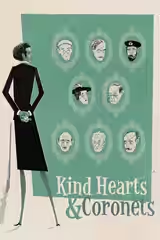
After Ruggles of Red Gap, try The Awful Truth (1937, Fi1m 89): McCarey two years on, faster and sharper, with Cary Grant and a dog in dispute. Then My Man Godfrey (1936, Fi1m 82): Another butler who is nobody’s fool, hired by a family of rich idiots; and Kind Hearts and Coronets (1949, Fi1m 91): The English class system taken apart from the inside, with murder instead of manners.

Cast

Awards

Academy Awards, 1936

Nominated
Best Picture

If you liked this, try…

  1. The Awful Truth (1937, Fi1m 89)McCarey two years on, faster and sharper, with Cary Grant and a dog in dispute.

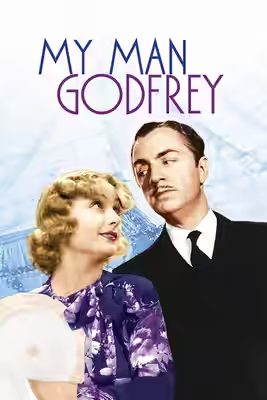
  2. My Man Godfrey (1936, Fi1m 82)Another butler who is nobody’s fool, hired by a family of rich idiots.

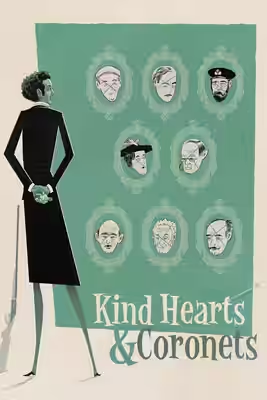
  3. Kind Hearts and Coronets (1949, Fi1m 91)The English class system taken apart from the inside, with murder instead of manners.

  4. Local Hero (1983, Fi1m 86)The same journey the other way: an American undone, gently, by a small town.

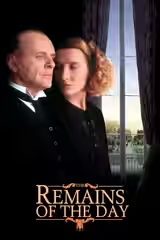
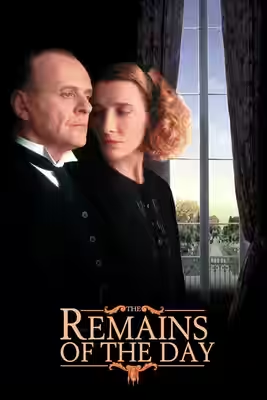
  5. The Remains of the Day (1993, Fi1m 88)The serious version of Ruggles: a butler who never does learn to unbend.

Free account

Know what to watch tonight

Two lists that know where things are streaming, collections you can share, your own score beside ours, and Discover that remembers what you have seen.

  • Want to see, sorted by what is streaming now
  • Seen, with your score out of ten
  • No adverts, ever