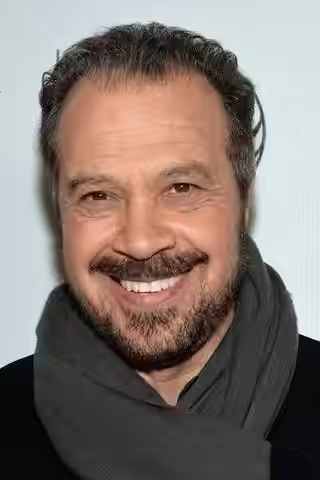
Edward Zwick takes military courage seriously and gives actors room to make it credible. We value his attention to people, though the dialogue and music sometimes insist on feelings the performances have already earned.
Fi1m perspective
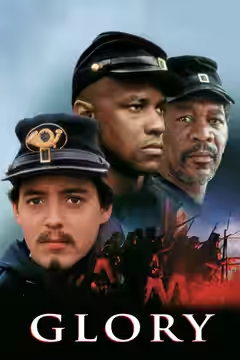
In Glory (1989), the black soldiers of the 54th Massachusetts Regiment have to contend with racism within the army they serve. Edward Zwick gives their struggle for recognition enough attention to make the military discipline and solidarity matter. We were moved by the smaller exchanges between the soldiers, because Denzel Washington and Morgan Freeman make familiar character types feel like men worth knowing. Zwick is a good director of people under pressure, and we trust him most when he lets his actors do the persuading.
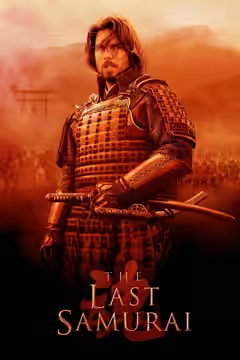
The years in television, including thirtysomething (1987–91), co-created with Marshall Herskovitz, are useful context for that attention to an ensemble. His feature debut, About Last Night (1986), came before Glory made historical war drama his chief territory. Legends of the Fall (1994) and The Last Samurai (2003) followed, while the later Love & Other Drugs (2010) and Pawn Sacrifice (2015) brought a move to smaller-scale films. Whatever the size of the production, we are more interested in the people he assembles than in the military spectacle.
Glory shows how much the collaborators matter. Editor Steven Rosenblum keeps the regiment’s growth in view alongside the fighting, giving the men time to become more than figures in uniform. James Horner’s score supplies the solemnity Zwick wants, and its emotional pressure usually works. Sometimes it pushes past what the actors need, just as Kevin Jarre’s dialogue can sound prepared for a classroom. We wish Zwick were readier to cut a speech or quieten the music when a performance has already made the point.
The more serious reservation is whose account of history we are being asked to follow. In Glory, the black soldiers still get too little opportunity to tell their own story, despite the care given to their struggle. The Last Samurai also makes a white protagonist central to a non-Western story, a choice that deserves scrutiny even when the battle choreography is clear and forceful. Zwick’s earnestness does not settle that problem. Start with Glory, and give the conversations between soldiers the same attention as the fighting.
Biography
Edward Zwick is an American director, producer and screenwriter. Born on 8 October 1952 in Chicago, Illinois, he graduated from Harvard University and the AFI Conservatory. He began his career in television, co-creating the series thirtysomething with Marshall Herskovitz.
Zwick directed films including Glory (1989), Legends of the Fall (1994), The Last Samurai (2003), Blood Diamond (2006) and Defiance (2008). As a producer, he worked on Shakespeare in Love (1998), for which he shared an Academy Award for Best Picture, and Traffic (2000), which received a nomination in the same category. He runs the production company The Bedford Falls Company with Herskovitz.