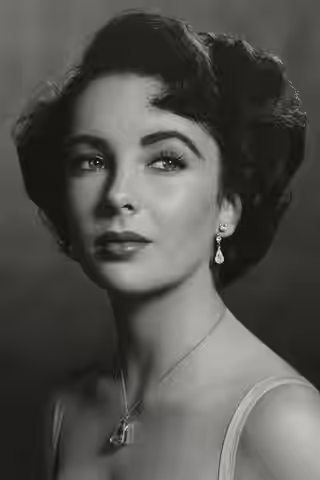
Elizabeth Taylor did her best work in close-up and against a partner who could keep up. Given Clift, Harrison or Hudson she is quick and alive; given a slower tempo she takes it, and the film stalls with her.
Fi1m perspective
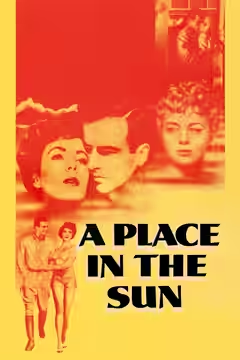
Watch what happens to Elizabeth Taylor when the camera comes in. In A Place in the Sun (1951) George Stevens pushes so close that there is nothing on screen but her face and Montgomery Clift's, and she talks in a rush about how unhappy he must be. The dialogue is close to nonsense. It does not matter, because the face is doing the work, and doing it without visible effort. She never appears to be acting, and when the film around her is good enough you stop asking whether she is.
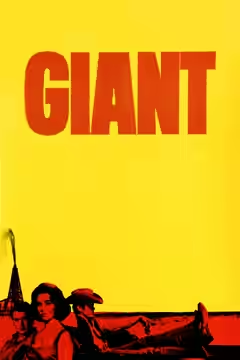
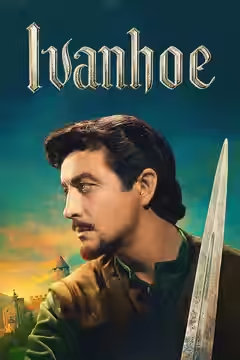
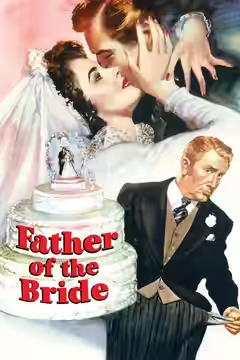
She had been in front of a camera since childhood, under contract at MGM from the early 1940s, and the studio spent the early 1950s working out what to do with the grown woman. Father of the Bride (1950) gives her a daughter who has not yet noticed how much she is asking of everyone. Ivanhoe (1952) gives her Rebecca, few lines and a great many close-ups, lit by Freddie Young so that she scarcely needs to move. Stevens saw more. A Place in the Sun and then Giant (1956) ask her to want things and argue for them, and in Giant she walks into a room where the men are talking politics, is told to go and rest with the women, and declines. We bristled along with her and were glad to; Leslie Benedict is the first Taylor character who seems to have read a newspaper.
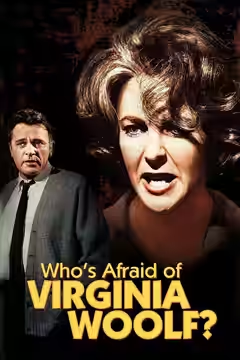
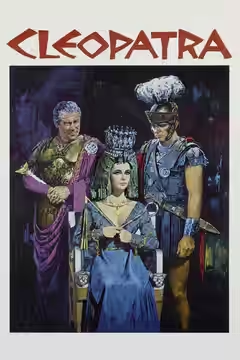
Then came the Tennessee Williams parts, Cat on a Hot Tin Roof (1958) among them, and Richard Burton, with whom she made film after film, Who's Afraid of Virginia Woolf? (1966) being the one most people point to. We have not reviewed either. What we have reviewed is Cleopatra (1963), and it shows the pattern plainly. Opposite Rex Harrison in the first half she is young, imperious and enjoying the argument, and the carpet scene gets its laugh. After the interval Burton arrives, brooding and loud, and she slows to his tempo. Their love scenes are the weakest thing in the film, two people declaring passion in balanced sentences nobody ever spoke.
That is the limit, and it is worth being plain about. Taylor said that "any technique or talent that I might have is not technique; it’s instinct", and instinct takes its tempo from the scene it is in. Put her with Harrison, Clift or Rock Hudson and she is fast, dry and hard to look away from. Put her with a partner who declaims and she declaims back. She is a partner's actress, and the best of her films are the ones that understood it.
Start with A Place in the Sun, and watch what she does while Clift looks away. Everything after it is a question of who was standing opposite.
Biography
Elizabeth Taylor was a British-American actress. Born in London to American parents, she began her career as a child actress under contract with Metro-Goldwyn-Mayer.
She appeared in films including National Velvet (1944), Giant (1956), Cat on a Hot Tin Roof (1958), Suddenly, Last Summer (1959) and Butterfield 8 (1960), for which she received the Academy Award for Best Actress. Taylor played the title role in Cleopatra (1963) and won a second Academy Award for Who's Afraid of Virginia Woolf? (1966). She collaborated with Richard Burton on several films after their meeting on the set of Cleopatra.
From the mid-1970s Taylor appeared less frequently in film and took on occasional roles in television and theatre. She received the Jean Hersholt Humanitarian Award and was appointed DBE in 2001.