Elsa Lanchester can make a grand performance funnier simply by refusing to be impressed. Her precision deserves attention beyond the eccentric parts, and in Bride of Frankenstein she deserves more time on screen.
Fi1m perspective
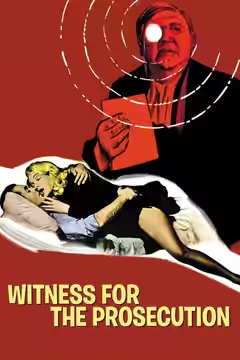
Charles Laughton’s Sir Wilfrid expects everyone to admire his intelligence; Elsa Lanchester’s Miss Plimsoll is not impressed. In Billy Wilder’s Witness for the Prosecution (1957), she gives his barrister someone who will argue back, with replies firm enough to check his fussing without turning every exchange into a contest for attention. We laughed at their bickering because she refuses to reward his vanity. His broad performance benefits from having someone who will not indulge it. That judgement of how hard to push a line is what we value most in her acting.
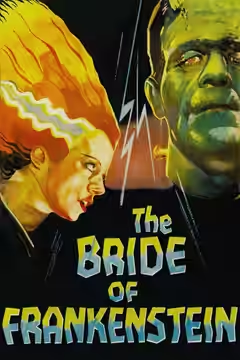
She had already played Anne of Cleves opposite Laughton in The Private Life of Henry VIII (1933), before Bride of Frankenstein (1935) brought wider recognition. James Whale introduces her there as Mary Wollstonecraft Shelley, framing the story before the horror resumes. The opening lets us enjoy the fact that someone is inventing these terrors, and Lanchester belongs comfortably in that playful company. What frustrates us is how little room the film gives her. She holds our attention without the busy display around her, yet there is too little opportunity to stay with her performance.
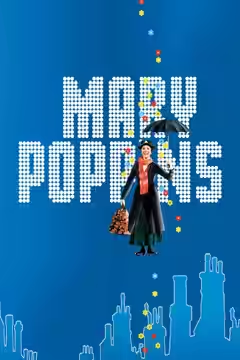
From the 1940s, supporting character parts became her regular work, frequently built around an eccentric woman. Louise Patterson, the artist in The Big Clock (1948), belongs to that pattern; Katie Nanna in Mary Poppins (1964) places her in the later family-film work. Her distinctive voice and movements were well suited to such casting. The risk is that an audience notices the peculiarities and gives the skill no further thought. Miss Plimsoll is a useful corrective: her timing matters because another actor has given her something worth answering.
Wilder gets particularly useful work from her by allowing the opposition to remain firm. His thriller sometimes pushes its characters to serve its plotting, but the exchanges between Lanchester and Laughton are funny for reasons we can believe. Whale’s broader humour occasionally presses too hard, making the lack of space for her quieter precision more frustrating. Neither film needs her to compete with every large performance around her. Start with Witness for the Prosecution, and give her as much attention as the man making the fuss.
Biography
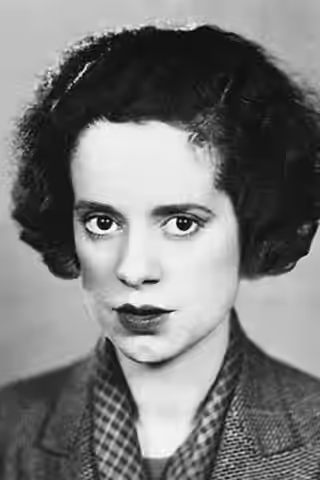
Elsa Lanchester was a British actress. Born Elsa Sullivan Lanchester on 28 October 1902 in Lewisham, London, she died on 26 December 1986 in Los Angeles.
She studied dance as a child and began performing in theatre and cabaret after the First World War. She met actor Charles Laughton in 1927 and they married in 1929. Lanchester appeared in small roles in British films, including as Anne of Cleves in The Private Life of Henry VIII (1933).
Her role as the Monster's mate in Bride of Frankenstein (1935) brought wider recognition. She received Academy Award nominations for Best Supporting Actress for Come to the Stable (1949) and Witness for the Prosecution (1957), playing Miss Plimsoll. Later film roles included Mary Poppins (1964) and Murder by Death (1976).