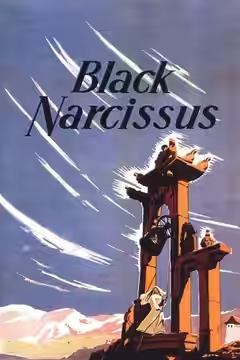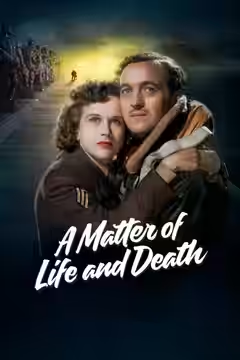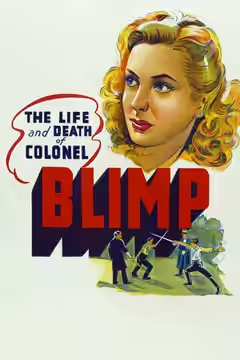
The writing half of The Archers, Pressburger took ambition, desire and love seriously enough to build heaven around them, and wrote Germans as people when nobody asked him to. The speeches run long; the films are as good as any Britain made in the 1940s.
Fi1m perspective
The person most likely to say something decent in a Powell and Pressburger film is a German. In The Life and Death of Colonel Blimp (1943) a British soldier and his German friend argue about honour, and the film is as fond of one as of the other. In 49th Parallel (1941), a chase across Canada where stranded U-boat men are stopped every twenty minutes to be told why they are wrong, the lesson that lands is Anton Walbrook's speech at a dinner table. Pressburger wrote the words. He was a Hungarian who had written for UFA in Berlin, left Germany in 1933 and settled in Britain two years later, and he never seems to have believed that a country and its people were the same thing.
He met Michael Powell while rewriting The Spy in Black (1939), and from 1942 they worked as The Archers, sharing credit on 14 films. The run we rate highest is short and dense: Colonel Blimp, A Matter of Life and Death (1946), Black Narcissus (1947) and The Red Shoes (1948), four films in five years, none of them alike. 49th Parallel comes before it and shows the join: plain and purposeful, with none of the strangeness that followed.
What Pressburger does is take a feeling seriously enough to build a world around it. A dancer's ambition in The Red Shoes is urgent and dangerous; a nun's desire in Black Narcissus has a Himalayan convent of colour to fight against; a love affair in A Matter of Life and Death is important enough to trouble the administration of heaven. British critics of the day found all this extravagant and un-British. They were half right, and the half they were right about is the reason to watch. Jack Cardiff photographed three of the Archers films, and the colour he and Powell put on screen makes the case Pressburger's characters keep trying to make in words.
The words are the reservation. Victoria Page's producer in The Red Shoes declares things about art that Moira Shearer's dancing has already shown us. The lovers in A Matter of Life and Death are made to carry relations between Britain and America, and the speeches explain the film's humane feelings after the actors and the colour have made them clear. Yet Walbrook at that dinner table moved us more than propaganda has any business doing, because it is the one moment in 49th Parallel where somebody stops representing something and simply speaks.
He said a film should have a good story, a clear story and "a little bit of magic". The magic was Powell's and Cardiff's as much as his. The clarity was his, and so were the speeches. Start with A Matter of Life and Death, and when somebody begins to explain the Anglo-American alliance, look at the colour until they have finished.
Biography
Emeric Pressburger (born Imre József Pressburger) was a Hungarian-British screenwriter, film director and producer. He studied engineering at the universities of Prague and Stuttgart before working as a journalist in Hungary and Germany and as a scriptwriter in Berlin and Paris. He settled in Britain in 1935.
From the late 1930s he collaborated with director Michael Powell. From 1942 they shared equal credit for writing, producing and directing films under the banner of their production company The Archers. Their best-known works include 49th Parallel (1941), The Life and Death of Colonel Blimp (1943), A Matter of Life and Death (1946), Black Narcissus (1947), The Red Shoes (1948) and The Tales of Hoffmann (1951). Pressburger received an Academy Award for best original story for 49th Parallel.