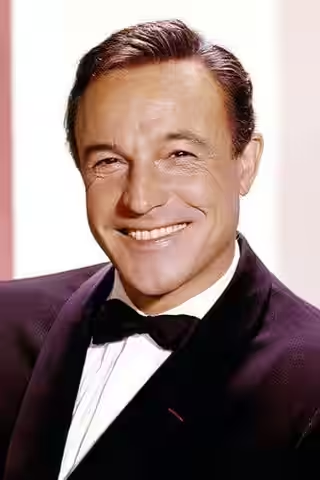
Gene Kelly danced in sailor whites and wet streets and made the hardest craft in the studio musical look like a man getting up because a tune had come into his head. Given the right film, nothing in the genre gave us more pleasure.
Fi1m perspective
Watch his hands in Anchors Aweigh (1945). He is dancing with a cartoon mouse who was never on the set, and he pats a head at exactly the height where a head would be, and plays every step to Jerry as though he were a small, difficult partner. That is the whole of Gene Kelly. Other dancers of the period let you feel the discipline; Kelly hid it. In our review of Singin' in the Rain (1952) we said he never seems to be counting steps, and we have not found a film in which he does.
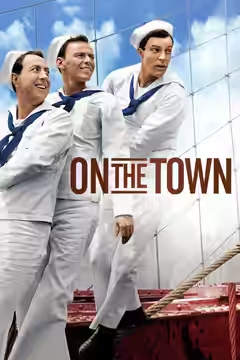
He came from Broadway, where he had starred in Pal Joey (1940), and made his film debut at MGM in For Me and My Gal (1942) opposite Judy Garland. The style was fixed early: tap, ballet and modern movement mixed together and performed in ordinary clothes, without asking the audience to know which was which. He said it himself: "I wanted to dance in a pair of jeans. I wanted to dance like the man in the streets." Then came the run with Stanley Donen, co-directing and starring in On the Town (1949), which opened on the streets of New York, An American in Paris (1951), with its long closing ballet, and Singin' in the Rain. Those three took the film musical out of the theatre and put it on location and inside the story.
The ease was manufactured, and the people who manufactured it deserve naming. In Anchors Aweigh the mouse's feet land where Kelly's land because Kelly choreographed them that way and Adrienne Fazan cut the sequence so that no join shows. In Singin' in the Rain Donald O'Connor lets us feel the effort of a physical joke, and the film needs him to, because Kelly will not; Debbie Reynolds holds her place alongside them without becoming an accessory. The title number is the measure of him: one man, a street, a downpour, and no second joke to justify the scene. It made us happier than we expected, and the reason is on the screen. His pleasure in moving is so plain that we stopped looking for the trick.
The limits are the vehicles'. Anchors Aweigh runs 143 minutes around three great numbers and its story is a sailor suit with nobody much inside it. The romance in Singin' in the Rain is thin. He was at his best in the MGM musicals Arthur Freed produced, with Donen beside him; by Xanadu (1980) he was the one relaxed presence in a roller-disco fantasy that otherwise looks effortful. His duet with Olivia Newton-John is among the few things in it that work, because he looks comfortable beside her. The film is poor. He is not the reason.
Start with Singin' in the Rain. Go to Anchors Aweigh for the mouse and be patient with the rest of it.
Biography
Gene Kelly was an American actor, dancer, singer, choreographer and director. He was born Eugene Curran Kelly on 23 August 1912 in Pittsburgh, Pennsylvania, and died on 2 February 1996 in Beverly Hills, California.
He made his film debut in For Me and My Gal (1942) and went on to star in and often choreograph or co-direct musicals including On the Town (1949), An American in Paris (1951) and Singin' in the Rain (1952), in which he played Don Lockwood and co-directed with Stanley Donen. Other notable credits include Hello, Dolly! (1969) as director and appearances in Inherit the Wind (1960) and The Young Girls of Rochefort (1967).