Gérard Depardieu makes wounded pride visible beneath the bravado. We value the embarrassment he allows into Cyrano de Bergerac, though Hamlet is a reminder that his recognisability can also get in the way.
Fi1m perspective
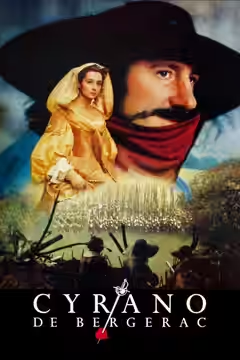
In Cyrano de Bergerac (1990), Gérard Depardieu makes the verbal swagger look like hard work. His poet keeps finding words while failing to speak plainly about his own feelings, and Depardieu lets us see the embarrassment this costs him. We were moved by that embarrassment, because he makes the hesitation beneath the eloquence so recognisable. He treats Cyrano’s nose as a reason to rule himself out before anyone else has decided. The performance is funny, but there is enough wounded pride in his face to make the boasting uncomfortable too.
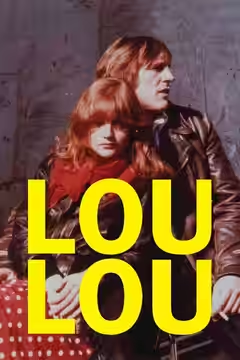
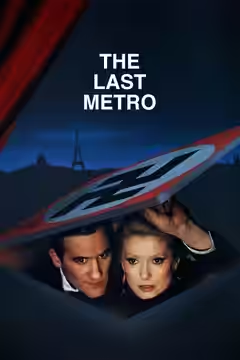
That ability to make a forceful man seem vulnerable serves him across work spanning auteur drama and broad comedy. The breakthrough was as a thug in Bertrand Blier’s Les Valseuses (1974). With François Truffaut’s The Last Metro (1980), opposite Catherine Deneuve, came the move towards leading-man status in the 1980s. Collaborations with Maurice Pialat and Francis Veber sit alongside the international turn of Green Card (1990). The later career takes in Obélix in Asterix & Obelix: Mission Cleopatra (2002) and independent films, without settling into one kind of work.
Jean-Paul Rappeneau gives that vulnerability a proper purpose in Cyrano de Bergerac. The verse does not need simplifying when Depardieu makes the fear behind it this clear, and Anne Brochet’s composed Roxane gives him someone who need not compete for volume. Rappeneau keeps a large, busy romance moving, but occasionally holds an emotion long after Depardieu’s face has conveyed it. Those passages become tiring because the performance has already done enough. His extravagance earns its place here: the poet’s exhausting behaviour is part of what we are being asked to understand.
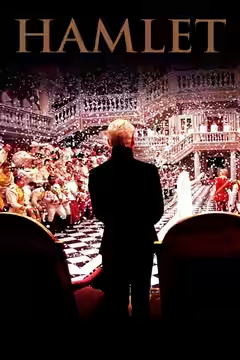
Hamlet (1996) shows the risk of conspicuous guest casting. Kenneth Branagh’s full-text film makes complicated speech clear and gives proper attention to people outside the prince’s crisis, yet Depardieu’s Reynaldo can send our thoughts towards the guest list. His appearance interrupts our concentration in a film we otherwise warmly recommend; the pleasure of recognition does not help us follow what is being said. For a first encounter, choose Cyrano de Bergerac and make some allowance for the film’s emotional insistence.
Biography
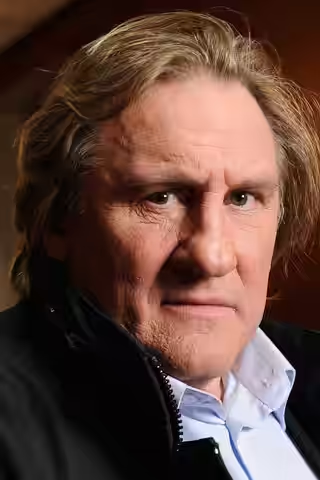
Gérard Depardieu is a French actor. Born on 27 December 1948 in Châteauroux, Indre, he made his screen debut in the late 1960s and rose to prominence in the 1970s with roles including in Les Valseuses (1974).
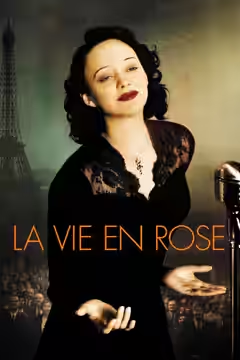
He is known for his performances in Cyrano de Bergerac (1990), for which he received two César Awards for Best Actor across his career, the Cannes Film Festival award for Best Actor and an Academy Award nomination, and as Reynaldo in Hamlet (1996). Other credits include the Asterix and Obelix films (1999–2012) and La Vie en Rose (2007). He has also appeared in Hollywood productions such as Green Card (1990), for which he won a Golden Globe Award for Best Actor.
Depardieu has received honours including Chevalier of the Légion d'honneur and the Ordre national du Mérite. He acquired Russian citizenship in 2013. He has faced multiple accusations of sexual assault and was convicted of sexual assault in one case in 2025, which he has appealed; he has denied wrongdoing in connection with the allegations.