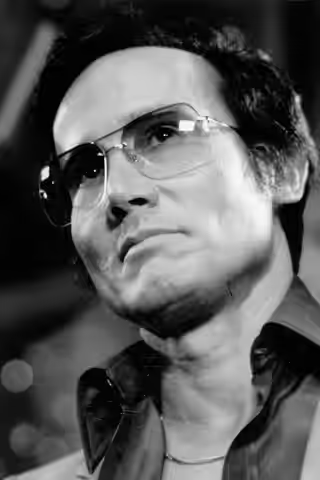
Henry Silva had a face that did the work before he spoke: dark, watchful, and most frightening when it smiled. Hollywood cast it as the villain for fifty years and he made the villains leaders, which is why we remember them.
Fi1m perspective
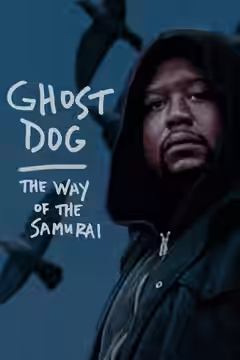
Ray Vargo, the mob boss in Jim Jarmusch's Ghost Dog: The Way of the Samurai (1999), does most of his acting by looking at people and saying very little. Jarmusch has cast Silva as a joke about the kind of man Silva had been playing since the 1950s, and Silva plays along, letting the stillness sit until it becomes funny. We laughed at him, and then felt slightly ashamed of ourselves, because the joke depends entirely on the face and not on anything the script has given him to do. Our review put Vargo among the film's comic figures and said the broadness of the gangsters was its clearest weakness. Both things are true of him at once.
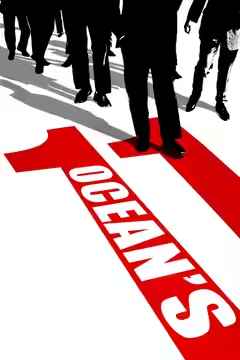
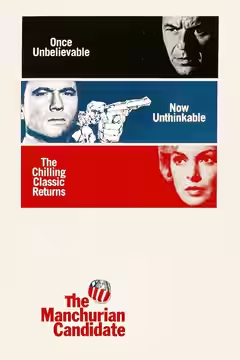
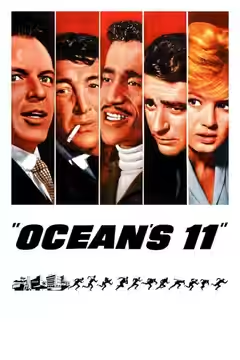
He had trained at the Actors Studio, which is worth keeping in mind while watching what he was asked to do with it. The parts came small through the early 1950s, then larger alongside Frank Sinatra, with whom he made four films, including Ocean's Eleven (1960). The Manchurian Candidate (1962) gave him Chunjin, a Korean agent posing as a houseboy, and a fight scene people still talk about. Johnny Cool (1963) put him in the lead as a hitman, and critics noticed. Then the leads dried up in America, and from The Hills Run Red (1966) he spent a decade in Italian westerns and crime films, where the casting read differently. "Funny thing, over here they see me as a bad guy," he said in 1971. "In Europe, they see me as a hero."
He came home in the 1980s to be the villain in action films such as Above the Law (1988) and Dick Tracy (1990), and lent his voice to Bane. The complaint about all this is obvious and he made it himself: he was typecast as a heavy, and the training mostly went unused. He was also handed villains of whatever nationality the script needed, Korean, Mexican, Native American, Italian, which sits badly now. What he brought to the parts was a decision. His heavies were the men in charge, never the ones in the doorway waiting for orders, and a stillness that would look like nothing in a lesser actor read as a man working out whether you were worth the trouble.
There is a bit part in the 2001 remake of Ocean's Eleven and then nothing; he retired. Start with Ghost Dog, since it is the one we have reviewed and since Jarmusch is using the face on purpose, then go back to Johnny Cool to see what it looked like when a film let him lead. He spent half a century being remembered on the way out of the cinema, which is more than most leading men manage.
Biography
Henry Silva (1926–2022) was an American actor. He left school at the age of 13 to attend drama classes and later trained at the Actors Studio.
A prolific character actor, Silva appeared in more than 140 productions, frequently playing criminals or gangsters. His film roles include Roger Corneal in Ocean's Eleven (1960), Chunjin in The Manchurian Candidate (1962), Kurt Zagon in Above the Law (1988), Influence in Dick Tracy (1990) and Ray Vargo in Ghost Dog: The Way of the Samurai (1999). He also provided the voice of Bane in Batman: The Animated Series (1992) and related series. Silva retired from acting after 2001.