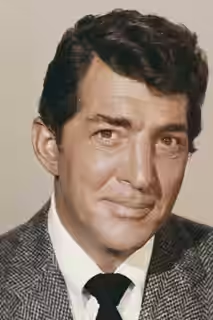
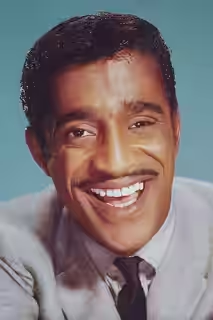
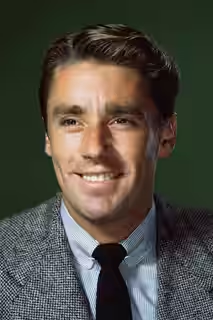
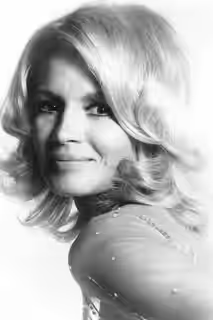
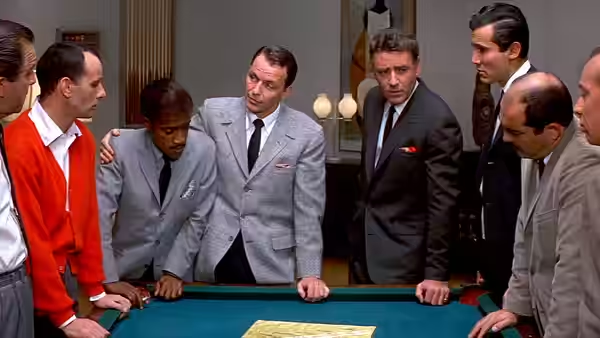
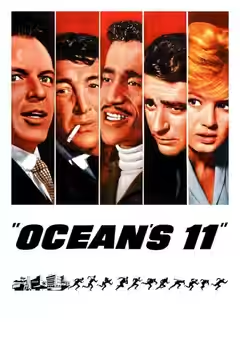
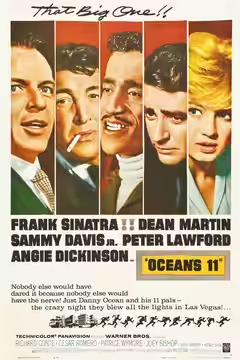
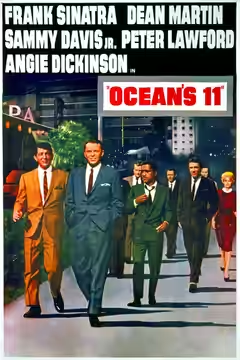
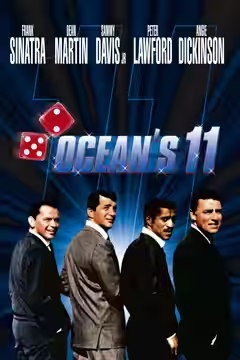
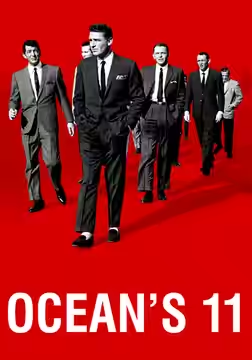
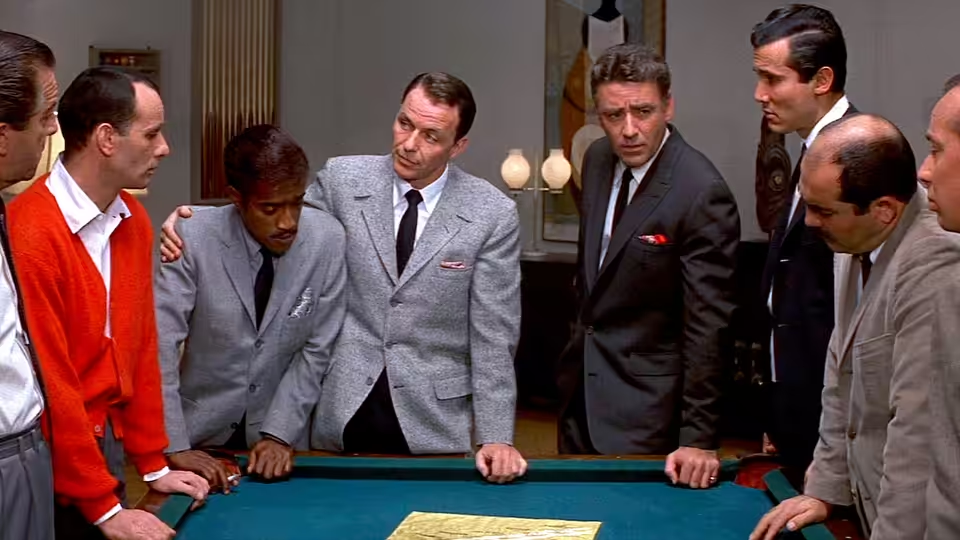
Sammy Davis Jr. and suited men lean over a green pool table
Film review

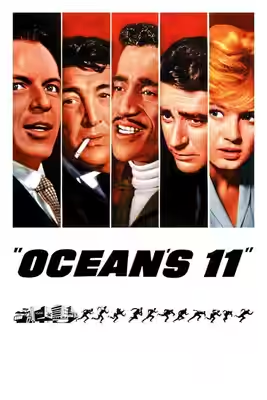
Ocean's Eleven

1960 · Directed by Lewis Milestone · 2h 07m · MPA NR

In a sentenceFrank Sinatra robs Las Vegas in an orange mohair jumper and looks as if he would rather be at the bar

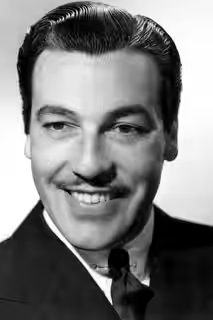
Las Vegas, New Year’s Eve. Danny Ocean (Frank Sinatra), a former paratrooper with time on his hands, gathers ten men who served with him in the 82nd Airborne and proposes to rob five casinos on the Strip in a single night, while the town’s power is cut. The money comes from Spyros Acebos (Akim Tamiroff), who is frightened of everything. Sam Harmon (Dean Martin) sings in a lounge and doubts the plan. Josh Howard (Sammy Davis Jr.) drives a rubbish truck. Jimmy Foster (Peter Lawford) lives off his mother, who is about to marry Duke Santos (Cesar Romero), a man with connections nobody wants near a robbery. Anthony Bergdorf (Richard Conte), an electrician just out of prison, will handle the wiring, and has his own reasons for wanting the cash.

Fi1m review

Lewis Milestone’s Rat Pack caper has a heist worth waiting for, William H. Daniels’ wide-screen Vegas and Nelson Riddle’s brass. Around them sit ninety minutes of men who would rather be doing their nightclub act, and often visibly are.

Danny Ocean (Frank Sinatra) wants to rob five Las Vegas casinos on the same night, and Lewis Milestone’s Ocean’s Eleven takes 127 minutes to let him. That is the film’s problem in a sentence. Harry Brown and Charles Lederer’s script, from a story by Jack Golden Russell and George Clayton Johnson, has a clean idea: eleven former paratroopers treat the Strip like an enemy position, cut the power and walk out with the cash while the lights are down. The idea is worth about forty minutes of screen time, and those forty minutes are good. The rest is the Rat Pack being the Rat Pack, in rooms, at length.

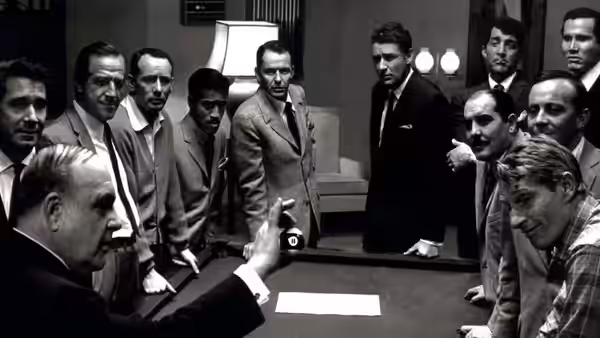
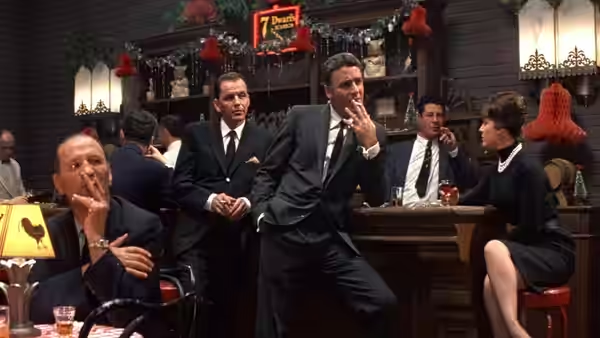
The first hour is recruitment and planning, and it is slack. Spyros Acebos (Akim Tamiroff), the nervous money behind the job, sweats in a Beverly Hills living room while the men drift in one by one. Sam Harmon (Dean Martin) is found at a piano and sings. Josh Howard (Sammy Davis Jr.) drives a rubbish truck and sings. Jimmy Foster (Peter Lawford) sponges off his mother (Ilka Chase), who is about to marry a man called Duke Santos (Cesar Romero) with unhelpful friends. Each introduction is a scene; none of them is a scene with anything in it. We were bored, and then we were irritated at being bored, because the people on screen are plainly capable of more and have decided not to bother.

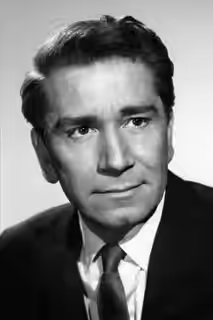
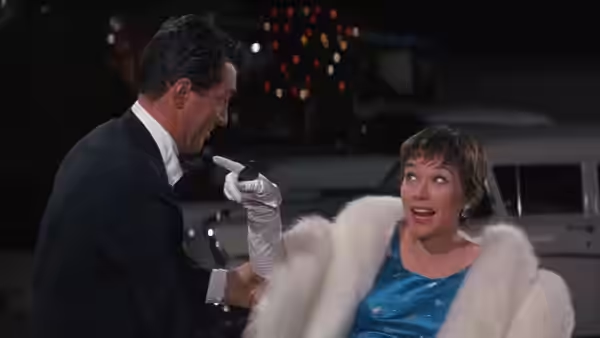
Sinatra is the worst offender. He plays Danny as a man who cannot be surprised by anything, which comes across as a man who cannot be interested in anything either, and he spends much of the film in an orange mohair jumper looking as if he is between sets. Martin is easier company, because Sam Harmon is written as a sceptic and Martin’s half-asleep delivery suits a man who thinks the whole thing is a bad idea. Davis has the most life in him and the least to do. Richard Conte, as the electrician Anthony Bergdorf with a bad heart and a boy to leave money to, gives the only performance that seems to have come from a script rather than a bar, and the film is briefly about something whenever he is on. Angie Dickinson, as Danny’s estranged wife Beatrice, gets two scenes and a good coat.

Then the lights go out and the film wakes up. Milestone made All Quiet on the Western Front in 1930, and he stages the robbery like a night raid, calm and exact, five casinos going dark in turn while the men move through them. Philip W. Anderson holds each shot just long enough for us to see where the money is and who is carrying it, and Nelson Riddle’s brass, which has been idling in the lounges, finally has somewhere to go. We sat up. For twenty minutes this is the caper the poster promised, and it is possible to see why the film still has defenders.

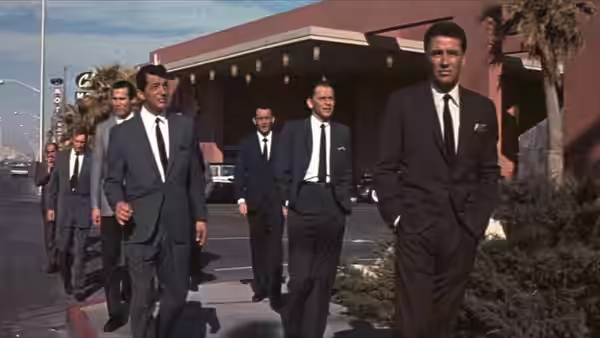
William H. Daniels shoots the town as it was: low, wide, neon signs standing alone against black desert sky, hotels sitting in their own car parks with nothing behind them. It is now the most valuable thing in the film, and it was never meant to be. Howard Shoup puts the men in narrow dark suits and the women in a great deal of fabric, which is right for 1960 and a little wearing by the second hour. The wide frame is used well in the casinos and left half empty in the living rooms.

The trouble is tone. The film wants to be a heist thriller and a floor show at once, and each time it settles into one it remembers the other. A crime story needs us to fear the men might be caught; a Rat Pack picture needs us to know they never will be. Milestone does not resolve that, and the second half, which takes a turn we will not describe, is more interesting than the first because for once somebody stands to lose. The closing shot is the one properly witty idea in the whole script, and it arrives after two hours.

Most critics sit roughly where we do, split between those who prize the heist and those who cannot get through the lounge act to reach it. Steven Soderbergh’s 2001 remake took the same skeleton and gave it a pulse, and there is no shame in preferring it. This one is for people who want to see the Strip before the money arrived, and Dean Martin at a piano being paid, for once, to look bored. Have something else to do during the first hour.
Critical consensus AI synthesised

49
Positive
2
Mixed
2
Negative
4

The reviews lean negative, and even the critics who enjoy the film do so with reservations. Where praise gathers, it gathers around the heist itself, which several find well staged, and around the film as a record of an unpolished, half-built Las Vegas caught in William Daniels’ Panavision photography. Nelson Riddle’s score and the musical turns from Sammy Davis Jr and Dean Martin are counted as incidental pleasures rather than reasons to watch.

The complaints are consistent: a slack pace, leads who seem to be coasting, and a tone that cannot decide between heist picture and musical comedy. More than one critic notes that the cast were playing Vegas shows at night while filming by day, and thinks it shows. The spread is wide, from Radio Times, which calls it a great and underrated caper, to Collider, which says it is mainly worth seeing to appreciate how the remake improves on it. The 1959 and 1960 notices are among the harshest; the film has never had much of a reputation to lose.

Radio Times
★★★★ · Tony Sloman
80

This is one of the great (and most critically underrated) caper movies, superbly cast with the Rat Pack and directed in glossy Panavision by veteran Lewis Milestone, who keeps a tight lid on the antics; the ending is utterly brilliant.

Read the full review →
The Times
4 May 2018 · ★★★★☆ · Kevin Maher
70*

The critic finds the original Rat Pack caper eminently entertaining and fascinating in its details, such as the characters' shared army veteran status and Sinatra's striking orange mohair jumper.

Read the full review →
The AV Club
20 May 2021 · Craig D. Lindsey
60*

The 1960 Ocean’s Eleven is a smart-assed, Technicolor Rat Pack heist that peters out over two hours with a downbeat ending and piles on cameos and musical numbers. It remains a fascinating artifact for its glimpse of an unpolished, still-developing Las Vegas.

Read the full review →
Time Out
10 September 2012 · ATu
50*

The Rat Pack antics (with guest spots) become rather hard to bear, and the film was made as an extended advertisement for the Clan's Vegas shows; the heist itself, though, is a superb piece of movie-making.

Read the full review →
Empire
1 January 2000 · Colin Kennedy
40*

The 1960 film is a knockabout comedy undermined by its sluggish pace and sleepy performances, which stem from the principal cast's double duties performing in Las Vegas shows. It offers incidental pleasures in Sammy Davis Jr's singing, Dean Martin's lounge act, Nelson Riddle's score, hipster dialogue, and William Daniels' cinematography capturing old Vegas.

Read the full review →
The New York Times
11 August 1960 · Bosley Crowther
30*

The picture maintains a surprisingly nonchalant and flippant attitude toward crime that undercuts many gags. Lewis Milestone's direction fits the centripetal script focused on Sinatra and his gang, though elders may find the amoral heroes less appealing than younger viewers do.

Read the full review →

Straight answers AI written, from our review

Is Ocean's Eleven worth watching?
Ocean's Eleven (1960) is worth watching only for its last hour, and we scored it 55. The recruitment scenes drag while the Rat Pack sing in rooms, but once the casino lights go out Lewis Milestone stages the robbery like a night raid, and William H. Daniels' wide shots of the old, low Strip are now the most valuable thing in it. Keep something else to hand for the first hour.
How long is Ocean's Eleven, and what is it rated?
Ocean's Eleven runs 2h 07m and is rated NR by the MPA in the US. It is a crime and comedy film.
Where can I watch Ocean's Eleven in the US?
Ocean's Eleven is streaming on Tubi in the US, and it is also available to rent from Amazon Prime Video from $3.99. It leaves Tubi on 1 October. Availability is checked daily; the links above go straight to each service.
How violent or frightening is Ocean's Eleven, and is it suitable for children?
Ocean's Eleven (1960) is a PG-rated caper with almost nothing to frighten anyone. The robbery is staged calmly, without gunplay or menace, and the adult content is confined to smoking, drinking and lounge-act flirting. Children are safe with it but will be bored by the long, talky first hour; it suits teenagers and adults curious about Las Vegas before the money arrived.
How does Ocean's Eleven compare to Ocean's Eleven?
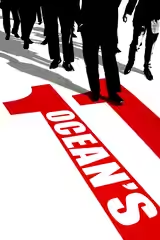
Ocean's Eleven (2001) is the better film, and the one to watch first. Soderbergh's remake takes the same skeleton, eleven men robbing Las Vegas casinos in one night, and gives it pace and pleasure, staging the heist like a dance with everyone awake. The 1960 original is slacker and slower, but it has Richard Conte's one serious performance and a real, neon-and-desert Vegas the remake cannot offer.
What should I watch after Ocean's Eleven?
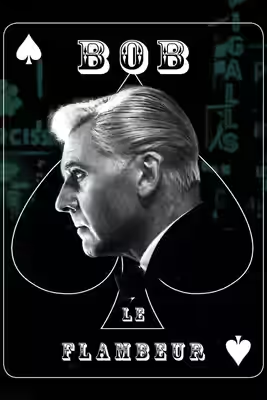
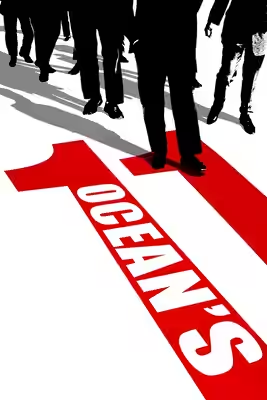
After Ocean's Eleven, try Bob le flambeur (1956, Fi1m 76): A gambler plans one last casino job in Montmartre; Melville keeps it quiet and sad. Then Ocean's Eleven (2001, Fi1m 80): Soderbergh’s remake does the same job in less time and everyone stays awake.

Cast

If you liked this, try…

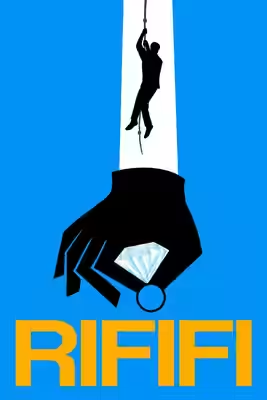
  1. Rififi (1955) · not reviewed yetJules Dassin’s Paris jewel robbery, thirty silent minutes of it, and nobody sings.

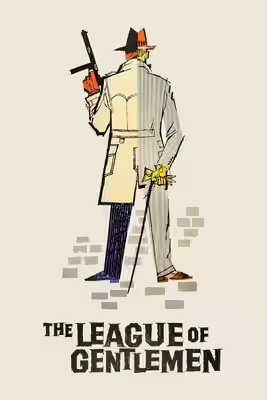
  2. The League of Gentlemen (1960) · not reviewed yetEx-army officers rob a bank the same year, with better jokes and tighter trousers.

  3. Bob le flambeur (1956, Fi1m 76)A gambler plans one last casino job in Montmartre; Melville keeps it quiet and sad.

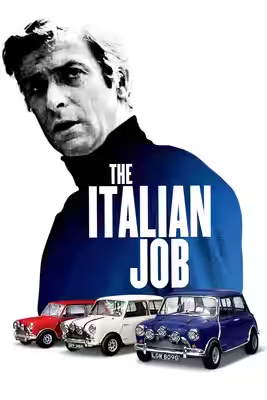
  4. The Italian Job (1969) · not reviewed yetTurin, Minis and Noël Coward; the caper film as a very British holiday.

  5. Ocean's Eleven (2001, Fi1m 80)Soderbergh’s remake does the same job in less time and everyone stays awake.

Free account

Know what to watch tonight

Two lists that know where things are streaming, collections you can share, your own score beside ours, and Discover that remembers what you have seen.

  • Want to see, sorted by what is streaming now
  • Seen, with your score out of ten
  • No adverts, ever