Hope Lange's gift was for showing the cost of keeping up appearances: the smile held a beat too long, the composure that is plainly work. Hollywood cast her as the sensitive girl until she tired of it and took the trade to television, where it lasted.
Fi1m perspective
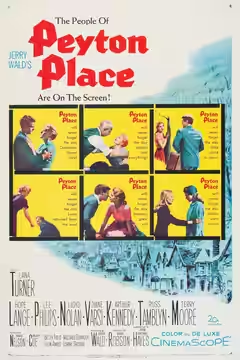
Watch Selena Cross in Peyton Place (1957) when she is being cheerful. Lange plays a girl who has to smile because the alternative is unbearable, and she lets us see the effort: the smile is held a second longer than it should be, and that second is where the performance lives. We found the film's second hour a long sit, and then Selena's scenes came round again and we sat up, because Lange never plays the girl's misery for us. She plays the girl hiding it, which is harder and a good deal more upsetting.
She had been working since childhood, on Broadway at nine and in live television through the 1950s, before Bus Stop (1956) put her on screen alongside Marilyn Monroe and got her a contract at Fox. Peyton Place followed a year later and fixed her, for the studio's purposes, as the sensitive, vulnerable girl of the 1950s melodrama. She played that girl in film after film, and by her own account the typecasting shortened her film career. We take her word for it. Selena is good enough that we resent, on her behalf, how little the pictures that came after asked of her.
The turn came on television. The Ghost & Mrs. Muir (1968) gave her a widow to play in a sitcom, and The New Dick Van Dyke Show (1971–74) kept her there, and the medium seems to have suited her better than the studio had. A widow keeping her spirits up in a sitcom is not far from what she did in Peyton Place; it is the same held smile with the dread taken out.
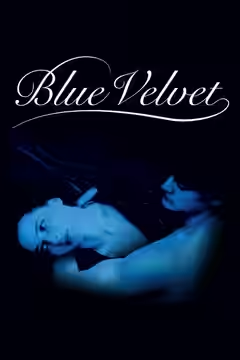
Film had her back later, in the mother and wife parts that thrillers and dramas keep for actresses of a certain age: Joanna Kersey in Death Wish (1974), Mrs. Williams in David Lynch's Blue Velvet (1986). Our review of Blue Velvet does not single her out, and that is not a slight. It is a supporting part in a film that spends its attention on Dorothy, and Lange was never an actress who elbowed her way into a scene that was not about her. She did the job and left the frame.
If you want to see what she could do, start with Peyton Place, over two nights if you must, and watch for the smile she holds too long. It is the best thing in the film. The studio saw it too, and asked her to do it again for a decade.
Biography
Hope Lange was an American film, stage and television actress. Born in Redding, Connecticut, she began performing on Broadway as a child and made her film debut in Bus Stop (1956).
She received Academy Award and Golden Globe nominations for Best Supporting Actress for her role in Peyton Place (1957). Lange won two Primetime Emmy Awards for Outstanding Lead Actress in a Comedy Series for portraying Carolyn Muir in the sitcom The Ghost & Mrs. Muir (1968–1970).
Her later film roles included Joanna Kersey in Death Wish (1974), Cheryl Walsh in A Nightmare on Elm Street Part 2: Freddy's Revenge (1985), Mrs. Williams in Blue Velvet (1986), and Senator Mayo in Clear and Present Danger (1994). She also appeared in numerous television series and films until the late 1990s.