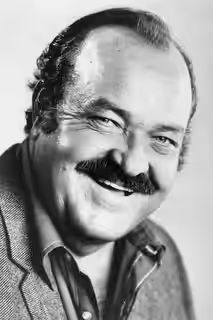
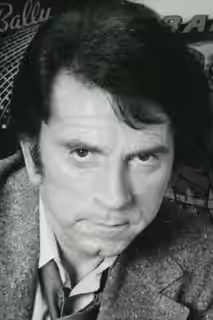
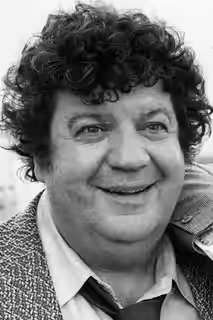
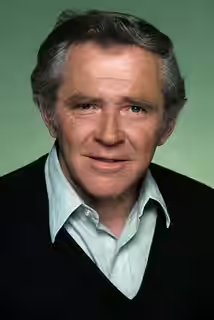
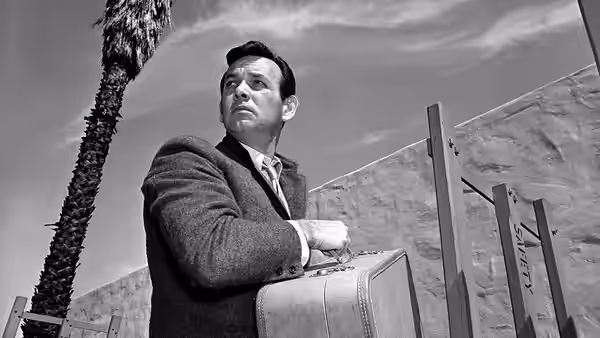
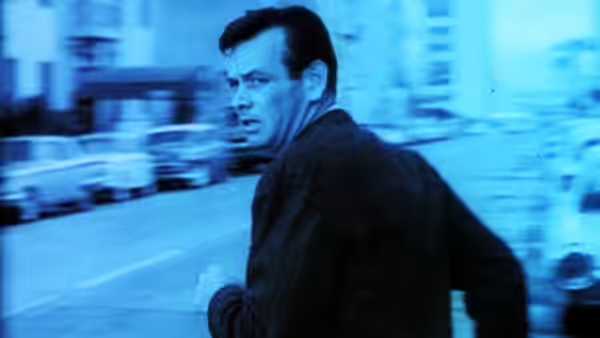
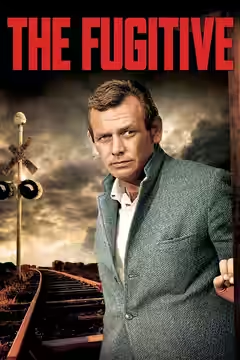
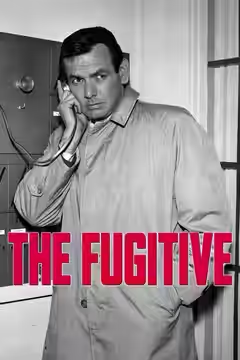
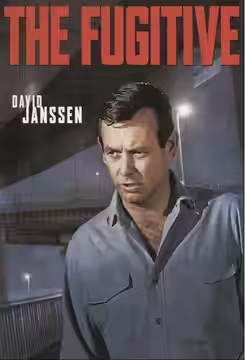
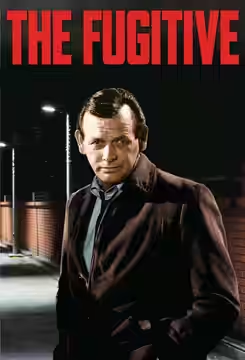
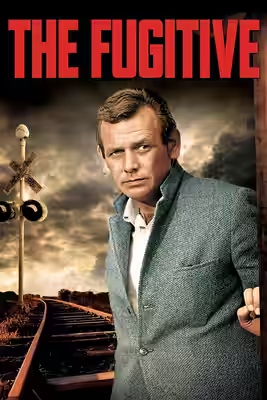
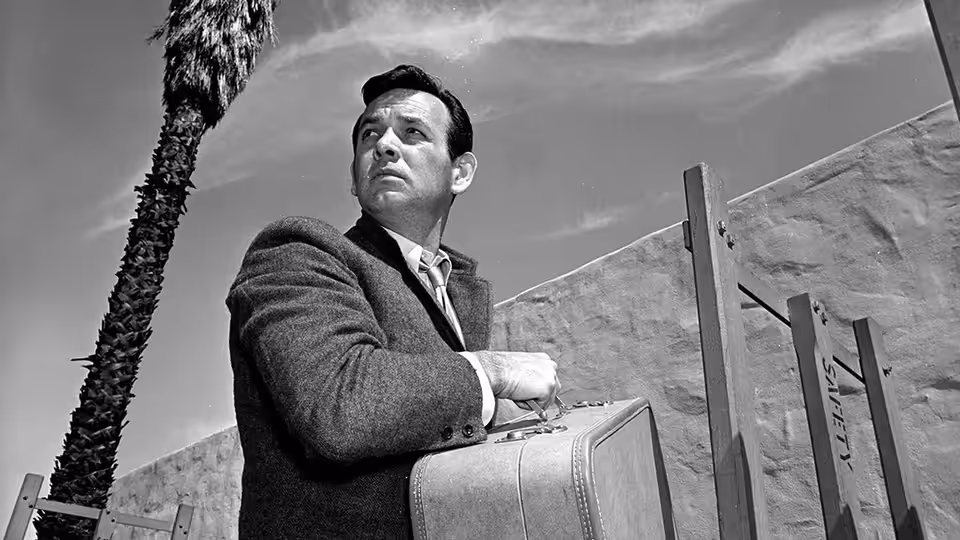
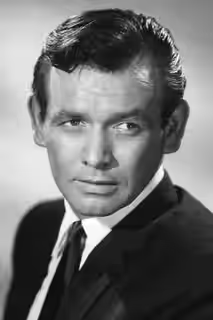
Richard Kimble (David Janssen) holding a suitcase outdoors under a palm tree
Series review

The Fugitive

1963 · Created by Roy Huggins · Series · 1h 00m · MPA TV-PG

In a sentenceDavid Janssen looks tired enough without the police making it worse

Richard Kimble (David Janssen) is a doctor living under the pressure of pursuit. Lieutenant Gerard (Barry Morse) represents the law that he cannot trust to put things right. With the Narrator (William Conrad) telling his story, The Fugitive follows a weary, conscientious man trying to remain free while confronting institutions capable of getting things wrong. Crime, action and personal troubles complicate his position. Richard Kimble wants to stay beyond the law’s reach, but his concern for other people makes withdrawal difficult: keeping himself safe cannot be his only consideration.

Fi1m review

David Janssen gives The Fugitive a tired, believable hero worth following through its mixture of crime, action and melodrama. We recommend it, with patience for the repeated predicament and the sometimes over-insistent narration.

Roy Huggins’s The Fugitive makes gripping television out of a predicament that cannot simply be cleared away after an hour. We recommend it for David Janssen’s Richard Kimble, a doctor whose weariness makes the continuing danger matter. The series combines crime, action and melodrama without treating the last of those as an embarrassment. Its principal limitation is the repetition built into keeping one man in trouble for so long, however effectively that trouble is varied.

The troubling idea is that the law can be wrong and still possess the power to ruin a life. Richard Kimble has to live with that possibility, so authority offers little reassurance. Barry Morse’s Lieutenant Gerard gives the law a continuing presence, while the protagonist’s anxiety makes the threat personal. The programme asks us to spend time with someone who cannot assume that an institution will recognise its own mistake.

David Janssen’s naturalism is essential to making that bearable. He allows Richard Kimble to be virtuous without making him seem inexhaustible, and the fatigue makes his goodness persuasive. We were moved by how tired his decency looked. There is nothing restful about being the conscientious person in this story, and the performance makes us feel the effort of it. A more assertive, invulnerable hero would make the danger easier to dismiss, and would be considerably less interesting company.

The cinematography credits include Carl E. Guthrie and Robert Hoffman, and the editing credits include Richard Cahoon and Jodie Copelan. Their shared task is to keep the danger clear without crowding out the man experiencing it. That balance works: Richard Kimble’s capacity to keep going matters as much as the immediate excitement. The hour-long format also leaves space for the crime story and the melodrama to sit together, giving the actor something beyond the next threat to play.

William Conrad’s narration is a less naturalistic element, and its emphatic authority can sit awkwardly beside the leading performance. We occasionally wanted it to trust David Janssen more. The actor already makes the strain of Richard Kimble’s position intelligible; the programme need not underline it quite so firmly. Still, the narration keeps the changing stories clear, and there is something reassuring about its firmness in a programme whose central character has so little reassurance available to him.

The larger reservation is repetition. Across four seasons of 30 episodes each, there are a great many occasions to worry about the same man in the same essential trouble. His decency can also make him too dependable, with more opportunities to endure than to surprise us. The variety of stories helps, but cannot make the central predicament feel newly discovered on every visit. Expecting constant progress towards a solution is a good way to miss what the individual dramas offer.

Against the pursuit thriller’s usual reliance on speed, this series gives unusual weight to the wearing business of being afraid. Its hero’s vulnerability remains interesting even when the pattern becomes familiar. It is worth allowing those individual dramas some breathing space, particularly if the older television rhythms take a little adjustment. Start with one episode rather than clearing the weekend.
Critical consensus AI synthesised

2 of 6
Positive
2
Mixed
0
Negative
0
The AV Club
11 September 2013 · Stephen Bowie
90*

The series achieved a unique perfection of form as fusion TV blending crime procedural, action-adventure, and melodrama, with consistent high quality across varied episodes. It broke new ground with its premise of a perpetually paranoid protagonist at odds with the law and institutions that can err, anchored by David Janssen's naturalistic performance as the virtuous but weary Dr. Kimble.

Read the full review →
Paste
20 February 2023 · Kenneth Lowe
80*

The critic highlights the series' enduring appeal through its portrayal of a powerless, desperate protagonist navigating paranoia and authority in mid-1960s America. They single out the satisfying two-part finale for finally resolving the central mystery and giving audiences the emotional payoff after years of tension.

Read the full review →

Straight answers AI written, from our review

Is The Fugitive worth watching?
The Fugitive is worth watching for anyone who wants a pursuit drama built on weariness rather than speed, and we scored it 84. David Janssen's tired, believable Richard Kimble carries a crime-and-melodrama mixture across four long seasons, so the central predicament does repeat. Start with a single episode rather than clearing the weekend.
How long is The Fugitive, and what is it rated?
The Fugitive has episodes of about 1h 00m and is rated TV-PG by the MPA in the US. It is an action & adventure and drama series.
Where can I watch The Fugitive in the US?
The Fugitive is streaming on Tubi in the US. Availability is checked daily; the links above go straight to each service.
How does The Fugitive compare to The 39 Steps?
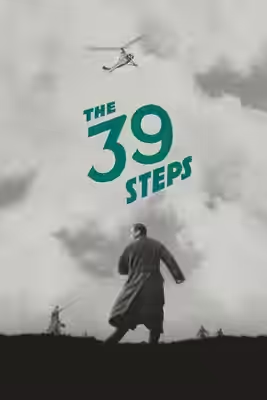
The Fugitive is the slower and more wearing of the two, giving its innocent man on the run years to be afraid, where The 39 Steps gives Robert Donat barely time to worry. Hitchcock's film is the tighter, brisker pleasure and the better single evening. The series suits anyone who would rather stay with a decent man's exhaustion than watch a chase resolved before bed.
What should I watch after The Fugitive?
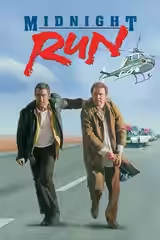
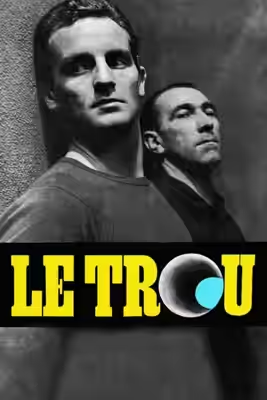
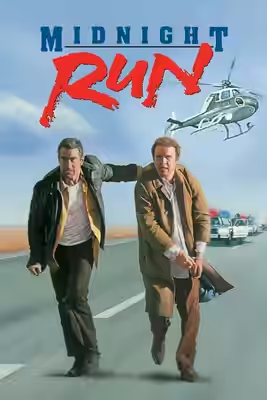
After The Fugitive, try The 39 Steps (1935, Fi1m 88): An innocent man on the run, with considerably less time to worry. Then Le Trou (1960, Fi1m 88): Patient, practical suspense built around confinement, trust and the possibility of escape; and Midnight Run (1988, Fi1m 88): Another determined pursuit, with room for exasperation, companionship and some welcome laughter.

Cast

If you liked this, try…

  1. The 39 Steps (1935, Fi1m 88)An innocent man on the run, with considerably less time to worry.

  2. Le Trou (1960, Fi1m 88)Patient, practical suspense built around confinement, trust and the possibility of escape.

  3. The Prisoner (1967) · not reviewed yetFor a hero facing institutions that make even less effort to explain themselves.

  4. Midnight Run (1988, Fi1m 88)Another determined pursuit, with room for exasperation, companionship and some welcome laughter.

  5. Phoenix (2014, Fi1m 68)A quieter drama of damaged identity, carried by a similarly watchful central performance.

Free account

Know what to watch tonight

Two lists that know where things are streaming, collections you can share, your own score beside ours, and Discover that remembers what you have seen.

  • Want to see, sorted by what is streaming now
  • Seen, with your score out of ten
  • No adverts, ever