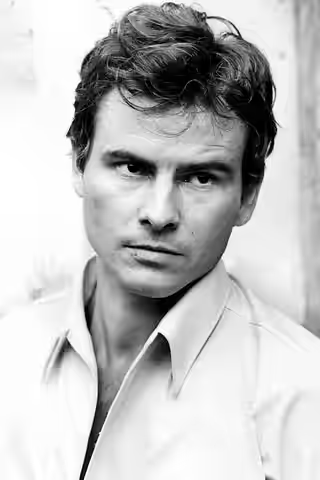
Horst Buchholz was Germany's young rebel before Hollywood borrowed him, and the heat that made him a star at home did not reliably travel. In the one early lead we have reviewed, he seems to have left before the film began.
Fi1m perspective
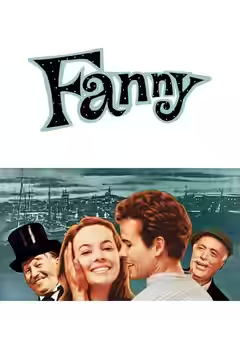
Watch Horst Buchholz in Fanny (1961) and you see the problem at once. Marius is a young man in Marseilles who is meant to be torn between the girl on the quay and the sea beyond it, and Buchholz plays him as someone who has already gone and is being polite about staying for dinner. Leslie Caron looks at him as though she has been looking at him since childhood; he looks back as though checking the time. The love scenes have no heat, and in a film called Fanny that leaves a hole where the story should be.
It was not always so. Buchholz came out of Berlin theatre and radio, took small film parts from 1951, and became a star in 1956 as the teenage rebel Freddy Borchert in Die Halbstarken, which got him called the German James Dean. Intensity was the trade and youth was the product. English-language work followed from 1959, Tiger Bay among it, then The Magnificent Seven (1960) as Chico, and two Hollywood pictures in 1961: Fanny, and Billy Wilder's One, Two, Three, in which he played Otto Ludwig Piffl and the heat was turned to comedy. That was the peak. From the mid-1960s the leads thinned into supporting parts and television, with the odd return to cinema: a Wim Wenders film in 1993 and Roberto Benigni's Life Is Beautiful (1997), where he is Doctor Lessing.
We have reviewed two of these, and the honest account is that his reputation and our experience pull in different directions. The reputation is for the hot-headed young man, the one who is about to do something rash and knows it. What we found in Fanny was a young actor with nothing burning underneath. Our attention drifted in the middle hour, and we knew it was Charles Boyer and Maurice Chevalier we were waiting for, which is not where a romantic lead wants to leave an audience. Some of the blame is Joshua Logan's, since a slow, sentimental film that hands the drama to the old men gives its young lead little to do but wait. But Buchholz waited without visibly wanting anything.
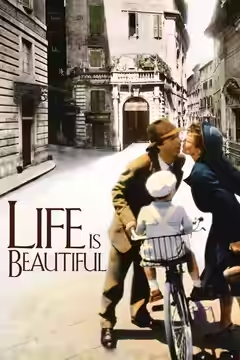
In Life Is Beautiful he is a quiet presence in a loud film, and our review did not single him out for good or ill. That is roughly the shape of his later career: present, capable, not the reason anyone came. He also missed two of the largest parts of his moment, in West Side Story (1961) and Lawrence of Arabia (1962), and never found a place with the New German Cinema generation, so the 1970s went largely to television.
If you want to see what the fuss was about, the reputation points to One, Two, Three, and we have not yet put it to the test. Start there, and treat Fanny as a demonstration of what happens when the fire is not lit.
Biography
Horst Werner Buchholz was a German actor who appeared in more than sixty feature films between 1952 and 2002. He began his career on the stage in Berlin in the late 1940s and made his screen debut in the early 1950s.
Buchholz achieved international recognition for his role as Chico in The Magnificent Seven (1960) and as Otto Ludwig Piffl in Billy Wilder's One, Two, Three (1961). Later credits include Tony Baker in Wim Wenders' Faraway, So Close! (1993) and Doctor Lessing in Roberto Benigni's Life Is Beautiful (1997). He was married to the French actress Myriam Bru from 1958 until his death; their son Christopher Buchholz is also an actor.