Jane Fonda plays clever women who have not yet been asked the right question, and she plays the moment the question arrives without making them look foolish for the years before it. It is a rarer skill than it sounds.
Fi1m perspective
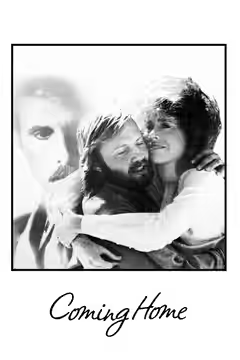
On her first morning in the veterans' ward of Coming Home (1978), Sally Hyde knocks a patient's catheter bag off his gurney and he screams at her. Fonda does not flinch and does not apologise prettily. She stands there and takes it, and the film's whole case, that a woman in lacquered hair and an officer's-wife's outfits can be remade by paying attention, is in that stance. She has been doing this since the late 1960s: playing women who are not stupid, only unasked, and letting us watch the question land.
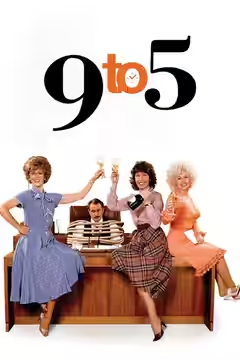
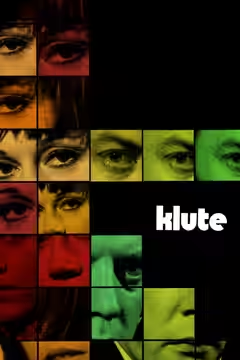
The career divides cleanly. The 1960s were comedy and costume, Cat Ballou (1965) and Barbarella (1968) among them, parts that ran on her looks and her timing. Then came the turn to drama, Klute (1971) for Alan J. Pakula chief among it, and by the end of the decade she was choosing, and sometimes producing, films with something to say: The China Syndrome (1979), 9 to 5 (1980). After Stanley & Iris (1990) she stopped for fifteen years, came back in Monster-in-Law (2005), and has since done a good deal of television, most of it with Lily Tomlin in Grace and Frankie (2015–2022).
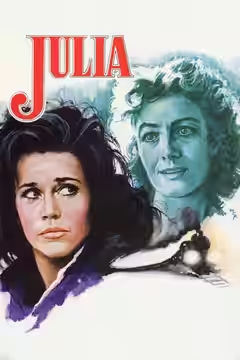
The complaint that has followed her since Coming Home, that the acting goes stiff when the film has a point to prove, is fair about the films and less fair about her. Hal Ashby signposts Sally's awakening, and Ann Roth's costumes do half the work before Fonda has opened her mouth. What Fonda adds is a refusal: she will not play the earlier Sally as a dupe, so the later one is not a lecture. In Julia (1977) she is better than the part, playing Lillian Hellman as a woman nervous about her own talent and rude to cover it, and her scenes with Jason Robards, arguing over pages by the fire, are the only stretch of Fred Zinnemann's film that behaves like the people it is about. We came away wanting a film about that woman rather than one in which she remembers somebody else, which is a compliment to Fonda and not to the film.
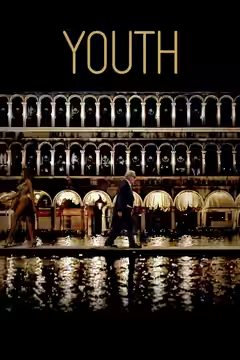
Her later work is lighter and she is good in company. Across three films and the series, Tomlin brings out a comic exasperation the 1970s dramas had no use for. In Youth (2015) she turns up briefly as Brenda Morel, a difficult ageing actor, in a film we found already too full of speeches about getting old. She remains most herself opposite a man who is shouting at her and a script that expects her to change her mind. Give her one of those and she will not waste it.
Biography
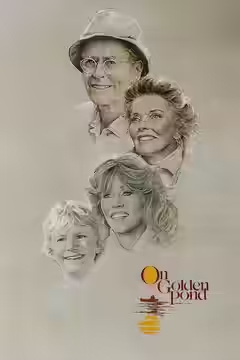
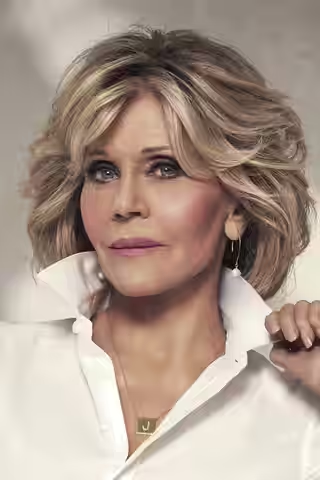
Jane Fonda is an American actor. She was born on 21 December 1937 in New York City. Her screen credits include Barbarella (1968), Klute (1971), Coming Home (1978), On Golden Pond (1981), Monster-in-Law (2005), This Is Where I Leave You (2014) and Youth (2015), in which she played Brenda Morel.
Fonda received Academy Award nominations for They Shoot Horses, Don't They? (1969), Julia (1977), The China Syndrome (1979), On Golden Pond (1981) and The Morning After (1986), winning twice for Klute and Coming Home. She has also received two BAFTA awards, seven Golden Globe awards and a Primetime Emmy award.