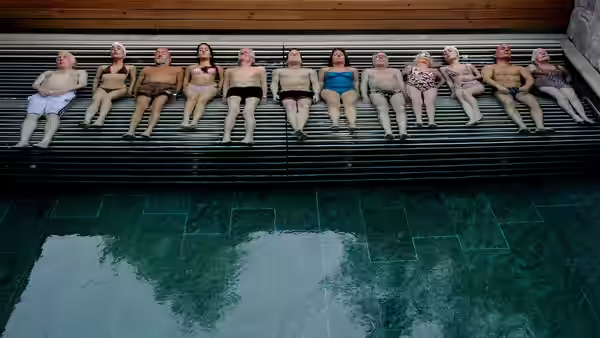
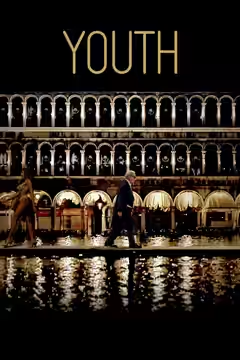
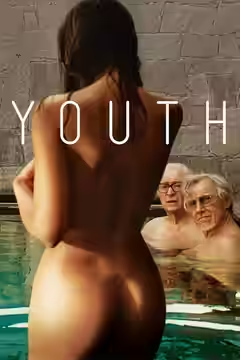
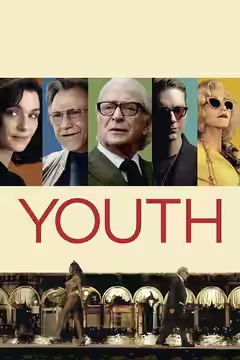
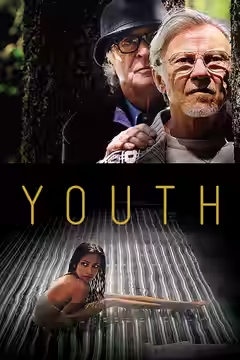
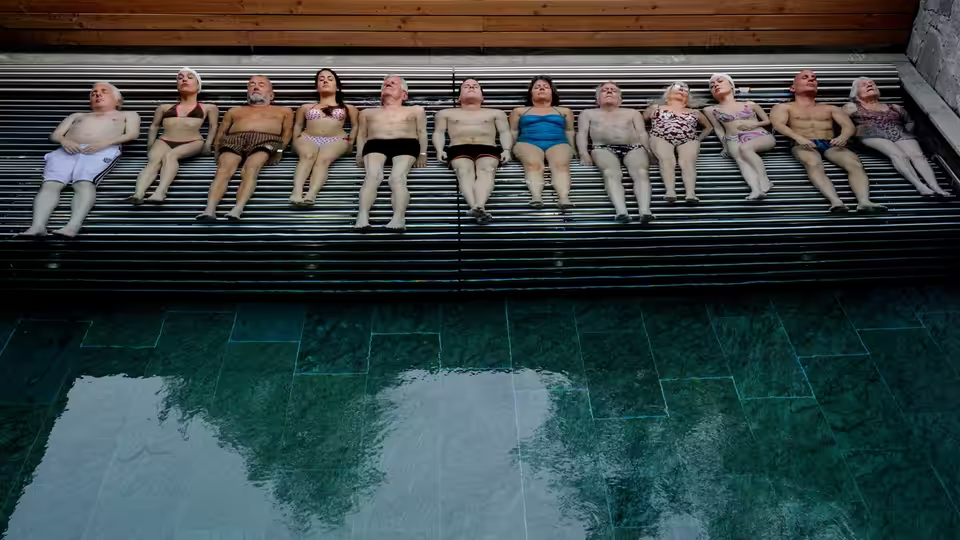
Group of elderly people in swimwear seated in a row above a pool
Film review

Youth

2015 · Directed by Paolo Sorrentino · 2h 05m · MPA R

In a sentenceA Swiss spa with excellent views and rather too much advice about life

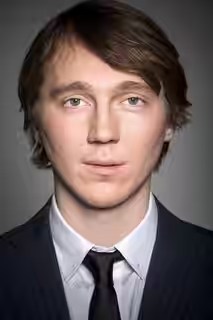
At a Swiss spa, Fred Ballinger (Michael Caine), an ageing composer, and his old friend Mick Boyle (Harvey Keitel) talk about their lives and their work. Around them are Lena Ballinger (Rachel Weisz) and Jimmy Tree (Paul Dano), among the people drawn into the resort’s conversations about ambition, memory and desire. The two artists consider what remains of their creative lives as their bodies grow older. Away from ordinary routines in the Alps, they find that rest leaves plenty of time to think about the things that trouble them.

Plays from YouTube when you press play; nothing loads from them until then.

Fi1m review

Paolo Sorrentino’s Youth has two fine central performances and too many speeches about getting old. Michael Caine supplies the feeling that the film’s elaborate images and wandering conversations keep interrupting.

Paolo Sorrentino takes two ageing artists to a Swiss spa and gives them ample opportunity to consider what their lives have amounted to. Youth is worth considering for its actors and music, though its observations about age are thinner than its patient delivery suggests. There is welcome humour in the friendship, and some feeling that does not arrive on cue. Too often, however, a conversation gives way to another carefully arranged image just as somebody has begun to interest us.

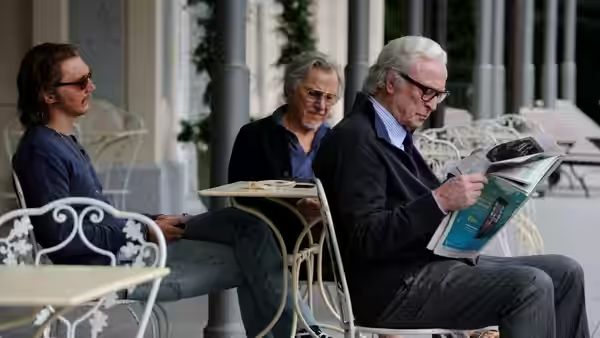
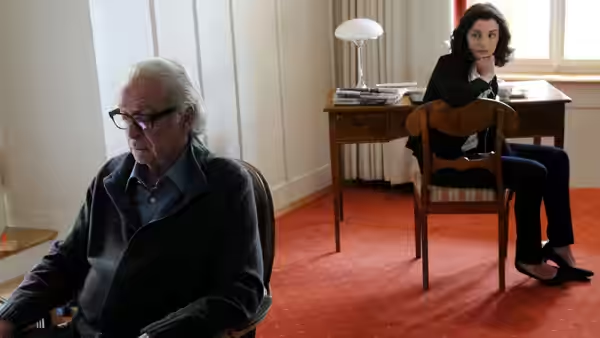
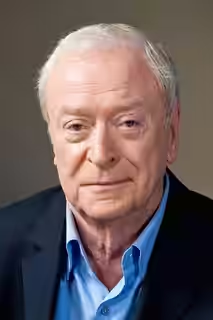
Michael Caine is the main reason to stay. As Fred Ballinger, the ageing composer, he gives the droll lines a faint tiredness that makes a joke sound like something requiring effort. Harvey Keitel brings enough warmth to Mick Boyle to establish an old friendship without much explanation. We were moved by their exchanges, particularly Michael Caine’s reluctance to make Fred’s sadness any more conspicuous than his humour. The film should trust those conversations for longer.

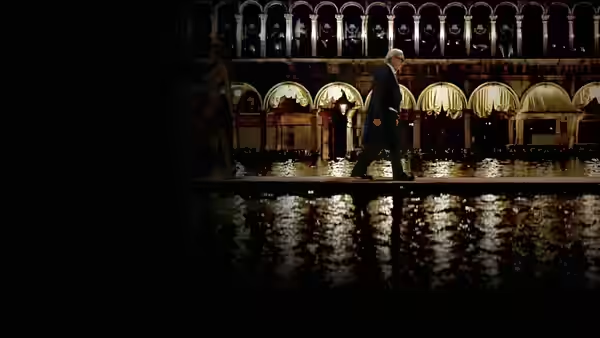
Luca Bigazzi’s cinematography gives the Alpine scenery an almost distracting sharpness and scale. The views supply the pleasure the dialogue keeps promising, although the care spent arranging bodies within them can make the people seem like another attraction at the resort. Ludovica Ferrario’s production design makes the spa look comfortable enough to encourage a long stay and orderly enough to make that stay oppressive. That suits people with time to rehearse their regrets. It also leaves us looking at the accommodation when we ought to be listening.

Cristiano Travaglioli’s editing allows the film to move by association, passing between conversations, music and the life of the resort rather than pushing towards the next event. That looseness is initially agreeable, since the friendship needs room for its small changes of mood. Over 125 minutes, though, the pauses and digressions begin to feel like a reluctance to choose what matters. David Lang’s music helps: its measured phrasing brings some calm to the succession of conversations and images, and makes a welcome change from being offered advice about life.

As writer, Paolo Sorrentino too often gives his characters a thought about life when they need something particular to say to one another. Some lines have the stiffness of remarks polished in advance, and the delivery cannot always loosen them. Rachel Weisz and Paul Dano offer welcome changes of presence as Lena Ballinger and Jimmy Tree, but the supporting characters are not given the same room as the two friends. The women, in particular, too often seem to have been brought into view to help the men think about themselves.

A reflective comedy about old age need not hurry, and complaining that this one wanders would miss much of what it is trying to do. The problem is how often it returns to a feeling already expressed without making that feeling more complicated. The humour is a considerable virtue here, reducing the men’s self-importance and allowing their friendship to become affectionate without turning soft. More of that willingness to be ordinary would have helped.

There is enough here for admirers of leisurely, visually elaborate drama, especially those willing to follow an actor through an uneven script. Michael Caine rewards that attention. We would hesitate to recommend it to anyone hoping for much wisdom about getting older. Give it time for the company, and expect a few conversations to outstay their welcome.
Critical consensus AI synthesised

68
Positive
17
Mixed
7
Negative
4

Most critics respond warmly to Youth, with praise clustering around Michael Caine and Harvey Keitel’s performances as ageing artists, Sorrentino’s elaborate compositions and his use of music. Caine’s humour, restraint and world-weariness give many reviewers an emotional connection to the film’s reflections on age and creativity. Admirers find tenderness and melancholy beneath the visual extravagance, with several enjoying the shifts between absurd comedy and quieter feeling.

The spread of opinion is wide, and the main disagreement concerns how much those images and observations amount to. Even some favourable reviews find the storytelling rambling or the dialogue stiff; less persuaded critics see attractive surfaces concealing thin ideas and limited emotional depth. Slant Magazine raises a sharper objection to the film’s narrow sympathy and its treatment of women as symbolic types. The Independent also breaks with the praise for Caine, finding him aloof and short of his usual charm.

Los Angeles Times
3 December 2015 · Kenneth Turan
90*

Youth is a quixotic, idiosyncratic cinematic essay and meditation on what lasts and matters at any age, perfectly suited to Sorrentino’s visual flair and soul-capturing style. Michael Caine’s nuanced performance anchors the stellar ensemble in its offbeat rhythms.

Read the full review →
Variety
20 May 2015 · festival review · Jay Weissberg
90*

Sorrentino delivers his most tender film yet, an emotionally rich contemplation of life’s wisdom with Caine and Keitel bringing lifetime depth to the roles of old friends. Stunning compositions, music, and humor balance the quiet melancholy and human experience.

Read the full review →
Evening Standard
25 June 2015 · festival review · David Sexton
85*

The critic calls the film exquisite and operatic, praising its inventiveness, brio and poignancy in turns bitter, hilarious, vivid and beautiful. Michael Caine is superb as the ageing composer.

Read the full review →
The Hollywood Reporter
20 May 2015 · festival review · Todd McCarthy
85*

Praises the film as a voluptuary’s feast of sensory cinematic pleasures and an improvement on Sorrentino’s prior English-language effort, highlighting the strong performances by Michael Caine and Harvey Keitel as aging artists.

Read the full review →
IndieWire
20 May 2015 · festival review · Eric Kohn
80*

Highlights Michael Caine and Harvey Keitel delivering some of their best performances in years in Sorrentino’s whimsical take on aging artists at a Swiss spa.

Read the full review →
Little White Lies
28 January 2016 · 4/4/4 · Adam Woodward
80

The critic calls it a joyous, gently moving experience anchored by a fearless central turn from Michael Caine. Sorrentino delivers an operatic ode to old age that reminds viewers respect can take a lifetime to earn.

Read the full review →

Straight answers AI written, from our review

Is Youth worth watching?
Youth is worth watching for Michael Caine and Harvey Keitel rather than for its thoughts on getting old, and we scored it 66. Their friendship carries real feeling and welcome humour, but Sorrentino keeps interrupting it with arranged images and speeches about life. Give it your evening if you like leisurely, visually elaborate drama and can forgive a wandering script.
How long is Youth, and what is it rated?
Youth runs 2h 05m and is rated R by the MPA in the US. It is a comedy and drama film.
Where can I watch Youth in the US?
Youth is available to rent from Amazon Prime Video and Apple TV from $3.99. Availability is checked daily; the links above go straight to each service.
How violent or frightening is Youth, and is it suitable for children?
Youth is a reflective comedy-drama with a UK 15 certificate, and it is not violent or frightening. The rating reflects adult content and sexual frankness at a spa full of grown-ups discussing ambition, memory and desire, not anything that would alarm a squeamish viewer. Children would find little of interest in two old men talking about their regrets.
How does Youth compare to The Great Beauty?
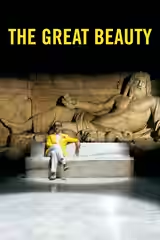
Youth and The Great Beauty are both Paolo Sorrentino films about an ageing man given beautiful surroundings and plenty to regret, and the earlier Roman film is the better of the two. The Great Beauty is funnier and more moving, though also indulgent, while Youth returns too often to feelings it has already expressed. Choose Youth mainly for Michael Caine.
What should I watch after Youth?
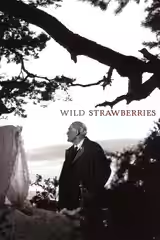
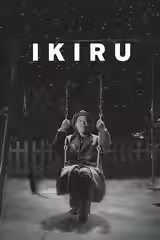
After Youth, try Wild Strawberries (1957, Fi1m 88): A tougher account of old age, memory and the effort of facing yourself. Then The Great Beauty (2013, Fi1m 83): Paolo Sorrentino gives another ageing man beautiful surroundings and plenty to regret; and Ikiru (1952, Fi1m 92): An ageing man’s search for purpose is given firmer dramatic consequences.

Cast

Awards

David di Donatello for Best Director, 2016

Nominated
David di Donatello for Best Director

European Film Award for Best Actor, 2015

Won
European Film Award for Best Actor

European Film Award for Best Actress, 2015

Nominated
European Film Award for Best Actress

European Film Award for Best Director, 2015

Won
European Film Award for Best Director

European Film Award for Best Film, 2015

Won
European Film Award for Best Film

European Film Award for Best Screenwriter, 2015

Nominated
European Film Award for Best Screenwriter

If you liked this, try…

  1. Wild Strawberries (1957, Fi1m 88)A tougher account of old age, memory and the effort of facing yourself.

  2. The Great Beauty (2013, Fi1m 83)Paolo Sorrentino gives another ageing man beautiful surroundings and plenty to regret.

  3. Ikiru (1952, Fi1m 92)An ageing man’s search for purpose is given firmer dramatic consequences.

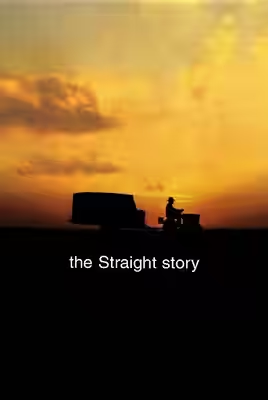
  4. The Straight Story (1999, Fi1m 88)Quiet conversations and patient observation make an older man’s journey matter.

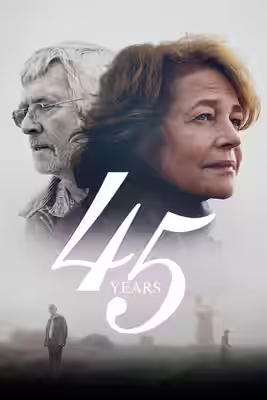
  5. 45 Years (2015, Fi1m 88)Old unhappiness disturbs a comfortable present in a more tightly controlled drama.

Free account

Know what to watch tonight

Two lists that know where things are streaming, collections you can share, your own score beside ours, and Discover that remembers what you have seen.

  • Want to see, sorted by what is streaming now
  • Seen, with your score out of ten
  • No adverts, ever