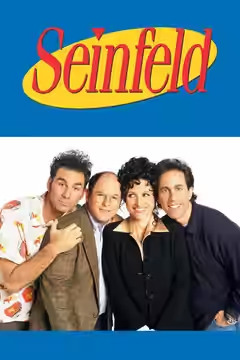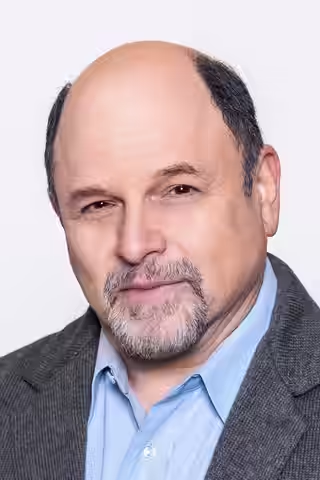
Jason Alexander makes injured pride funny by showing the labour behind every excuse. We rate him highly when the writing lets us see the insecurity; handing him a succession of cruel jokes wastes his skill.
Fi1m perspective
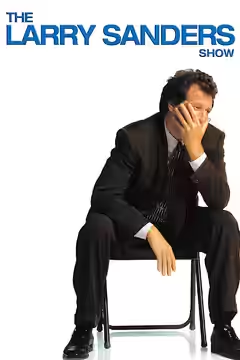
George Costanza has prepared an excuse, and Jason Alexander makes sure we notice the effort. In Seinfeld (1989–1998), the slightest objection produces a pause of injured disbelief. We laughed at those pauses because Alexander makes George seem personally affronted that anyone should question him. The aggression stays close to humiliation, so even his nastiest behaviour has something painfully recognisable behind it. He wants to appear reasonable and cannot quite conceal how hard he is trying.
The control of voice and movement owes something to musical theatre, with Merrily We Roll Along (1981) and Jerome Robbins’ Broadway (1989) preceding the television fame. Larry David, Seinfeld’s co-creator and a partial model for George, gave that precision a useful subject: a man forever justifying himself. Alexander’s performance deserves its place beside Jerry Seinfeld, Julia Louis-Dreyfus and Michael Richards in an ensemble we would readily spend another evening with. His Philip Stuckey, the smarmy lawyer in Pretty Woman (1990), also put his capacity for unpleasantness to work on film.
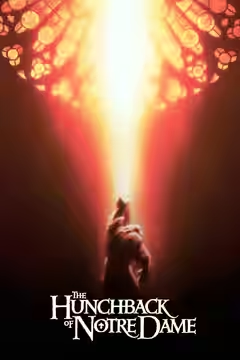
The Hunchback of Notre Dame (1996) finds a less useful place for his comic delivery. Alexander voices Hugo alongside Charles Kimbrough’s Victor and Mary Wickes’s Laverne, the three gargoyles whose interruptions keep breaking the film’s serious mood. Their music-hall cheerfulness feels imposed on a story that has earned the right to be frightening. We still recommend the film with reservations, but the comic relief is one of them.
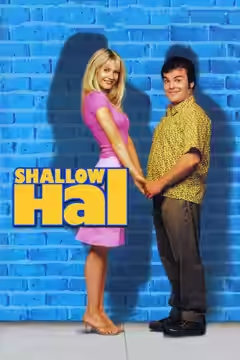
In Shallow Hal (2001), the problem becomes harder to overlook. Mauricio Wilson is given nearly every fat joke, leaving Jack Black’s Hal free to seem kinder while the film continues to enjoy the cruelty. Alexander supplies the sneer, but the writing gives him little of George’s exposed insecurity to complicate it. The early nightclub scenes work better: both men are certain the crowd is failing them, and their shared lack of self-awareness briefly gives the comedy something worth observing.
George remains the part against which the others tend to be measured, and the weaker films do Alexander few favours. We would rather see his characters allowed to defend themselves at length than employed to make somebody else look decent. For the clearest account of what he can do, start with Seinfeld and pay attention when somebody tells George he is wrong.
Biography
Jason Alexander is an American actor, comedian and director. Born Jay Scott Greenspan on 23 September 1959 in Newark, New Jersey, he trained at Boston University before leaving to pursue acting in New York. He made his Broadway debut in 1981 and won the Tony Award for Best Actor in a Musical in 1989 for Jerome Robbins' Broadway.
Alexander is best known for playing George Costanza in the NBC sitcom Seinfeld from 1989 to 1998. He also directed three episodes of the series, including "The Good Samaritan." His other notable screen credits include Philip Stuckey in Pretty Woman (1990) and voice roles in animated features such as The Hunchback of Notre Dame (1996). He has received an Emmy Award, a Tony Award and a Screen Actors Guild Award, along with multiple Golden Globe nominations.