Adrian Lyne’s Jacob’s Ladder is frightening enough to forgive its tangled explanations. Tim Robbins gives the hallucinations a human cost, though the film sometimes works too hard to tell us that something important is happening.
Jacob’s Ladder is a frightening, affecting horror film that sometimes makes its story harder to follow than it needs to be. Adrian Lyne wants us to share Jacob’s uncertainty, and for long stretches we do: the hallucinations make even the attempt to understand his predicament feel unsafe. Bruce Joel Rubin’s screenplay gives that fear a serious concern with death and the need for answers. The trouble begins when the film seems anxious that we might mistake being frightened for a sufficient response.
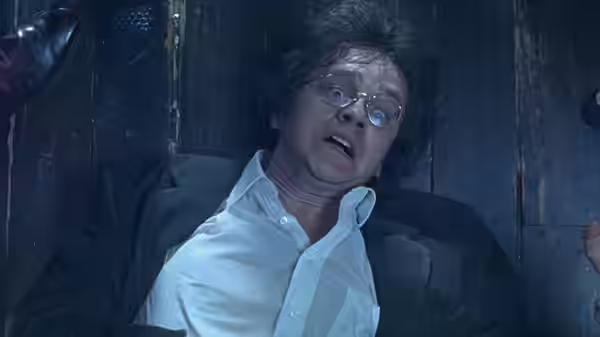
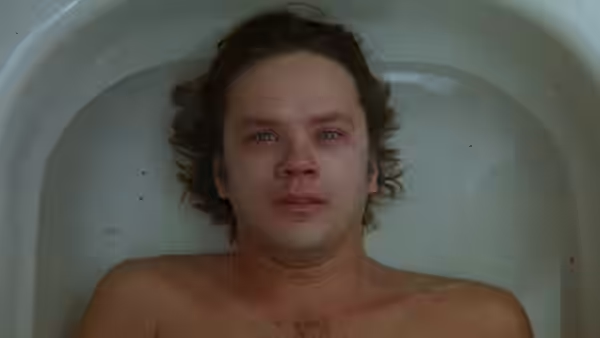
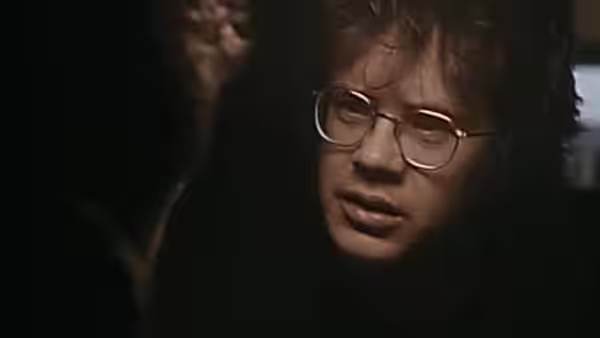
Tim Robbins makes Jacob’s confusion exhausting to watch without making him tiresome company. We believe that he needs an explanation, and his performance gives the search an urgency that the tangled plotting cannot always provide. He allows Jacob to seem vulnerable without asking us to admire the vulnerability. That matters in a film whose images can be forceful enough to turn the person experiencing them into a secondary concern.
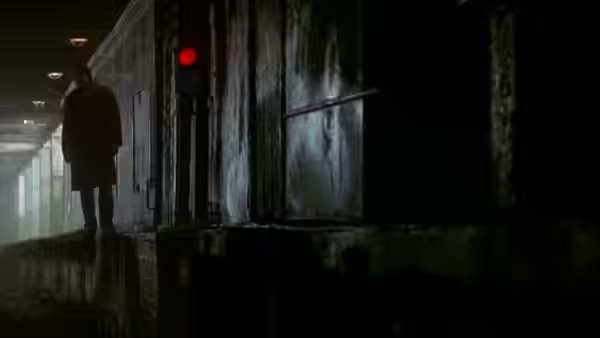
The subway descent is where the film’s craft becomes especially persuasive. Jeffrey L. Kimball’s cinematography makes the setting threatening, while Brian Morris’s production design gives the place enough everyday credibility to make its horrors difficult to dismiss. We felt trapped, because the subway remains ordinary enough that we cannot put it safely outside our own experience. The scene is frightening without requiring an explanation of every image, and Lyne is wise to let that uncertainty persist.
Tom Rolf’s editing keeps us close to Jacob’s confusion, although the accumulated disorientation eventually becomes tiring. After a while, the difficulty of connecting one passage to another starts to distract from our concern for the man. Maurice Jarre’s score contributes to the sustained unease, though it cannot make every suggestion of spiritual importance convincing. We respond most readily when the music serves the immediate fear, leaving Robbins to make us care about what that fear costs Jacob.
Rubin’s script is least persuasive when it insists on the significance of what we are seeing. The broad hints can make us conscious of being steered, and the more conventional horror effects are a disappointment beside the unsettling uncertainty of the subway. We do not need every question answered, but we do need the questions to hold our attention as firmly as Jacob does. There are passages where sorting through the possibilities starts to feel like homework.
Yet the film earns the right to be taken seriously. Its interest in death never feels like an excuse for treating Jacob as a disposable figure, and Robbins supplies the human credibility that the stranger images need. Within psychological horror, that sustained attention to the frightened person is worth a great deal. Lyne can be heavy-handed, but Jacob’s distress remains convincing even when the director overdoes the effects.
The 113 minutes ask for patience with a story that occasionally confuses complication with depth. We would still recommend it to anyone who values horror that stays troubling after the immediate scare, provided a little overstatement is tolerable. We would not put it on when sleep is already difficult.