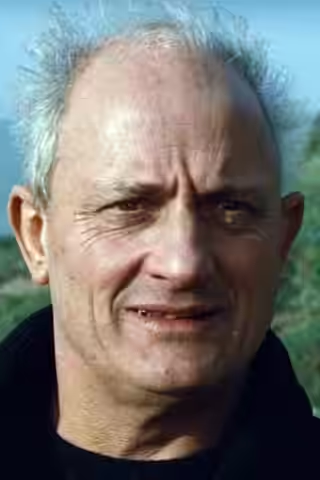
Jean Dasté makes quiet authority worth watching, using expressive eyes and spare delivery to convey feeling with little dialogue. We value his restraint, though the brief supporting parts do not always give us enough of him.
Fi1m perspective
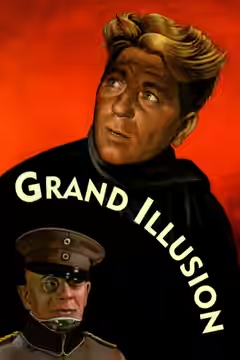
In Grand Illusion (1937), Jean Dasté plays the teacher among the prisoners, one member of a cast in which nobody feels misplaced. He fits into the company without insisting that we notice him separately. We were moved by the warmth of that ensemble, which gives even the smaller figures a place in its account of captivity. Dasté's restrained manner suits Jean Renoir's generosity. The film has a soft final stretch, but there is nothing false in its acting, and his modest contribution belongs to that achievement.
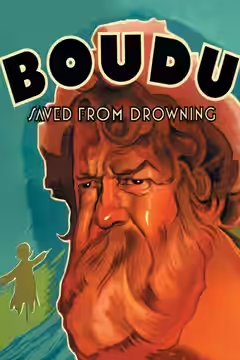
Boudu Saved from Drowning (1932) had introduced him to the screen as the student, also for Renoir. Michel Simon's stubborn presence is the chief attraction here; Dasté is a supporting player, and it would be odd to pretend otherwise. The comedy sometimes finds middle-class smugness too easy a target, but Renoir's moving camera keeps it from becoming stiff. It is worth watching as ensemble work, without expecting Dasté's small role to supply the whole evening.
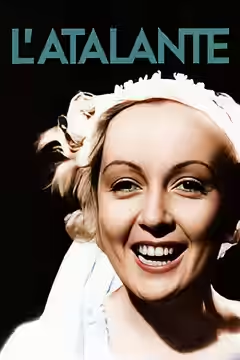
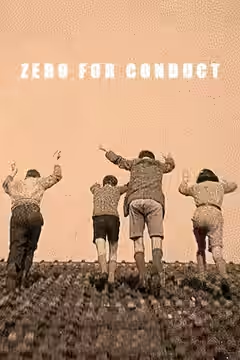
Jean Vigo gave him larger opportunities in Zero for Conduct (1933) and L’Atalante (1934): the supervisor Huguet, then Jean, the young barge skipper. These parts make a fuller case for the actor than the Renoir appearances alone. He conveys emotion with little dialogue, trusting his expressive eyes rather than explaining everything in speech. The restraint can accommodate intensity as readily as kindness. The leading part in L’Atalante gives that quiet approach more time to work.
The reduced screen presence after the 1930s reflects a decision to give theatre priority. A later return brought Alain Resnais's Muriel, or the Time of Return (1963), followed by work with François Truffaut in The Wild Child (1970) and The Green Room (1978). His unsettling Bernard Humbert in the latter is worth keeping in mind alongside the benevolent figures: we should not assume that a quiet elderly man is there to reassure us. Start with L’Atalante if a few minutes in a crowded cast are not enough.
Biography
Jean Dasté (also credited as Jean Georges Gustave Dasté) was a French actor and theatre director. He made his screen debut in Jean Renoir's Boudu Saved from Drowning (1932) and appeared as the teacher in Renoir's Grand Illusion (1937). He played leading roles in two films by Jean Vigo: the supervisor in Zero for Conduct (1933) and the title character in L'Atalante (1934).
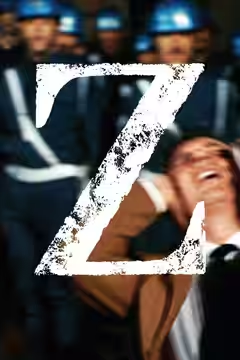
Dasté was a prominent figure in French theatre. In 1947 he became founding director of the Comédie de Saint-Étienne company. He later appeared in films by Alain Resnais and François Truffaut, including Z (1969), The Wild Child (1970) and The Man Who Loved Women (1977). He was married to actress Marie-Hélène Dasté, daughter of Jacques Copeau.