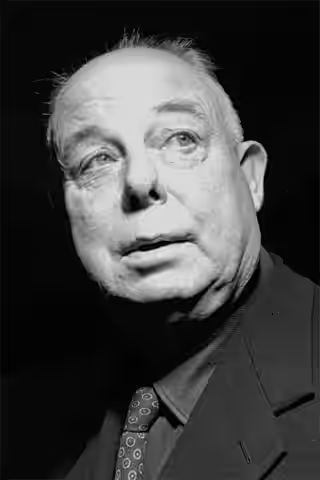
Jean Renoir keeps two or three people sharp in the frame at once and lets us decide who matters, so his films manage to like everyone in them without letting anyone off. The two 1930s films we have reviewed we would send a stranger to see.
Fi1m perspective
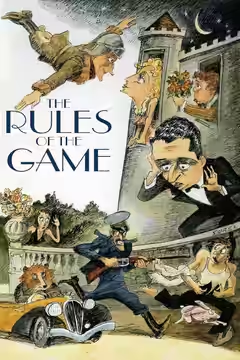
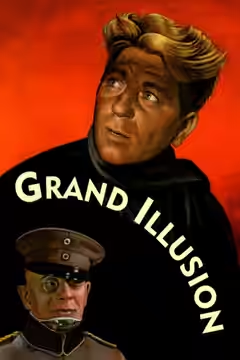
Somebody is always doing something at the back of a Jean Renoir shot. In Grand Illusion (1937) a conversation plays in front while men move behind it, and Christian Matras's camera keeps two or three of them sharp at different depths. In The Rules of the Game (1939) the long takes give us time to choose where to look, and paying attention to one guest does not require the rest to disappear. Renoir does not point. He sets a room going and trusts us to find the person who matters.
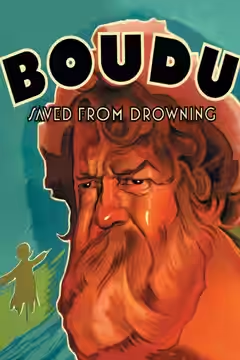
He began in the mid-1920s with silent features made to launch his first wife, Catherine Hessling, and hit his stride in the 1930s: Boudu Saved from Drowning (1932), Grand Illusion, La Bête Humaine (1938), The Rules of the Game. That last was met with hostility on release. After the fall of France he left for the United States in 1941 and worked in Hollywood until 1947; Swamp Water (1941) is the film usually cited for the strain, a studio picture that does not feel like his. He came back to Europe for colour and something closer to theatre, beginning with The River (1951), his first film in colour, shot in India.
The method needs actors who can hold a frame without being handed it. Erich von Stroheim's German commandant in Grand Illusion, absurd and grieving at once in his neck brace and corset; Marcel Dalio's Robert in The Rules of the Game, so easy in company that his failings hurt more; Renoir himself as Octave, warm enough to stop the house party becoming a parade of bad examples. Marguerite Renoir cut eight of his films, with Marthe Huguet on both of these, and they cut late, after the joke has landed and the silence has been felt. Eugène Lourié built four of his worlds, the cramped barracks and cold fortress of one, the readable upstairs and downstairs of the other. We knew the revue scene in Grand Illusion was coming, the chorus line in wigs standing to sing the Marseillaise at its guards, and it still put a lump in our throat, because he had spent forty minutes showing us how bored, hungry and kind these men were, so that standing up cost them something.
None of this is free. The opening of The Rules of the Game is a crowd, and it takes a while to work out whose disappointment matters to whom. Grand Illusion goes soft in its final stretch. Renoir told André Bazin in 1958 that "the camera finally has only one right – that of recording what happens. That's all." It is a modest claim and not quite honest; he decided what happened. Start with Grand Illusion. Give The Rules of the Game two viewings, since the first is mostly spent learning names.
Biography
Jean Renoir was a French film director, screenwriter, actor and producer. Born in Paris in 1894, he was the son of the painter Pierre-Auguste Renoir. After studying philosophy and serving in the First World War, he entered the film industry in the 1920s.
Renoir directed more than forty films from the silent era to the late 1960s. His 1930s work, including Grand Illusion (1937), La Bête Humaine (1938) and The Rules of the Game (1939), is associated with poetic realism and the Popular Front. He also appeared as Octave in the latter film, which he wrote, directed and produced.
Later films include The River (1951) and French Cancan (1955). Renoir became a US citizen after leaving France during the Second World War and wrote the memoir Renoir, My Father (1962).