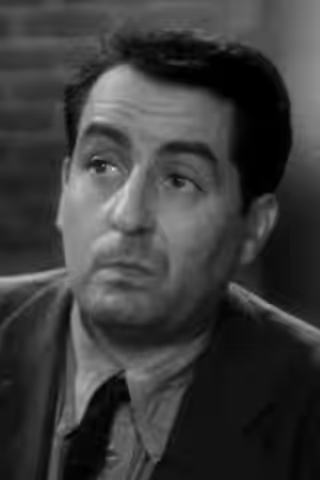
A Parisian voice in a crowd of officers, aristocrats and servants: Julien Carette played the man at the back who will not stop talking, and in the two Jean Renoir films we prize most he is the one you hear first.
Fi1m perspective
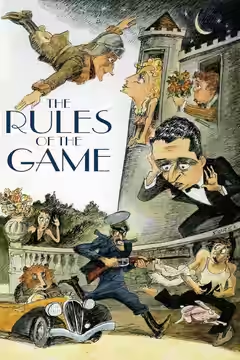
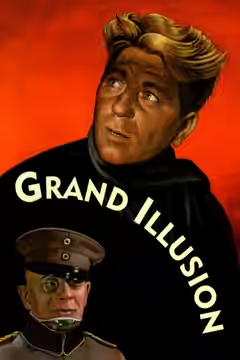
He is usually talking before we see him. Julien Carette's voice, pure Paris street and pitched at the volume of a man addressing a bar, arrives in a Jean Renoir scene a beat ahead of the rest of him, and it does not modulate for anybody. As Cartier, the vaudeville performer among the captured officers of Grand Illusion (1937), he speaks to the men around him as though they were at the next table; as Marceau, the poacher of The Rules of the Game (1939), he does the same to the gamekeeper he is supposed to be running from. Whatever else is going on in a Renoir scene, and there is always a great deal, you can find him with your ears.
We laughed at Marceau, and then caught ourselves siding with him against people with far better manners, because Carette plays every excuse the poacher makes as a small courtesy paid to whoever he is lying to. That is the trick, and he used it for more than thirty years. The bantering Parisian, the titi as the French call him, has never once believed the people around him outrank him, and Carette lets the rest of the cast find this out at their own pace.
He came to the cinema in 1931 after the twenties in Paris theatre, and for most of that decade he was a supporting player. Renoir made the difference. Four films together, three of them in three years: Grand Illusion, La Bête Humaine (1938), in which he plays Pecqueux opposite Gabin, and The Rules of the Game. After the war the work kept coming, more than 120 films by the finish: Gates of the Night (1946) for Marcel Carné, five films with Claude Autant-Lara including The Red Inn (1951), seven with Marc Allégret, more than with anyone. His last part was in 1964.
The complaint against him, and it is a fair one, is that he was cast the same way too often: valets, concierges, barmen, the man behind the counter with an opinion. The accent and the look made the decision for him. We have not seen enough of the 120 to say how thin the type wore, and The Red Inn is said to have put it to darker use, but we will not judge what we have not reviewed. In the two Renoirs the type is exactly what the films need. A war film about officers and a comedy about the rich both want someone who came in through the tradesmen's entrance and refuses to lower his voice, and Renoir knew what Carette was for.
Start with the two Renoirs, which is where everyone should start anyway, and listen for him. In Grand Illusion he is the one making a prison camp sound like a music hall; in The Rules of the Game he is the one the gamekeeper cannot catch and the household cannot quiet. We suspect French cinema found it useful to have one man in the building who did not know whose house it was.
Biography
Julien Carette was a French actor. Born Julien Henri Carette in Paris on 23 December 1897, he died in Saint-Germain-en-Laye on 20 July 1966.
He appeared in more than 100 films from 1931 to 1964, often in comic or character roles and frequently credited simply as Carette. He began in music halls and theatre before making his feature film debut in American Love (1931).
Carette collaborated several times with Jean Renoir, appearing as Cartier in Grand Illusion (1937), Pecqueux in La Bête Humaine (1938) and Marceau, le braconnier in The Rules of the Game (1939). Other notable films include La Marseillaise (1938), Gates of the Night (1946), The Red Inn (1951) and The Magnificent Tramp (1959).