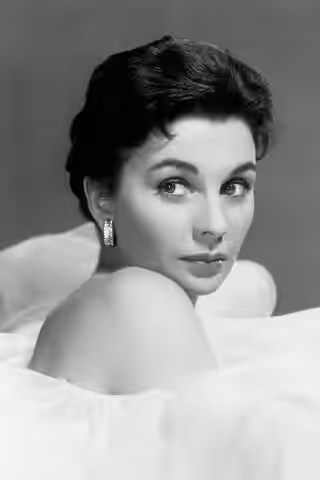
Jean Simmons is at her most interesting when her composure makes somebody else uncomfortable. We value the intelligence beneath her elegance, though Hollywood too often asked her to do little beyond restraining the leading man.
Fi1m perspective
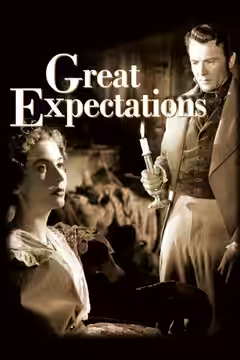
In Great Expectations (1946), Jean Simmons's young Estella is assured enough to make Pip's uncertainty painful. We winced at their childhood encounters because she makes the difference in confidence so clear. David Lean gets a performance from her that gives those scenes an awkwardness the adult romance cannot quite recover. John Mills remains an engaging Pip, but Valerie Hobson's Estella is harder to understand, and the later pairing asks for feelings the performances do not supply. Simmons gives us enough to understand the hurt without making Estella easier to like.
Black Narcissus (1947), directed by Michael Powell and Emeric Pressburger, gives her a different task as Kanchi, an openly sensual presence. We rate the film highly for its performances and for the colour and music that make the women's religious repression frightening. There is a caveat here, since its Himalayan setting sometimes encourages an outsider's simplifications. Simmons's presence belongs within a film whose pleasures need that qualification. Together, Estella and Kanchi show how misleading it would be to remember her only for decorum.
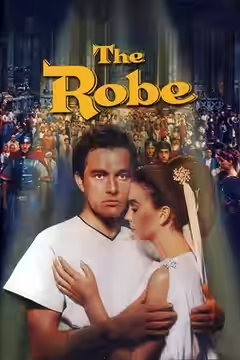
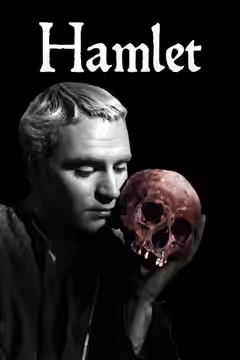
The early British films also include Hamlet (1948), with Simmons as Ophelia under director and co-star Laurence Olivier. Her Ophelia has an immediacy that keeps the poetry from sounding like a recital. The move to Hollywood in 1950 brought a recurring limitation: strong, decorous women whose job was to restrain the leading man. The underwritten role in The Robe (1953) is the kind of assignment that leaves an actor's intelligence apparent but insufficiently employed.
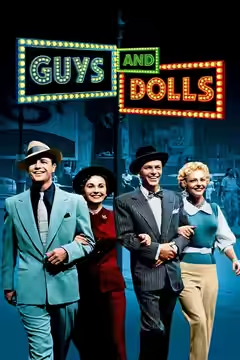
Guys and Dolls (1955) gives her comic timing and singing room as Sarah Brown, its strait-laced mission sergeant. Richard Brooks gives her a rewarding part in Elmer Gantry (1960), where her preacher Sister Sharon Falconer is more finely shaded than the writing alone would suggest. The caution with Simmons is that a capable performance does not automatically make a thin part worth an evening. Start with Lean, then try the Brooks film for a Hollywood role that gives her more to work with.
Biography
Jean Simmons was a British actress. Born Jean Merilyn Simmons in London on 31 January 1929, she began her career after training at the Aida Foster School of Dancing and made her screen debut in Give Us the Moon (1944). She first gained notice playing Young Estella in David Lean’s Great Expectations (1946).
She appeared in several British films of the late 1940s, including Black Narcissus (1947) and Hamlet (1948), in which she played Ophelia opposite Laurence Olivier. From 1950 she worked mainly in Hollywood, appearing in films such as The Robe (1953), Guys and Dolls (1955), The Big Country (1958), Elmer Gantry (1960) and Spartacus (1960). She became a US citizen in 1956.
Later credits include Star Trek: The Next Generation (1987) and Final Fantasy: The Spirits Within (2001). Simmons received Academy Award nominations for Best Supporting Actress for Hamlet and Best Actress for The Happy Ending (1969). She died in Santa Monica, California, on 22 January 2010.