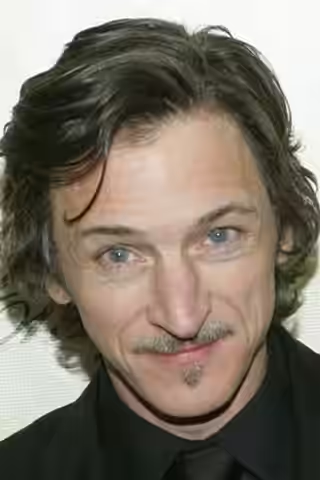
John Hawkes plays dangerous men as if they were reasonable ones, lowering his voice, offering a suggestion and leaving the other actor to work out what has just happened. In Winter's Bone and Martha Marcy May Marlene it is the most frightening thing on screen.
Fi1m perspective
In Martha Marcy May Marlene (2011), Patrick looks at the new girl and decides she is a Marcy May. Hawkes says it the way you might suggest a nickname to a colleague, lightly, as a kindness. Nothing in his voice tells Elizabeth Olsen's Martha that she has just been claimed, and nothing tells us either, which is why we found the moment more upsetting than we expected. He is deciding who she is, and he is so mild about it that there is nothing for her to push against. That is the Hawkes method in a single line: the threat is never announced, and the other actor has to do the worrying.
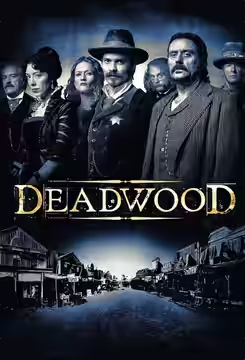
He had been working a long time before anyone noticed. Small film parts from the mid-1980s, some of them credited to John Perkins before he took the name Hawkes, then a steady stretch of television and supporting roles through the 1990s and early 2000s. Deadwood (2004) changed that. As Sol Star he stood beside Timothy Olyphant's Bullock in David Milch's town of talkers and was, in our phrase at the time, another distinct presence: a man worth watching for how he listened while Ian McShane did the speaking. Miranda July's Me and You and Everyone We Know (2005) gave him Richard, whose hesitant courtship with July's Christine is the part of that film we resented being taken away from. Eastbound & Down (2009) gave him Dustin, the brother who took Kenny Powers in and looks quietly exhausted by it.
Then Debra Granik cast him as Teardrop in Winter's Bone (2010), and the quiet turned into something else. He makes a frightening figure without letting the threat explain everything about the man, so Jennifer Lawrence has to stay attentive around him, and their scenes loosen a film that otherwise keeps Ree's resolve at the centre of every exchange. Sean Durkin's Patrick followed a year later. The Sessions (2012), a lead part as the polio survivor Mark O'Brien, we have not reviewed, so we will only note that it exists.
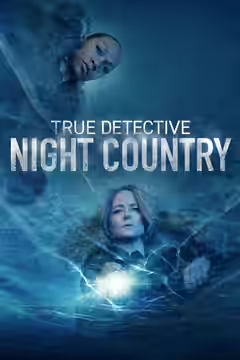
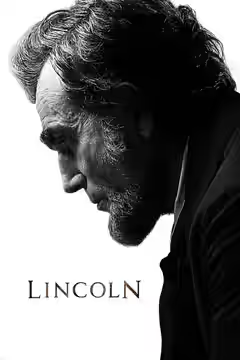
Since then he has mostly worked in bigger, busier rooms: Robert Latham in Steven Spielberg's Lincoln (2012), Charlie in Martin McDonagh's Three Billboards Outside Ebbing, Missouri (2017), and Hank Prior in Night Country (2024), the fourth season of True Detective, where he and Fiona Shaw fill out Issa López's Alaskan town under Florian Hoffmeister's sodium lamps. In none of these did we single him out. That is partly the parts and partly the method. An actor who works by not announcing himself will, in a crowded frame, sometimes go unannounced.
He has said he plays a lot of characters you might want to avoid, and directors keep casting him that way, because he is so good at it. If you want to see why, start with Granik's Ozarks. Do not watch Hawkes. Watch Lawrence watching him.
Biography
John Hawkes is an American actor. Born John Marvin Perkins on 11 September 1959 in Alexandria, Minnesota, he adopted the stage name John Hawkes to distinguish himself from another performer.
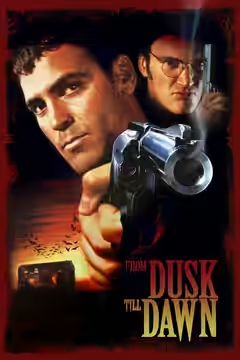
He played the merchant Sol Star in the HBO series Deadwood (2004–2006) and its 2019 film adaptation. His film roles include Roger in Contagion (2011), as well as appearances in From Dusk Till Dawn (1996), American Gangster (2007), Winter's Bone (2010), The Sessions (2012), Lincoln (2012), Everest (2015) and Three Billboards Outside Ebbing, Missouri (2017). Television credits also include parts in Lost (2004) and True Detective (2014).
Hawkes has received two Independent Spirit Awards and nominations for an Academy Award, Primetime Emmy Awards and a Golden Globe Award.