A documentary man who learned to wait, John Irvin gave le Carré seven hours and Alec Guinness all the silence he needed, then spent two decades in Hollywood proving he could do noise as well. It is the waiting we would keep.
Fi1m perspective
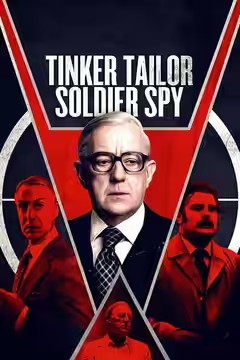
Watch what John Irvin does after a line has landed. In Tinker Tailor Soldier Spy (1979) somebody answers a question, the scene is by any ordinary rule over, and the camera stays on the face to see whether it will offer a second answer the mouth did not. Clare Douglas and Chris Wimble cut the seven hours to that rhythm, and Alec Guinness, who could hold a silence longer than most actors can hold a line, fills them. It is slow in a way that would get a director sacked now. It is also why the thing still works.
He came to it the long way round. Irvin started in the 1960s making vérité documentaries for the BBC and his own company, Mithras Films, some of them in conflict zones, and the habit of watching people rather than arranging them never left him. British television drama followed in the 1970s, and Tinker Tailor, written by Arthur Hopcraft, who worked with him three times, was the one that got him noticed abroad. Hollywood took him up almost at once: The Dogs of War (1980), from Frederick Forsyth, with Christopher Walken; Ghost Story (1981), with Fred Astaire among a cast of veteran actors; Raw Deal (1986), with Arnold Schwarzenegger; Hamburger Hill (1987), his Vietnam film. Then independent films and occasional television into the 2010s. He died on 11 August 2026, aged 86.
He said of himself, "I’m a bit split. I like playing with expensive toys, yet I also like the miniatures. I hate being pigeonholed, and I like to do the unexpected." That is a fair account of the filmography and of its problem. The documentary training shows in Hamburger Hill, which is remembered for staging combat as something that happens to people rather than as a set of thrills, and in the small, patient Turtle Diary (1985). It is harder to find in a Schwarzenegger picture, and Robin Hood (1991) had the misfortune to arrive alongside other films telling the same story. A man who will take anything sometimes takes the wrong thing, and Irvin's reputation rests on the television and a handful of the features rather than on the run as a whole.
Our feeling is for the television. Geoffrey Burgon kept his music out of Tinker Tailor until the credits, where a boy sings the Nunc Dimittis, and by the seventh week we found the hymn had stopped sounding like a hymn and started sounding like a verdict on everyone we had watched, Smiley included. A composer does not manage that alone; it takes a director deciding early that nothing will be underlined until the end. Guinness credited Irvin afterwards with nerve, and nerve is the right word for a man who would let a scene run on past its point and trust us to stay.
The 1980s features are for the curious and can wait. Start with the seven hours, in order, one a week if you can bear it, and notice how often nothing is said and how much you hear.
Biography
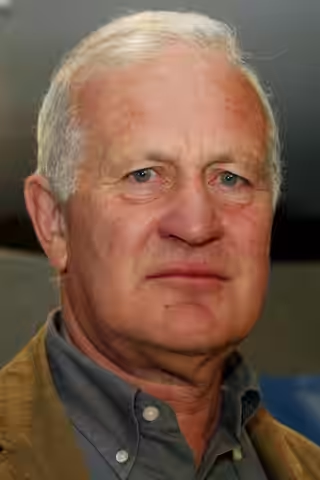
John Irvin (7 May 1940 – 11 August 2026) was an English film and television director. He trained at the London Film School and began his career directing documentaries and short films before moving into television drama in the 1970s.
Irvin directed the BBC miniseries adaptation of John le Carré’s Tinker Tailor Soldier Spy (1979), which starred Alec Guinness and was nominated for a BAFTA for Best Drama Series. He later directed feature films including The Dogs of War (1980), Raw Deal (1986), Hamburger Hill (1987), Next of Kin (1989) and Robin Hood (1991).
His other credits include Ghost Story (1981), When Trumpets Fade (1998) and Mandela's Gun (2016). Irvin received multiple BAFTA nominations over his career.