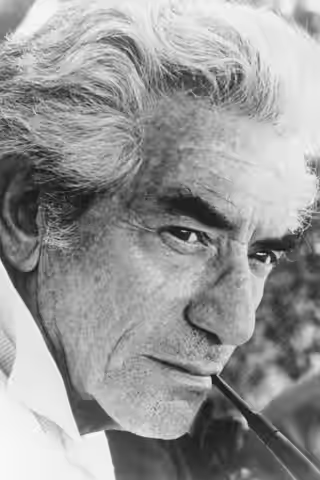
A character actor who spent twenty years being disliked in under a minute, then was let loose by John Cassavetes at sixty and turned out to have a wounded man behind the craggy face. The big parts came late and did not come often.
Fi1m perspective
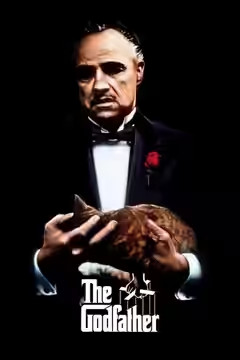
A studio boss is told what the Corleone family would like, and he says no, with the flat certainty of a man who owns everything he can see. John Marley's part as Jack Woltz in The Godfather (1972) is a short one, and the scene with the horse is one of the things people remember from a film they remember a great deal of. Our own review does not single him out, and in a picture that crowded that is fair. But what stays with us is not the horse. It is how quickly the certainty leaves his face, and how old and frightened the man underneath turns out to be. We felt sorrier for Woltz that morning than the film wanted us to, and that is Marley's doing.
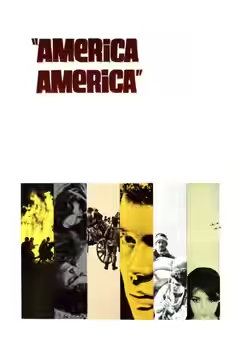
That face was his living for a long time before anyone asked it to do more. From the late 1940s he was a heavy, on television and in uncredited film bits, the sort of craggy, unsympathetic presence a director hires when he needs someone to be disliked fast. In Elia Kazan's America America (1963) he is Garabet, the Constantinople porter who tries to make an anarchist of young Stavros, and he is one of the credited anchors of a long, hard film. In Cat Ballou (1965) he is Jane Fonda's father. Good work, none of it the kind that gets a man's name above the title.
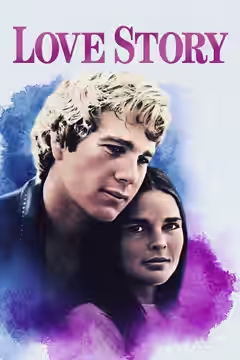
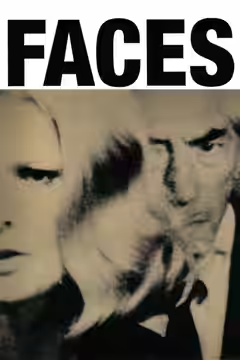
Then, at sixty, John Cassavetes cast him as Richard Forst in Faces (1968) and let him improvise, and something opened. We have not reviewed Faces and will not judge it here, but Marley himself said, in 1972, that it was the first time he had been permitted to do and explore whatever he wanted, and that his parts only began to ask an audience for sympathy from that film on. He and Lynn Carlin played opposite each other twice. What followed came through that door: Phil Cavilleri, the heroine's father in Love Story (1970), and then Woltz, a heavy again, but a heavy you can pity.
The criticism is the usual one for a character actor who breaks through late. He had been typecast for twenty years, and once the three big parts were behind him the roles never again reached that size; he kept working, in film and on television, until his death in 1984. That is not a tragedy. Character actors are hired for what their faces already say, and his said one thing clearly.
If you want the measure of him, watch Garabet in America America, trying to make a revolutionary of a boy who only wants to get to New York, and then Woltz in The Godfather. Nine years apart, the same face, doing two different jobs.
Biography
John Marley (born Mortimer Leon Marlieb) was an American actor and theatre director. Born in Harlem, New York City, on 17 October 1907, he studied at the City College of New York before pursuing acting. He served in the US Army Signal Corps during the Second World War.
Marley appeared in nearly 250 films and television productions over a career spanning more than 45 years. He gained acclaim for his leading role in John Cassavetes' Faces (1968), for which he received the Volpi Cup for Best Actor at the Venice Film Festival. He was nominated for an Academy Award for Best Supporting Actor as Phil Cavilleri in Love Story (1970) and is widely recognised for his portrayal of Jack Woltz in The Godfather (1972). Other notable credits include Cat Ballou (1965), The Car (1977) and Hooper (1978).
Marley died in Los Angeles on 22 May 1984, aged 76, following open-heart surgery.