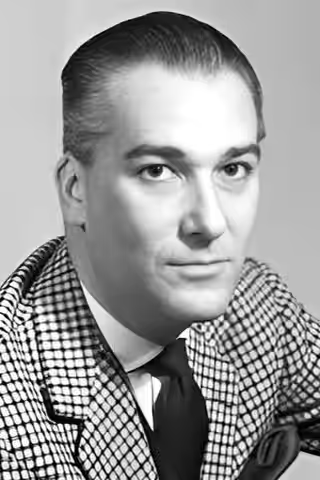
Vilallonga played the same man for nearly forty years: the correct, well-tailored aristocrat a heroine marries, kisses or leaves, and never quite looks at. He was good at it, and the best directors of his time knew what he was for.
Fi1m perspective
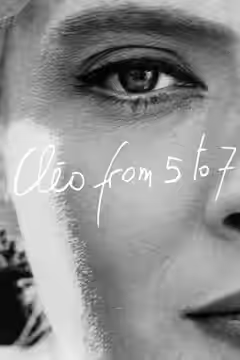
In Cléo from 5 to 7 (1962) José arrives at the singer's flat, kisses her, looks at his watch and goes. That is more or less the whole part, and it is most of the career in miniature. The suit is right, the manners are right, and the attention is already somewhere else.
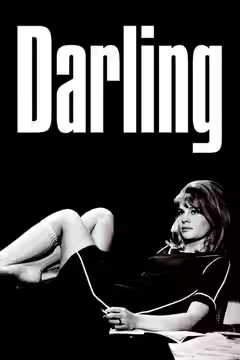
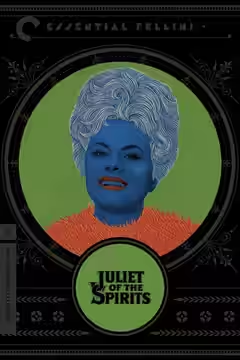
He came to acting late, after a career in diplomacy, which may be why he always looked as if he had been briefed. His debut was in Louis Malle's The Lovers (1958), as Raoul Flores, one of the men in a film about a woman choosing between them. Then came the wealthy Brazilian suitor in Breakfast at Tiffany's (1961), José for Agnès Varda, and in 1965 two films at once: the Prince Cesare della Romita whom Julie Christie's Diana marries in Darling, and a part in Fellini's Juliet of the Spirits. From then on the roles got smaller and the type did not change. By Nacional III (1981), for Luis García Berlanga, he was playing an aristocrat called Álvaro in a satire about aristocrats, and critics noticed the joke.
What he did well was decline to ask for sympathy. We felt nothing for José in Cléo, and then we noticed that was the point: Varda gives him a kiss and a glance at his watch so that Cléo's afternoon has one door that stays shut, and Vilallonga does not knock on it. Our review called him a cardboard rich boyfriend and added that he was meant to be, which is about as much as the part could bear. In Darling the Prince is the place Diana ends up rather than a man she meets, and the film is right not to make more of him. A warmer actor would have unbalanced both pictures.
The criticism, and it followed him for decades, is that this was all there was: the same indolent, cultivated noble, offered to one director after another, and taken. He did not disturb the arrangement. Asked about it, he said, "Nunca he utilizado la imagen de caballero español", he had never used the image of the Spanish gentleman, which is true only in the sense that the gentleman he used was not particularly Spanish.
If you want to see what he was for, watch Cléo and Darling in the same week. In one he is on screen for a few minutes; in the other he is a marriage. In both, the woman is the film and he is the money and the manners she has to get past. He knew it, and he kept his coat on.
Biography
José Luis de Vilallonga was a Spanish actor, author and nobleman. Born in Madrid, he held the title of 9th Marquess of Castellbell and was a Grandee of Spain. He made his film debut in Louis Malle's The Lovers (1958) and went on to appear in more than sixty films, often in supporting roles.
Among his best-known credits are Breakfast at Tiffany's (1961) as José da Silva Pereira, Cléo from 5 to 7 (1962), Any Number Can Win (1963), Juliet of the Spirits (1965) and Darling (1965) as Prince Cesare della Romita. He also worked as a journalist for EFE and magazines including Paris-Match and Vogue, and wrote an authorised biography of King Juan Carlos of Spain, published in 1993.
Vilallonga died in Andratx, Mallorca, in 2007.