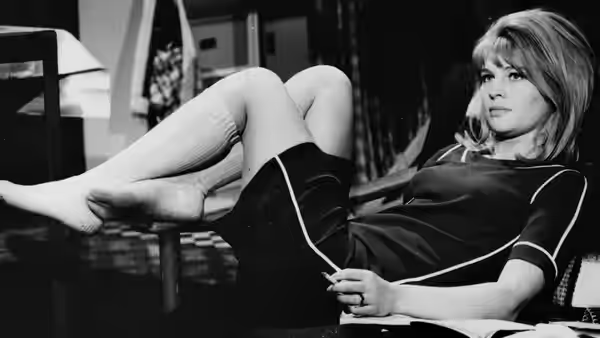
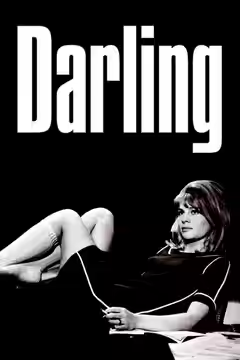
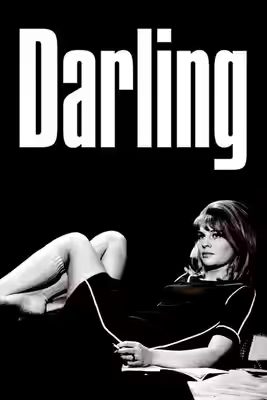
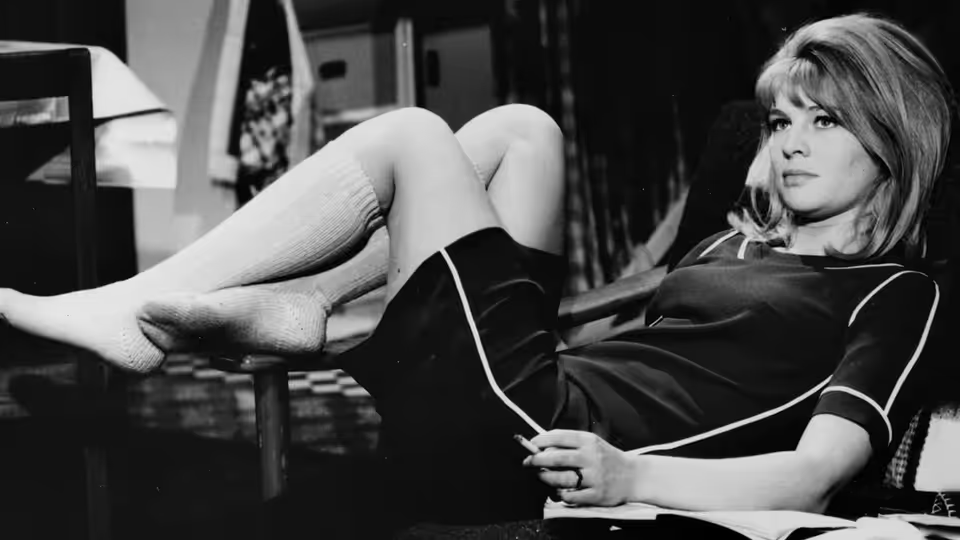
Woman in short black dress reclining with legs raised on chair
Film review

Darling

1965 · Directed by John Schlesinger · 2h 08m

In a sentenceThe camera adores her, the script despises her, and Dirk Bogarde looks tired on behalf of both

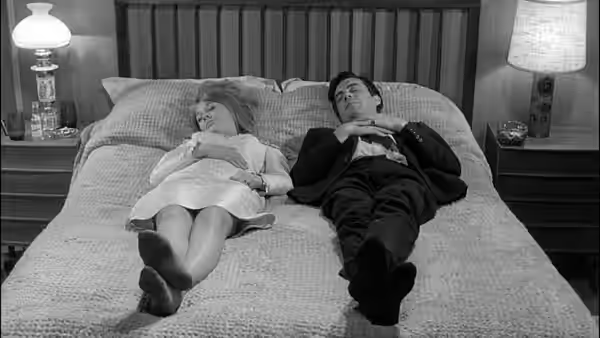
London in the middle of the 1960s. Diana Scott (Julie Christie) is a young model with a husband, Tony Bridges (Trevor Bowen), a flat she is bored of and a face that photographs well. Stopped in the street by Robert Gold (Dirk Bogarde), a television interviewer filming a piece about the young, she flirts with him on camera and then off it, and before long both of them have left their marriages for a flat of their own and a great many evenings reading in bed. Diana’s story is told in her own voice, to a women’s magazine, while the film shows what actually happened. At a party she meets Miles Brand (Laurence Harvey), an advertising executive who can put her face on posters and get her into films, and Robert does not like him.

Plays from YouTube when you press play; nothing loads from them until then.

Fi1m review

John Schlesinger’s portrait of a girl who gets everything she points at is sharp, handsome and rather pleased with itself. Julie Christie and Dirk Bogarde make it worth an evening; the script’s contempt for her is worth an argument afterwards.

John Schlesinger’s Darling opens on a hoarding. A poster appealing for famine relief is pasted over, sheet by sheet, with the face of Diana Scott on a magazine cover, and for the next 128 minutes the film keeps making the same point with slightly less economy. Diana (Julie Christie) is telling her life story to a women’s magazine, and Frederic Raphael’s screenplay lets us hear her version while Schlesinger shows us what happened. The gap between the two is the film. It is a clever device, and it is also a thumb on the scales, because she is never once allowed to be right.

What she wants is not complicated. Robert Gold (Dirk Bogarde), a television interviewer, stops her in the street for a piece about the young, and within a few scenes they have both left their marriages for a flat and a life of long evenings and cheap wine. Then she meets Miles Brand (Laurence Harvey), who runs advertising accounts and knows people. Robert talks to her about books. Miles can get her work. The rest of the film is the argument between the two men, conducted mostly over her head.

Christie plays Diana as someone who has learned that a laugh will get her out of any room she does not want to be in, and she uses it on everyone, including us. She is quick, funny and physically restless, forever reaching for a cigarette or a coat. The film thinks she is empty. Christie does not agree, and she is right; watch her face when Robert is being clever at her expense and there is somebody there who knows exactly how she is being judged and has decided not to mind. It is the performance that made her, and it deserved to.

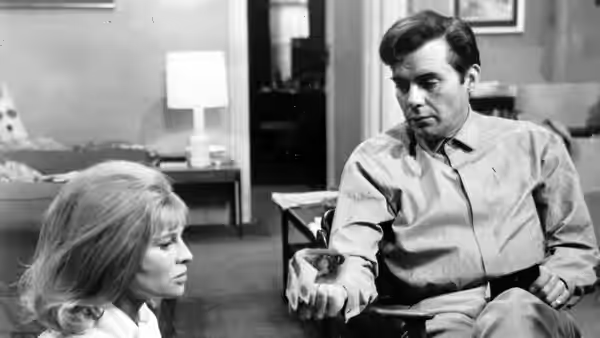
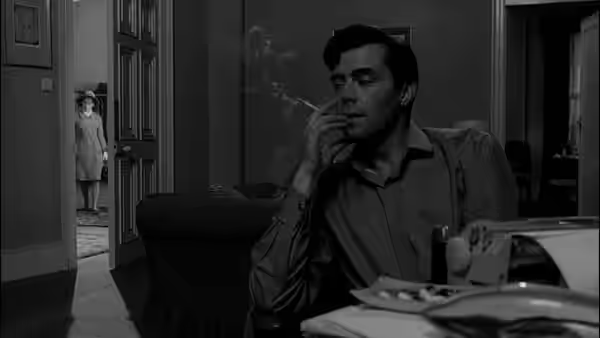
Bogarde is the film’s conscience and also its worst snob, and he plays both without asking us to like him. Robert speaks in finished sentences, corrects her, forgives her and then does not, and Bogarde lets a real tiredness show under the tweed. When he finally tells her what he thinks of her, late in their time together, we found ourselves on her side, which we suspect Raphael did not intend, and it is the moment the film became interesting to us rather than merely well made. Harvey, as Miles, is all polish and no temperature, which is what is asked of him, and it is a small pleasure to hear him make a proposition sound like a quarterly report.

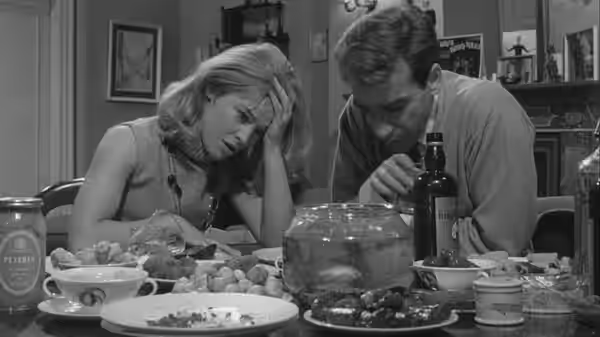
Kenneth Higgins shoots London in hard black and white, streets and stairwells and shop windows, and gets close enough in the interview scenes that the film has the grain of a news report. Jim Clark cuts against the voiceover: Diana says one thing about herself and we see the other. John Dankworth’s score is cool jazz, brass over a walking bass, and it gives the parties a lift the people at them do not have. Julie Harris dresses Christie in clothes that are neat at the start and expensive later, and you can follow the plot from the hats.

The satire is where it lets itself down. Raphael has a good line for everyone and a kind word for no one, and the party scenes, in which the rich are bored and cruel in ways anybody could have predicted, run past their point. Roland Curram’s Malcolm, the photographer who becomes Diana’s friend, is the one person the film seems fond of, and it treats his private life as a running joke. The moral, that a girl who wants nice things deserves whatever she gets, is delivered with a straight face by a glossy film full of nice things. We laughed at the dialogue and felt slightly grubby about the aim.

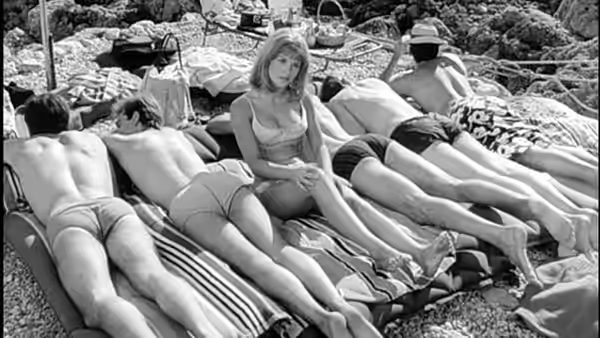
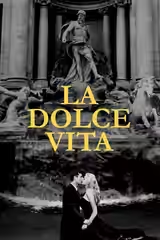
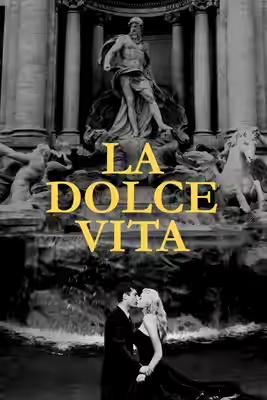
Schlesinger’s Billy Liar (1963), which also had Christie in it, was kinder to its dreamer, and this is the same director and producer, Joseph Janni, looking up the social ladder instead of down. The view is colder. The comparison the film invites is Fellini’s La Dolce Vita (1960), and the difference is plain: Fellini enjoyed the party. Schlesinger watches it from the doorway and disapproves.

It runs 128 minutes and carries a 15 certificate, and it is worth your evening for Christie, for Bogarde and for Higgins’s London, which is a place rather than a period. Watch it with someone who will take Diana’s side. The film will not, and that is the argument you will be having at the end.

Critical consensus AI synthesised

62
Positive
7
Mixed
2
Negative
3

Most critics come down in favour of Darling, though the approval is measured rather than warm. Almost every review, including the hostile ones, singles out Julie Christie for praise, and several also credit Dirk Bogarde with the film’s most humane presence. The reviews from its sixtieth-anniversary re-release find the satire of Swinging London has kept its verve, and read Diana’s rise and hollow success as sharper about fame and its costs than the film’s reputation suggests. The original 1965 notices are approving too, treating it as a sleek study of modern mores.

The spread is wide. The dissent comes almost entirely from critics writing between 2004 and 2016: Time Out calls the direction derivative and the script studied, Slant finds it drab and confused, and The AV Club argues it feigns hipness while pushing a prudish moral line. The mixed reviews find the second half slides towards soap opera and the tone inconsistent. Christie remains the one thing nobody disputes.

The Times
29 May 2025 · ★★★★★ · Kevin Maher
100

The review positions the film as a definitive Swinging London movie that has gained gravitas, calling it a feminist picaresque about an It girl’s rise and moral emptiness, comparable in relevance to modern works like Barbie. It praises the Oscar-winning central performance, satirical screenplay, and lively cinéma vérité style capturing 1960s London.

Read the full review →
Radio Times
★★★★ · David Parkinson
80

The review praises the film as an astute snapshot of its era with ongoing relevance, highlighting Julie Christie's vivacious Oscar-winning performance and Dirk Bogarde's strong supporting turn.

Read the full review →
The Guardian
29 May 2025
80*

The critic finds Schlesinger’s 1965 satire still possesses verve and ambition on its 60th-anniversary re-release, praising its witty take on swinging London and the director’s skill with innocents navigating society. Some dated elements and brittle dialogue are noted, but the overall energy and performances, especially Christie’s restrained lead, are highlighted positively.

Read the full review →
Evening Standard
5 April 2012 · Nina Caplan
75*

John Schlesinger's witty exploration of jetset mores follows bubbly beauty Julie Christie as she finds the path to fame and fortune bumpier than imagined. These neglected 1960s British New Wave films are well worth a look.

Read the full review →
The New York Times
4 August 1965 · Bosley Crowther
70*

The critic notes the film's sharp satire of selfish, ambitious social types in swinging London while portraying the heroine's restless quest. It is presented as a sleek, robust character study of modern mores.

Read the full review →
Variety
31 December 1964 · Variety Staff
70*

The film is described as a British 'Dolce Vita' centered on an immoral young model who drifts through affairs and social climbing. Schlesinger's direction and Julie Christie's performance are singled out for strong praise.

Read the full review →

Straight answers AI written, from our review

Is Darling worth watching?
Darling is worth watching for Julie Christie, Dirk Bogarde and Kenneth Higgins's hard black-and-white London, and we scored it 70. The script holds its heroine in contempt and the party satire runs past its point, so it suits viewers who like a sharp, handsome drama they can argue with afterwards rather than one they can simply enjoy.
How long is Darling, and what is it rated?
Darling runs 2h 08m. It is a drama and romance film.
Where can I watch Darling in the US?
Darling is streaming on Tubi and The Roku Channel in the US. It leaves Tubi on 1 October. Availability is checked daily; the links above go straight to each service.
How violent or frightening is Darling, and is it suitable for children?
Darling carries a UK 15 certificate and contains no violence or frights to speak of; it is a drama about adultery, ambition and the London social round of the 1960s. The adult content lies in the affairs and the cruelty of the dialogue rather than anything shown, so it is unsuitable for children on interest as much as on certificate, and fine for older teenagers.
How does Darling compare to Room at the Top?
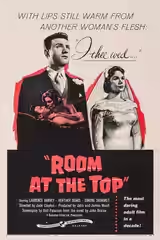
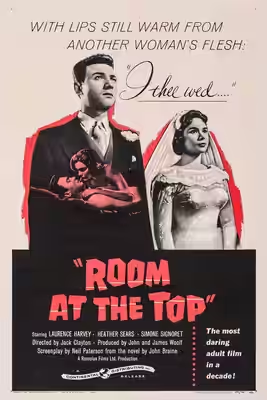
Darling and Room at the Top both watch a young person climb the English social ladder, with Laurence Harvey in each, but Clayton's film climbs from the bottom and makes its clerk pay for every rung, while Schlesinger's looks up from the middle and disapproves. The earlier film is the harder and more humane of the two; ours has the better central performance in Christie.
What should I watch after Darling?
After Darling, try La Dolce Vita (1960, Fi1m 88): The Roman original: the same parties, the same emptiness, a director who enjoyed them. Then Room at the Top (1959, Fi1m 82): Laurence Harvey climbs the same ladder from the bottom and pays for every rung; and Cléo from 5 to 7 (1962, Fi1m 88): Ninety minutes in a young woman’s Paris, filmed with curiosity instead of judgement.

Cast

Awards

Academy Awards, 1966

Nominated
Best Director
Nominated
Best Picture
Won
Best Actress
Won
Best Costume Design, Black-and-White
Won
Best Writing, Original Screenplay

BAFTA Film Awards, 1966

Nominated
Best British Film
Won
Best British Screenplay

Directors Guild of America Award for Outstanding Directing – Feature Film, 1965

Nominated
Directors Guild of America Award for Outstanding Directing – Feature Film

Golden Globes, 1965

Nominated
Best Actress – Motion Picture Drama
Nominated
Best Director
Won
Best English-Language Foreign Film

National Board of Review Award for Best Actress, 1965

Won
National Board of Review Award for Best Actress

If you liked this, try…

  1. La Dolce Vita (1960, Fi1m 88)The Roman original: the same parties, the same emptiness, a director who enjoyed them.

  2. Room at the Top (1959, Fi1m 82)Laurence Harvey climbs the same ladder from the bottom and pays for every rung.

  3. Cléo from 5 to 7 (1962, Fi1m 88)Ninety minutes in a young woman’s Paris, filmed with curiosity instead of judgement.

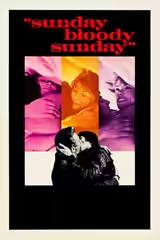
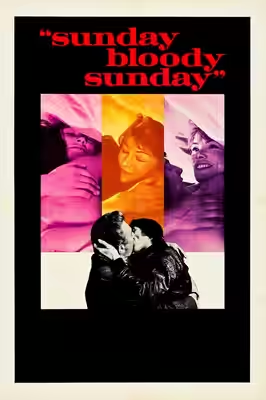
  4. Sunday Bloody Sunday (1971) · not reviewed yetSchlesinger six years on, wiser and far gentler about people who want two things.

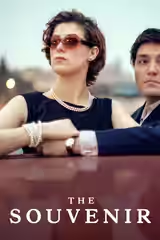
  5. The Souvenir (2019, Fi1m 84)A young woman, an older man and a London flat; this time she gets the last word.

Free account

Know what to watch tonight

Two lists that know where things are streaming, collections you can share, your own score beside ours, and Discover that remembers what you have seen.

  • Want to see, sorted by what is streaming now
  • Seen, with your score out of ten
  • No adverts, ever