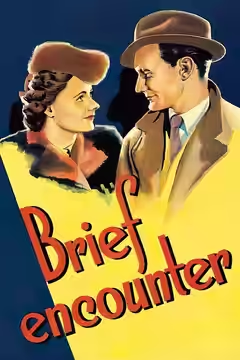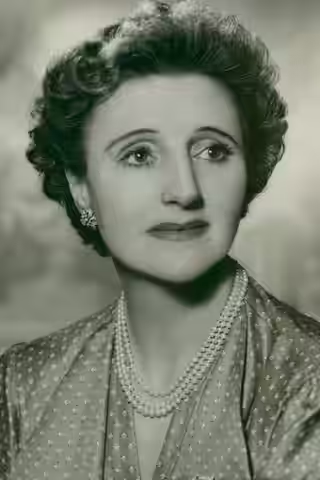
Joyce Carey spent a long career playing women who believe themselves a cut above everyone else present, and she played them without contempt. The station buffet in Brief Encounter is the proof: a small part, exactly judged, and remembered for good reason.
Fi1m perspective
Listen to what Joyce Carey does with a vowel. Her women of the 1940s hold their consonants carefully and lift their vowels a notch when they think someone worth impressing has come in, and it is the lifting, not the refinement itself, that tells you who they are. Myrtle Bagot, the manageress of the station buffet in Brief Encounter (1945), is the one everyone remembers: she runs her counter as if it were a drawing room and is faintly disappointed in everyone who comes to it. David Lean's film is about two people falling in love on the platform outside, and Carey is there to remind us that the world goes on being petty and orderly while it happens.
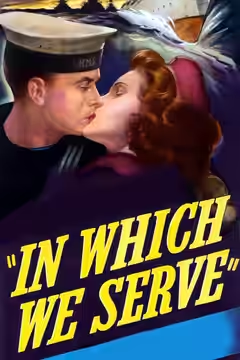
She had been at it a long time before the camera noticed. Her stage debut was in 1916, and from 1926, when she first appeared in one of his plays in New York, she belonged to Noël Coward. She was in Tonight at 8.30, toured with him for ENSA during the war, and made five films with him. Coward knew exactly what she could do and kept writing rooms for her to disapprove of. She had worked in silent pictures, but it was In Which We Serve (1942) that made her a screen face, and Coward's name is on that too.
Kath Hardy in In Which We Serve is the part we would send a sceptic to first. Bernard Miles's chief petty officer talks, and Carey listens, and we found we were watching her rather than him in the scenes at the Hardy semi, because she had decided what Kath thought about every remark before it was finished. We said in our review that she gets a great deal from almost nothing, and that is the whole of her method. She does not ask for the scene. She waits to be given it, and is usually given it.
The limitation is the obvious one. The parts were small, and as she grew older they grew alike: aristocratic dowagers, aunts and spinsters, all ladylike, all quietly certain, most of them a little sour. Miss Winterton in The Way to the Stars (1945) and Violet Bradman in Coward's Blithe Spirit (1945) sit close to Myrtle Bagot on the shelf. Cry, the Beloved Country (1951) gave her a straighter dramatic part in a larger production, but it did not change the pattern. She never became a star and she does not appear to have minded. She was still on stage in 1984, in Pygmalion, and on television into the late 1980s.
Start with the two Lean films, which are the ones we have written about and the ones that hold up. Then watch Brief Encounter again and, this time, keep an eye on the counter.
Biography
Joyce Carey (born Joyce Lilian Lawrence) was an English actress. Born in London on 30 March 1898 and died there on 28 February 1993, she was the daughter of actor Gerald Lawrence and actress Lilian Braithwaite. Her stage career began in 1916 and continued until the late 1980s.
She had a long professional and personal association with Noël Coward, appearing in several of his plays and films. On screen she played Myrtle Bagot in Brief Encounter (1945), Violet Bradman in Blithe Spirit (1945) and Mrs Hardy in In Which We Serve (1942). Other film roles include appearances in The Way to the Stars (1945), London Belongs to Me (1948) and The Black Windmill (1974). She also worked extensively in television.
Carey was awarded the OBE in 1982. She wrote two plays under the pseudonym Jay Mallory.