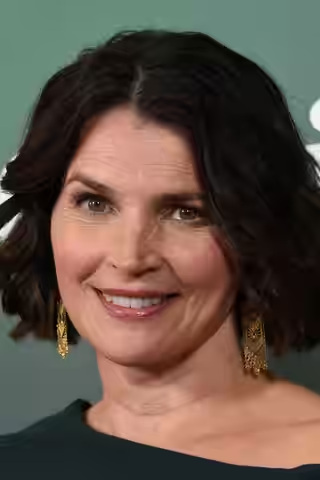
Julia Ormond was a Hollywood leading lady for about two years in the mid-1990s and has spent the decades since in supporting parts, often as the person the story is being told to. She listens well. We would like to see her given more to do.
Fi1m perspective
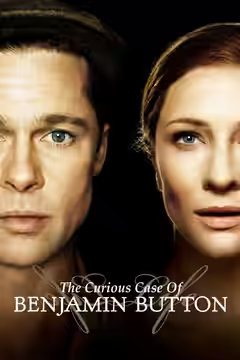
In The Curious Case of Benjamin Button (2008) Julia Ormond sits at a hospital bedside in New Orleans and reads a diary aloud while a hurricane comes in. In Che: Part One (2008) she is Lisa Howard, the journalist who asks Guevara the questions we would ask and gets the answers a politician gives. Two films in the same year, and in both she is the person the story is delivered to. It is a job actors are rarely thanked for. Ormond does it cleanly, with her attention on the other actor, and without asking for more of the frame than she has been given.
It was not always the size of the part. She started on British television in Traffik (1989), made her film debut in The Baby of Mâcon (1993), and within two years was opposite Brad Pitt in Legends of the Fall (1994) and Harrison Ford in Sabrina (1995), with First Knight the same year. Then the leads stopped. The Sabrina remake was measured against the Audrey Hepburn film and some critics found it wanting, and a view settled that her career had peaked early. From the late 1990s she moved to supporting roles in independent films and television, including Temple Grandin (2010), Mad Men (2012–2015) and The Walking Dead: World Beyond (2020–2021). Her own account is more cheerful than the critics': the ingénue roles, she has said, were not as layered, and she has found the later work increasingly liberating.
On our pages the evidence is thin, and we should say so. Steven Soderbergh gives her a function in Che and she performs it; she is the one person in the first half who talks to Guevara as an outsider, and the film is better for having her there. David Fincher gives her less. We grew impatient every time Benjamin Button cut back to that hospital bedside, Cate Blanchett rasping under prosthetics, Ormond turning pages, the wind picking up, because each return stopped the story so the film could tell us how to feel about it. None of that impatience attached to her. The fault is the script's framing, and she has almost nothing to play in it, and she plays that nothing without fuss.
Two listening parts do not tell us what Ormond does when handed the story herself, and the leading lady of 1995 exists on our pages only as a memory. What we can say is that she has spent thirty years being the person on screen who is not the point, and doing it well enough that we keep wondering what happens when she is.
Biography
Julia Ormond is an English actress. She was born on 4 January 1965 in Epsom, Surrey, and trained at the Webber Douglas Academy of Dramatic Art, graduating in 1988.
Ormond rose to prominence in the 1990s with roles in Legends of the Fall (1994), First Knight (1995) and Sabrina (1995). Later film credits include Inland Empire (2006), Che: Part One (2008) as Lisa Howard, The Curious Case of Benjamin Button (2008) and My Week with Marilyn (2011). On television she played Marie Calvet in Mad Men and Elizabeth Kublek in The Walking Dead: World Beyond (2020–2021). She won a Primetime Emmy Award for her performance in the HBO film Temple Grandin (2010).