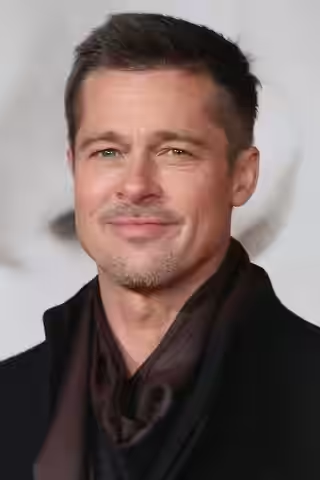
Pitt's trade is to look as if nothing is bothering him, and his best directors have put something behind that face that is. Left simply calm, or asked to be simply loud, he is less interesting than his billing.
Fi1m perspective
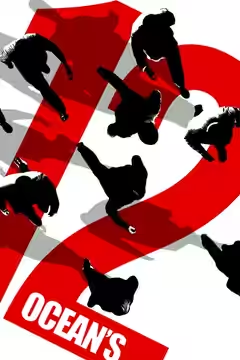
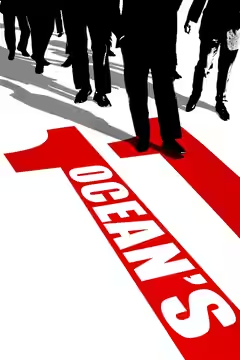
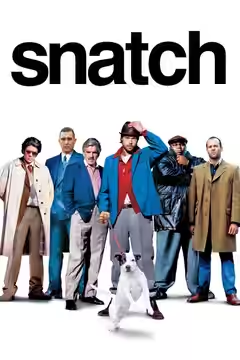
In Ocean's Eleven (2001) Rusty Ryan eats something in nearly every scene he is in, and it tells us more than dialogue could: here is a man who has never been worried. That is what Pitt does. He listens, finishes George Clooney's sentence and lets the camera come to him. He did a rougher version as the bare-knuckle boxer Mickey O'Neil in Snatch (2000), worth watching even when not speaking.
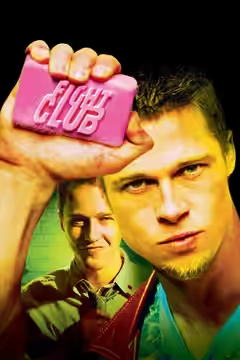
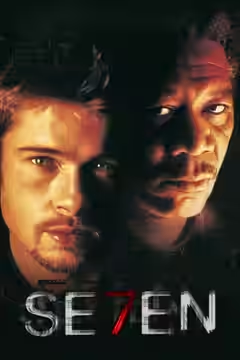
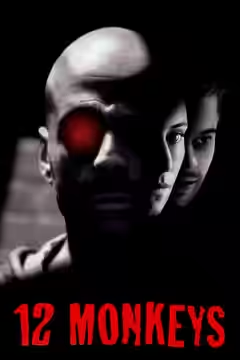
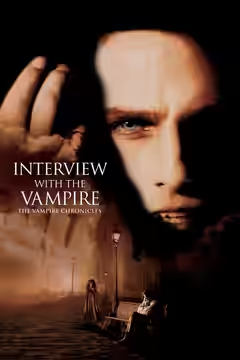
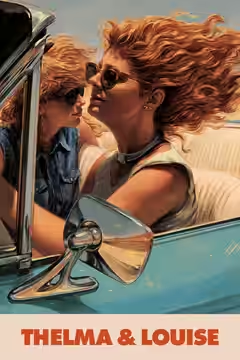
He arrived as the hitchhiker J.D. in Thelma & Louise (1991), a small part that made him a leading man, and the 1990s did not always know what to do with him. His Louis in Interview with the Vampire (1994) is asked to be sorry for two hours, and it wears. His Mills in Se7en (1995) pushes too hard against Morgan Freeman. His Jeffrey Goines in Twelve Monkeys (1995) is all agitation, and he has said as much himself: "I nailed the first half of '12 Monkeys.' I got the second half all wrong." Then Fight Club (1999): David Fincher let the casting do much of the work, and we found Tyler Durden alarmingly easy to like.
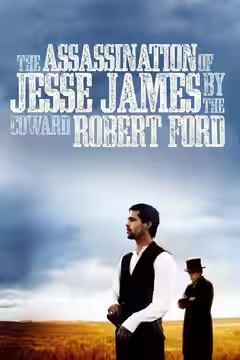
The 2000s found the use for the stillness: it works when something leans on it. As Jesse James for Andrew Dominik (2007) he holds the screen by being the man Casey Affleck's Ford cannot stop watching, and never asks us to like him. For Terrence Malick in The Tree of Life (2011), Mr O'Brien is a father formidable enough to resist and fallible enough to pity. In Moneyball (2011) Billy Beane's charm makes his certainty attractive and lets us see how tiring working for him would be. In Ad Astra (2019), with James Gray's camera close, we were moved by the effort it costs Roy McBride to keep his face in order. It is the performance of his we think about most.
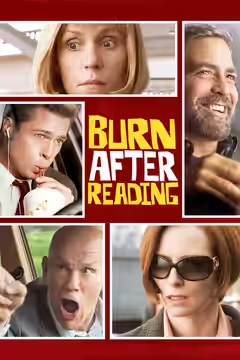
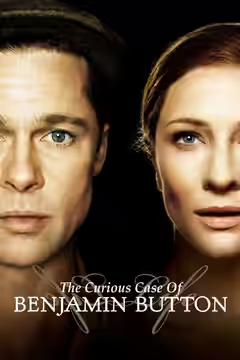
It fails in two directions. Quiet without pressure becomes passivity: Benjamin Button (2008) is written as a man things happen to, and Pitt takes them politely for 166 minutes. Loud without a joke becomes a turn: Aldo Raine in Inglourious Basterds (2009), jaw out and drawl thick, is where we looked at our watch. The exception is Chad in Burn After Reading (2008), bleached quiff and earpiece, whose blackmail call had us laughing because of how badly Chad wanted to be good at it. For the Coens, Pitt plays the wanting rather than the volume.
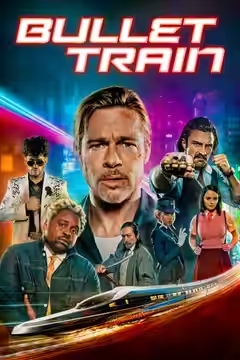
Lately he has settled into being a star rather than an actor, and he knows the difference. Bullet Train (2022) is agreeable company. F1 (2025) puts him in denim off duty so he looks like a man who has wandered in from an older film, and Sonny Hayes is a star performance, well judged for what that film is. It is also easy. Someone should make him uneasy again.
Biography
William Bradley Pitt (born 18 December 1963) is an American actor and film producer. He grew up in Springfield, Missouri, attended the University of Missouri, and moved to California to pursue an acting career.
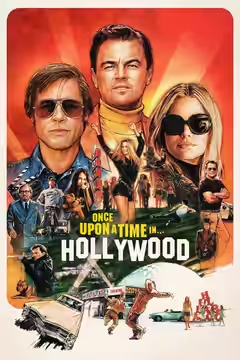
Pitt gained early recognition in Thelma & Louise (1991) and went on to star in films including Fight Club (1999), the Ocean's trilogy (2001–2007) as Rusty Ryan, Inglourious Basterds (2009) as Lieutenant Aldo Raine, Once Upon a Time... in Hollywood (2019) as Cliff Booth, Babylon (2022) as Jack Conrad, and F1 (2025) as Sonny Hayes.
He won the Academy Award for Best Supporting Actor for Once Upon a Time... in Hollywood. Through his production company Plan B Entertainment he has produced films including the Academy Award winner 12 Years a Slave (2013).