Julio Torres builds comedy from paperwork, fonts and small objects with inner lives, and under the whimsy sits a plain anger about how institutions treat the people who need them. Fantasmas is the best case for him, looseness and all.
Fi1m perspective
A hamster is out for the night. It has a club to go to, and Fantasmas (2024) gives the club the care most series spend on a wedding. This is the Julio Torres habit: take a small thing, a font, a shape, a rodent's social life, and treat it as seriously as the people who are ignoring it. He wrote for Saturday Night Live from 2016 to 2019, and the pre-taped sketches that got him noticed, Papyrus among them, were built the same way, around one object, a font in that case. His 2019 special My Favorite Shapes made an hour of stand-up out of objects.
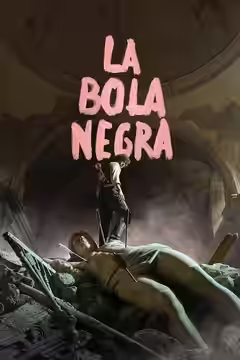
The career since has gone from company to solo. Los Espookys (2019–2022) was a surreal comedy in Spanish, made with Fred Armisen and Ana Fabrega, in which he played Andrés and shared the writing. Problemista (2024) he wrote, directed and carried himself, as Alejandro opposite Tilda Swinton, drawing on his own experience of immigration. Fantasmas, the same year, has him doing all three jobs again and playing a version of himself facing eviction and hunting for proof that he exists; being visibly present does not settle the matter. In La bola negra (2026) he is Juan Pablo in Javier Ambrossi and Javier Calvo's film, a part in somebody else's picture. We found that film too pleased with itself, and he is a small part of it either way.
The whimsy is not decoration. What keeps Fantasmas honest is the irritation under it: a man asked to prove he exists to institutions with no interest in whether he does. When the series turns to the entertainment business it is sharp about the expectation that a person's identity arrive ready to be packaged and sold, and Torres has put the same point in his own words: "I’m not attempting to write one of those little books by the cash register: the ‘What Is Latinidad?’, ‘What Is Queer?’ soft-cover booklets." We laughed at the hamster nightclubs, and what made us laugh was the commitment rather than the gag: the series takes the idea seriously enough to leave it unexplained and keeps its face straight throughout. Torres the performer helps here. He is deadpan, and he does not strain to make the strangeness reassuring, which is why the strangeness works.
The reservation is shape. A Torres detour can grow into a small film of its own, and some of the sketches in Fantasmas linger after their jokes have finished; the material is looser than it needs to be, and on the evidence so far the looseness travels with him. He also asks for patience with oddness for its own sake, and not everyone has it. What we would most like to see is Torres handing his own material to another director. We do not expect it, and we are not certain we want it.
Biography
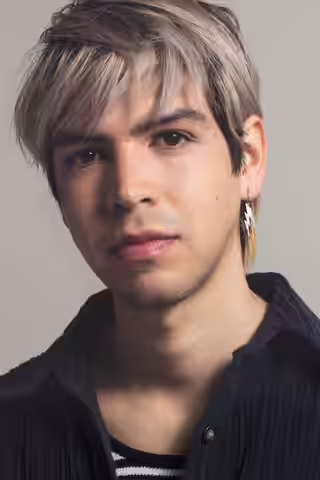
Julio Torres is a Salvadoran-American comedian, writer and actor. Born in San Salvador in 1987, he moved to New York to study at The New School. He began his career writing for The Chris Gethard Show on truTV before joining the writing staff of Saturday Night Live.
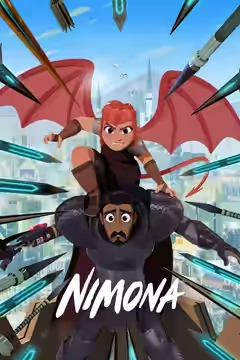
Torres co-created, wrote and starred in the HBO series Los Espookys (2019–2022). He wrote, directed and starred in the film Problemista (2024) and created, wrote, directed and starred in the HBO series Fantasmas (2024), in which he appears as a version of himself. He is also credited as Juan Pablo in the 2026 film La bola negra. His voice work includes roles in Nimona (2023) and series such as Bob's Burgers and The Great North. Both Los Espookys and Fantasmas received Peabody Awards.