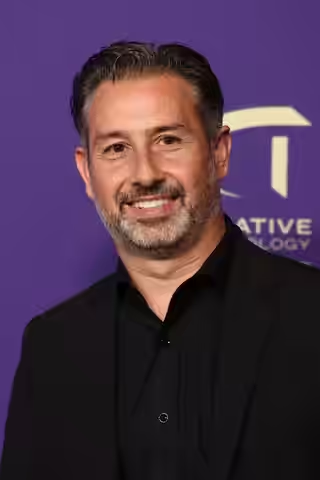
Kasra Farahani builds whole worlds out of one decade and then refuses to let anyone break them: a time-police office from about 1975, a Manhattan of cream curves and brass. Twice now the place he made has been the best thing in the picture.
Fi1m perspective
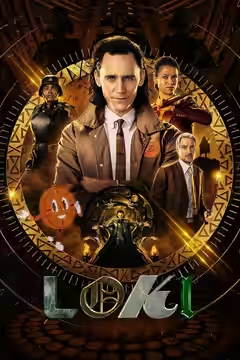
Somewhere in the Time Variance Authority a filing clerk sits behind an orange partition and has never heard of a fish. The office around him explains why. Brown carpet, pneumatic tubes, amber light, a bureaucracy that has been stamping forms since before time began and has not redecorated since about 1975. That is Kasra Farahani's habit as a production designer. He picks a period, builds all of it, and holds everyone to the rules, down to the typeface on the forms.
He came up through the art department, drawing concepts and art directing studio features from the late 2000s, with an illustrator's credit on Black Panther (2018), and designed smaller things, Halo 4: Forward Unto Dawn (2012) and Earth to Echo (2014), before Loki (2021) made him the name on a big one. He trained in industrial design before he came to film, and it shows: his rooms look manufactured rather than dressed. On Loki he stayed across both seasons, joined the writing staff and directed an episode of the second, which is not a route production designers usually take. He had already directed one feature, The Good Neighbor (2016). Then came The Fantastic 4: First Steps (2025), and an X-Men film is next.
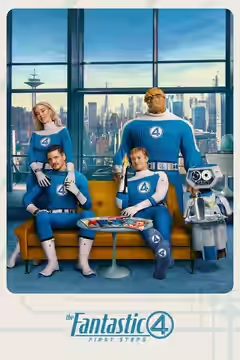
First Steps is the clearer statement. Farahani's New York is cream curves, brass trim and rounded glass, where the rockets look like ornaments and even the kitchen has fins. Jess Hall lights it like a picture book and holds his shots long enough for us to read the rooms; Alexandra Byrne's tweed and polonecks come from the same Sunday supplement. It is one place, built once and stuck to, which is rarer in a Marvel film than it should be. He builds his sets as full rooms with the lighting already in them, so the cinematographer has somewhere to stand, and you can see it in Autumn Durald's amber on Loki, which makes the TVA look cosy and slightly unwell at once. We came out of First Steps wanting the flat more than the film, and we do not think that was our failing: the kitchen is the one part of the picture somebody finished.
There is the catch. We scored both Loki and First Steps 71, and in both the design was better than the story inside it. Loki explained its rules until the explaining took over; First Steps built a lovely city and then could not think what to do with the sky above it. None of that is Farahani's fault, but it is the bargain of working inside franchises this size: the designer gets the money to build everything, and then somebody else decides what happens in it. He has shown twice that he can make a complete world. What we would like next is a story that deserves one, and we would not mind if he directed it himself.
Biography
Kasra Farahani is a production designer and director. Born in Iran in 1978, he was raised in Los Angeles after his family fled the Islamic Revolution. He studied industrial design at ArtCenter College of Design.
Farahani began his career in the art department on films including Alice in Wonderland (2010), The Curious Case of Benjamin Button (2008) and Black Panther (2018). He served as production designer on the miniseries Halo 4: Forward Unto Dawn (2012) and on Loki (2021–2023), for which he received a Primetime Emmy nomination and an Art Directors Guild Award. He also wrote and directed an episode of the series' second season.
His credits as production designer include Earth to Echo (2014), Bliss (2021) and The Fantastic Four: First Steps (2025).