Kathryn Bigelow makes danger frightening without losing sight of why people seek it out. We rate her action highly; we are less persuaded when the people become job descriptions and the procedure starts repeating itself.
Fi1m perspective
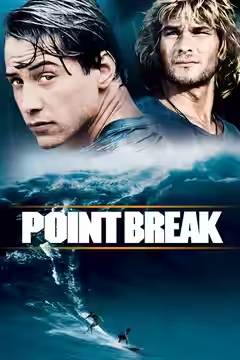
In Point Break (1991), Bigelow gives surfing the attention another director might save for the bank robbery. Donald Peterman’s sunlit photography makes the water inviting, while the movement keeps the possibility of injury close. We grinned at the surfing and skydiving because, for a moment, she made the risk look worth taking. This is where we value her most: showing why people enjoy dangerous things without making their bodies seem indestructible. W. Peter Iliff’s dialogue is often nonsense, but the physical encounters are clear and forceful enough to earn our patience.
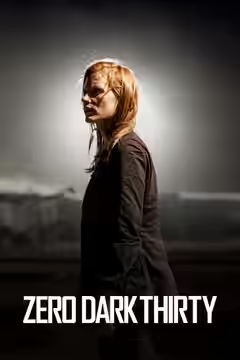
Her early films move readily between genres: Near Dark (1987) is a vampire western, while Strange Days (1995) uses science fiction to explore voyeurism and technology. The collaboration with screenwriter Mark Boal on The Hurt Locker (2008) and Zero Dark Thirty (2012) brought research and procedural detail further forward. Handheld camerawork, varied angles and rapid cutting make the danger feel close, though force alone cannot make a character interesting. In Detroit (2017), the violence leaves too little room for character and context.
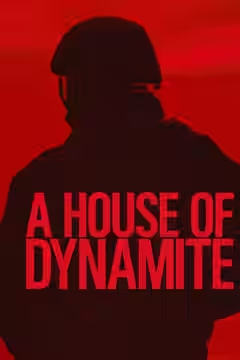
In A House of Dynamite (2025), a ballistic missile is detected over the Pacific and nobody knows who fired it. The people responding have eighteen minutes, and Bigelow shows that interval three times from different rooms. Sarah Edwards’s costumes, with their lanyards and badges, help make the procedure look like ordinary work. The first pass is frightening because decisions cannot wait for reliable information. Bigelow needs no chase here: the clock and the uncertainty do the work.
The trouble is that the later passes give us less reason to remain afraid. By the third, the repetition has cost tension without giving most of the characters enough time to become more than their job titles. That makes this a less satisfying film than The Hurt Locker or Zero Dark Thirty, even though its opening earns our attention. We would still make time for it, with patience for the repeated procedure. For a first encounter with Bigelow, though, choose Point Break and forgive the conversation.
Biography
Kathryn Bigelow is an American film director, producer and screenwriter. She was born on 27 November 1951 in San Carlos, California. She studied painting at the San Francisco Art Institute and film at Columbia University, after participating in the Whitney Museum's Independent Study Program.
Bigelow made her feature directorial debut with The Loveless (1981). Her subsequent films include Near Dark (1987), Blue Steel (1990), Point Break (1991), Strange Days (1995), K-19: The Widowmaker (2002), The Hurt Locker (2008), Zero Dark Thirty (2012), Detroit (2017) and A House of Dynamite (2025), on which she also served as producer. For The Hurt Locker she became the first woman to win the Academy Award for Best Director. She was married to director James Cameron from 1989 to 1991.