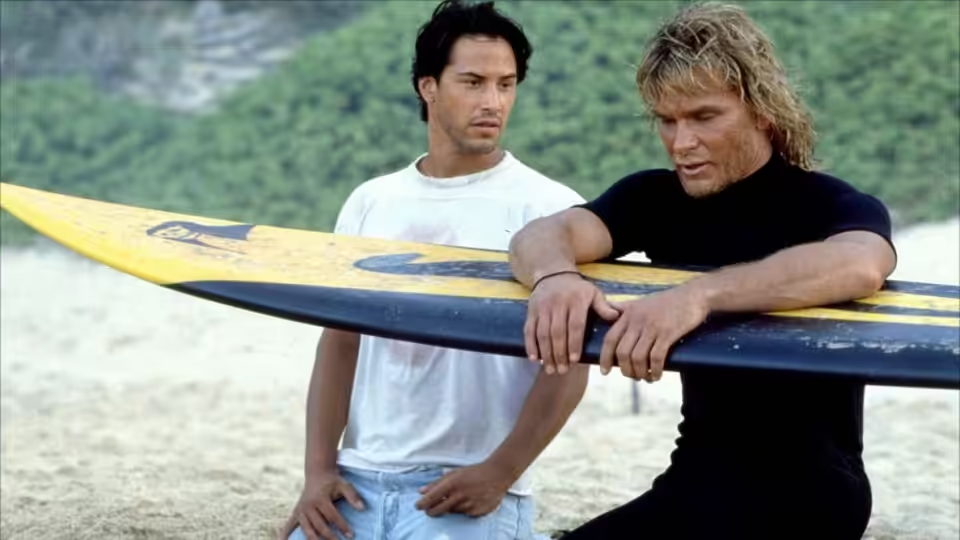
Kathryn Bigelow makes surfing and bank robbery equally seductive in an action thriller led by Keanu Reeves and Patrick Swayze. The dialogue gets carried away; the chases earn our enthusiasm.
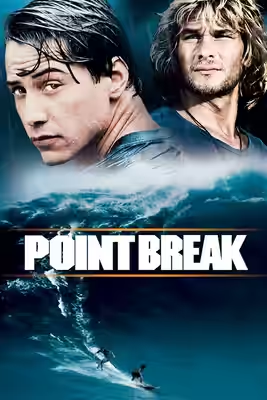
Kathryn Bigelow’s Point Break is an excellent action thriller, provided we do not mistake its talk about danger for wisdom. It brings surfing and bank robbery together with a straight face and enough skill to make the combination seem worth taking seriously. W. Peter Iliff’s screenplay supplies plenty of nonsense, some of it entertaining and some of it simply wearing. Bigelow is so good at showing why people might enjoy risking their necks that we forgive rather more than we should.
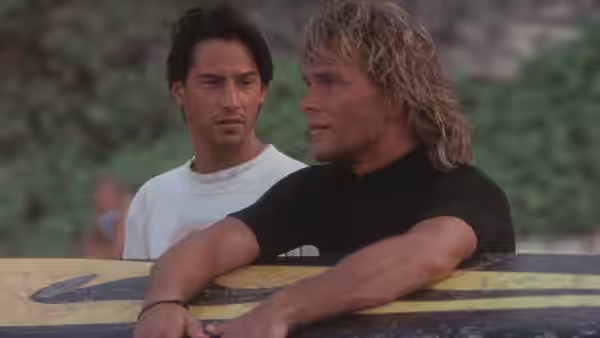
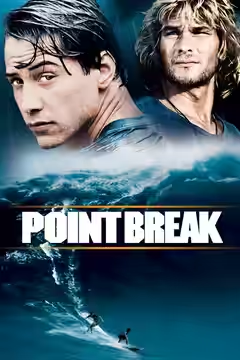
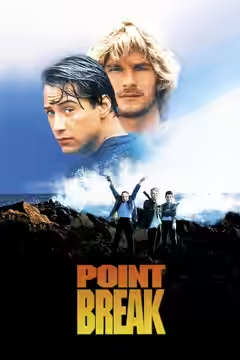
Keanu Reeves plays Agent Johnny Utah with an earnestness that gives the male bonding some weight. Patrick Swayze’s Bodhi needs to be attractive enough to make reckless behaviour seem like a reasonable choice, and Swayze manages that without much visible strain. We believe the fascination because Reeves does not stand outside the material making jokes about it. The occasional stiffness is useful here: beside Swayze, he seems to be working harder at everything, including enjoying himself.
Donald Peterman’s sunlit photography does much of the persuading, making the surfing look pleasurable as well as dangerous. We found ourselves grinning during the surfing and skydiving, because Bigelow makes the movement so inviting that we briefly forgot to worry about the risk. She gives these sequences the attention that another thriller might reserve for explaining the robbery. The polished images do not make the action feel weightless; we remain interested in what a body can do and how easily it might come to harm.
Howard E. Smith’s editing keeps the chases urgent and readable, allowing us to enjoy their speed without having to reconstruct them afterwards. Peter Jamison’s production design contributes to the film’s polished appearance, although it makes less impression than the outdoor action. Mark Isham’s music gives the appetite for danger an earnest accompaniment, and that works while bodies are moving. When the film starts explaining itself, the same seriousness can feel like too much encouragement.
Lori Petty, as Tyler Endicott, brings a welcome directness to a film in which the men can seem too pleased with themselves. Gary Busey’s Agent Angelo Pappas provides a more combustible energy, pushing his scenes along through the force of his performance. Busey can make the talk feel almost as strenuous as the action, which is funny without requiring the film to stop for a joke. Both performers help when the central pair’s fascination with each other threatens to become a closed conversation.
Iliff is less persuasive when he asks us to admire the men’s ideas about how to live. The macho posturing becomes repetitive, and the dialogue sometimes leaves Swayze having to sell a thought that cannot survive being spoken aloud. The plot’s implausibility is easier to accept during a chase than during an explanation, so the pauses give us time to notice how little sense some of it makes. These are real faults, particularly if the action does not win us over early.
The heist plot will disappoint anyone who values a crime film chiefly for its workings. Bigelow puts more care into the physical encounters, and the film earns its place among action thrillers through the force and clarity of those sequences. We would make time for it on that basis. Just do not expect the conversation afterwards to improve anyone’s philosophy of life.