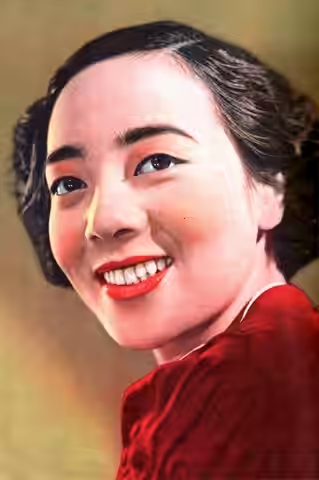
Kuniko Miyake gives Ozu’s family dramas credible wives and daughters-in-law, played without fuss. We value her composed, natural performances, though the parts seldom put her at the centre.
Fi1m perspective
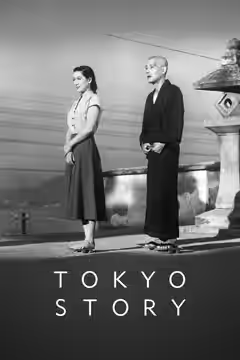
In Tokyo Story (1953), Kuniko Miyake plays Fumiko Hirayama, a daughter-in-law with plenty to occupy her. Her unforced manner helps Yasujirō Ozu make family neglect look ordinary, which is part of what makes the film so painful. She fits into the household without drawing attention away from the other actors. We rate her for taking these supporting parts seriously without making them conspicuous; the family needs to feel credible before its members can disappoint us.
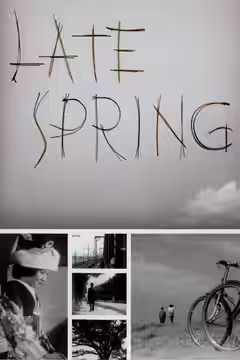
The early post-war films established the pattern. In Late Spring (1949), she is Akiko Miwa, a widow and friend, and her refined supporting work suits a drama in which familiar family pressures do the damage. Setsuko Hara and Chishū Ryū carry its central father-and-daughter story, but Miyake’s naturalness matters to the ensemble around them. Early Summer (1951), with Miyake as Fumiko Mamiya, continued the collaboration and her recurring place in Ozu’s domestic dramas.
We found the ordinary neglect in Tokyo Story almost unbearable, because Ozu allows people to hurt one another without turning them into villains. Miyake’s grounded playing helps the busy daughter-in-law belong to that recognisable family without asking us to single her out for blame. The limitation is how often these parts leave her in support, without giving her a film to carry. That is a restriction in the roles, not a fault in the acting, although it does limit how much we can claim for her from these performances.
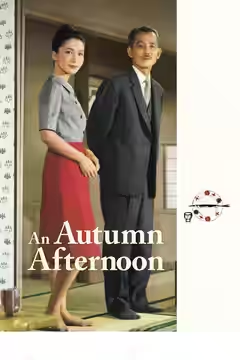
The lighter Good Morning (1959) gives her a comic domestic role as Tamiko Hayashi, a useful reminder that Ozu did not employ her only for painful family business. She remained part of his ensembles through An Autumn Afternoon (1962). Her work shifted increasingly towards television in the 1960s, while film appearances continued through Until the End of the World (1991), her final screen credit. Start with Tokyo Story, but give the supporting players some of the attention usually reserved for the people at the centre.
Biography
Kuniko Miyake (also credited as Yasushi Miura) was a Japanese actress. Born Yasu Miura on 17 September 1916 in Iwatsuki, Saitama, she joined Shochiku studios in 1934 and made her film debut that year. She appeared in nearly 200 films between 1934 and 1991, with a break after marrying in 1942 and returning after the Second World War. She died on 4 November 1992.
Miyake frequently appeared in films directed by Yasujirō Ozu, including Late Spring (1949), Early Summer (1951), Tokyo Story (1953) as Fumiko Hirayama, Good Morning (1959), Late Autumn (1960) and An Autumn Afternoon (1962). She also worked with other directors such as Kenji Mizoguchi and Keisuke Kinoshita, and from the 1960s was active in television dramas.