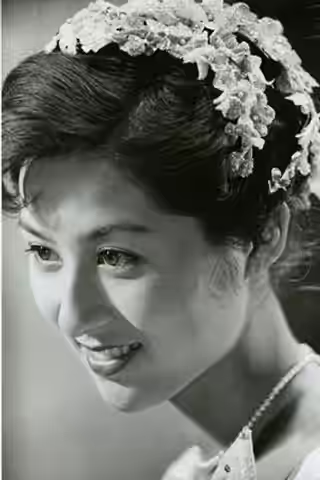
Kyōko Kagawa makes sincerity feel ordinary rather than saintly. We value her practical, naturalistic acting, though casting her as the innocent daughter or quietly strong wife can conceal how much else she is capable of.
Fi1m perspective
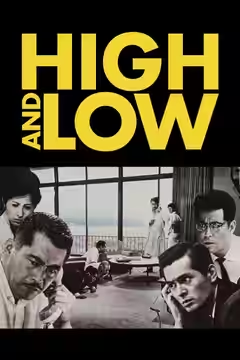
In High and Low (1963), Kyōko Kagawa is the wife making the case for doing the decent thing. As Reiko Gondo, she gives Akira Kurosawa's thriller a moral voice without seeming to have been appointed to deliver its lesson. Her practical acting matters in a film where a tycoon's choice must hold our attention before the police take over. The shift towards procedure costs the film some tension, but her place in its opening dilemma is worth noticing. We recommend it partly for the chance to watch an actor make sincerity persuasive.
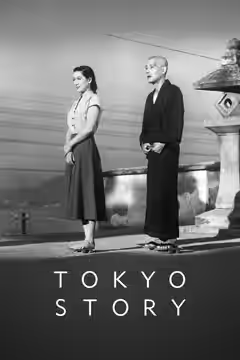
In Tokyo Story (1953), she is Kyoko Hirayama, the affectionate youngest daughter. Yasujirō Ozu allows goodness to exist in a family without pretending it can cure the family's failings. We were upset by the ordinary neglect, because nobody has to become a villain for it to hurt. The deliberate pace needs patience at first, but Kagawa is one reason to give it: an affectionate character can matter without dominating the film.
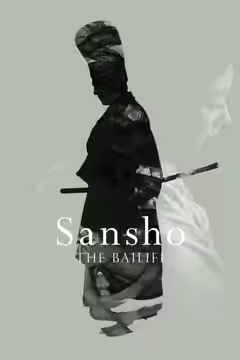
That casting can become restrictive: the innocent daughter or quietly strong wife is too easily taken for the whole actor. Kagawa worked with Ozu, Kenji Mizoguchi, Kurosawa and Mikio Naruse through the 1950s and early 1960s, and the parts were not all so reassuring. Mizoguchi cast her as Anju, the enslaved daughter in Sansho the Bailiff (1954); Kurosawa gave her the intense role of the madwoman in Red Beard (1965). Those parts are worth remembering before assuming that she was always there to provide a little kindness.
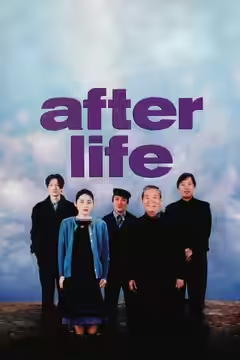
Television took more of her attention after the late 1960s, with prominent film roles resuming from the mid-1970s. The later work includes the professor's wife in Kurosawa's Madadayo (1993) and Kyoko Watanabe in Kore-eda's After Life (1998). That is a long stretch of work to reduce to a reliable supporting presence. Start with High and Low, then allow Tokyo Story the patience it needs.
Biography
Kyōko Kagawa is a Japanese actress. Born on 5 December 1931 in Asō (now Namegata), Ibaraki Prefecture, she was discovered through a 1949 "New Face" contest run by the Tokyo Shimbun newspaper and made her film debut the following year.
She appeared in leading and supporting roles in films directed by Yasujirō Ozu, Kenji Mizoguchi, Akira Kurosawa and Mikio Naruse, including Tokyo Story (1953), Sansho the Bailiff (1954), The Bad Sleep Well (1960), High and Low (1963) and Red Beard (1965). After a three-year break following the birth of her child and a move to New York with her husband, she returned to Japan in the late 1960s and worked increasingly in television and on stage.
Kagawa received the Japan Academy Prize for Best Supporting Actress for Madadayo (1993), the Medal with Purple Ribbon in 1998 and the Order of the Rising Sun in 2004.