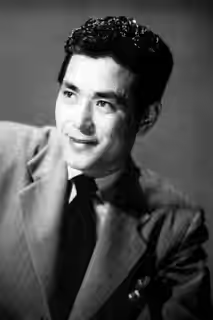
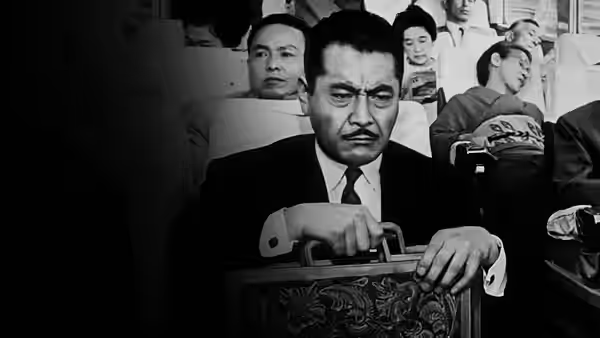
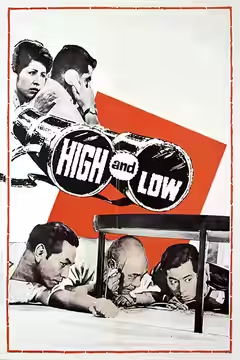
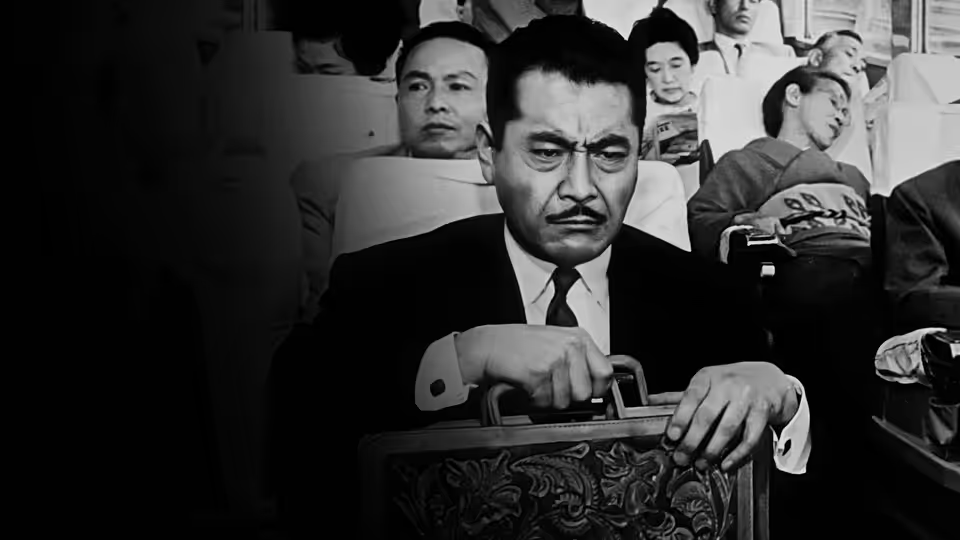
Kingo Gondo (Toshirō Mifune) holding a briefcase on public transport
Film review

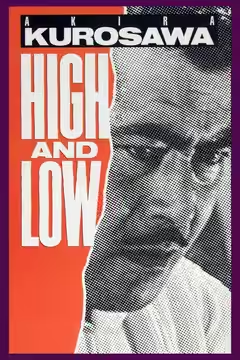
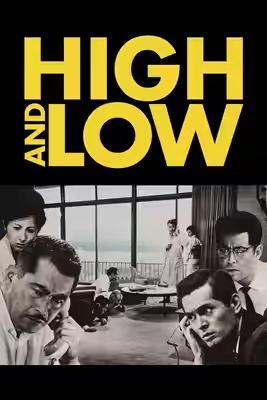
High and Low

1963 · Directed by Akira Kurosawa · 2h 22m · MPA NR

In a sentenceA roomful of people, one rich man, and no polite way to change the subject

Kingo Gondo (Toshirō Mifune), a tycoon, faces a moral choice that becomes the centre of Akira Kurosawa’s crime drama. The story begins in a single room, concentrating on Gondo’s dilemma, before widening into a police investigation. Tatsuya Nakadai plays Chief Detective Tokura, with Kyōko Kagawa as Reiko Gondo and Tatsuya Mihashi as Gondo’s secretary, Kawanishi. Adapted from a novel by Evan Hunter, the film follows Gondo’s deliberation and the detectives’ work, moving between contrasting settings as it considers class, responsibility and the decisions people make when their interests are at stake.

Fi1m review

Akira Kurosawa’s crime thriller makes a tycoon’s moral choice painfully absorbing, then gives the police time to work. The change costs it some tension, but Toshirō Mifune and the exact staging make this an easy recommendation.

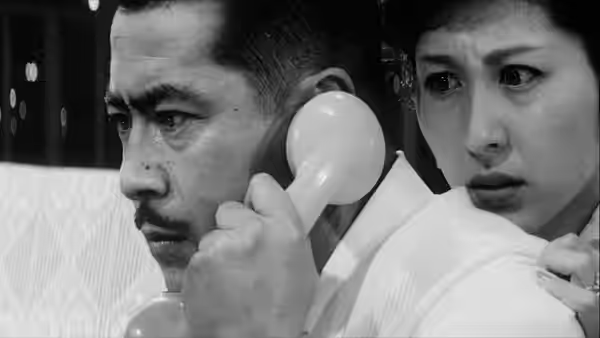
Akira Kurosawa’s High and Low is a crime film we would recommend to someone who usually avoids the genre. Its opening gives a tycoon’s moral choice the attention another thriller might reserve for the crime itself. Kingo Gondo, played by Toshirō Mifune, has to think, and Kurosawa makes us stay in the scene while he does it. That sounds like a modest basis for suspense. It proves enough to make the subsequent shift towards police work feel almost like a chance to breathe.

Mifune gives Gondo the assurance of someone accustomed to having his judgement accepted. His deliberation holds us because he does not make a decent choice look easy or automatic. We were unsettled by how readily we began making allowances for him. Mifune makes his hesitation seem reasonable, and Kurosawa lets it continue long enough for that sympathy to become uncomfortable. The performance keeps Gondo recognisably human while allowing us to judge him.

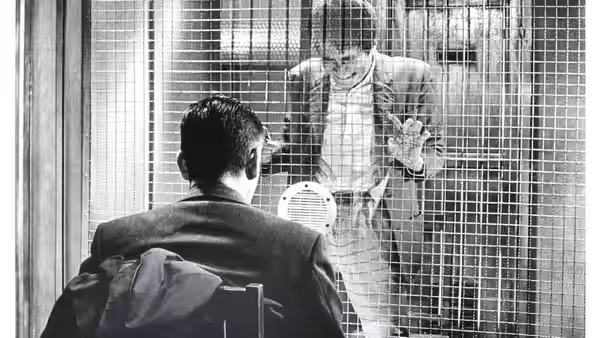
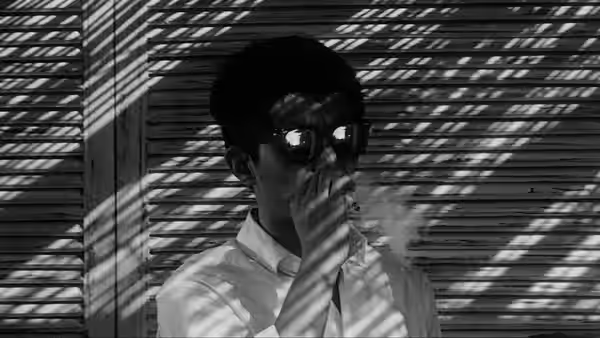
Cinematographers Takao Saitō and Asakazu Nakai deserve much of the credit for making the confined opening so watchable. Their framing makes the differences between the characters easy to feel, even before we have decided where our sympathies belong. Yoshirō Muraki’s production design gives Gondo’s surroundings a convincing sense of his social standing. The setting keeps his wealth present without distracting us from the difficult business of watching him deliberate, and the later contrasts of location give the film’s concern with class a broader reach.

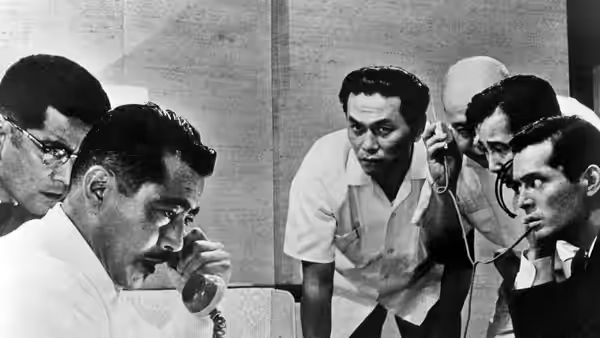
The police investigation brings a different pleasure, with Tatsuya Nakadai as Chief Detective Tokura. Kurosawa is also the editor, and he handles the move from concentrated deliberation to detailed police work with confidence. We are given time to follow the investigation and appreciate the effort involved. Nakadai supplies an authority that needs little display, which suits a film prepared to find drama in professional thoroughness. The detectives’ work receives enough attention to become absorbing in its own right.

The change nevertheless costs the film something. Gondo’s dilemma makes every delay feel consequential, whereas some stretches of the investigation ask us to be satisfied simply because the work is being done properly. Kurosawa’s editing keeps those passages clear, but the tension does ease. A little less procedural patience would have helped, particularly after an opening in which waiting for a decision has proved so difficult.

Masaru Satō’s music helps sustain the thriller’s unease across that change of scale. It is effective support, although the most troubling moments belong to Mifune and the time Kurosawa gives him to deliberate. Detective films often depend on how badly we want a solution, and this one gives us an additional reason to pay attention. We have spent too long considering Gondo’s position to care only about what the police will discover next. Kurosawa makes that investment matter even when Gondo is no longer the immediate focus.

At 142 minutes, the film asks for sustained attention, and earns it. Its slower passages remain worth watching closely for the care taken over the investigation. Set aside the evening, and resist treating the arrival of methodical police work as permission to put the kettle on.

Critical consensus AI synthesised

80
Positive
9
Mixed
0
Negative
1
Empire
6 April 2006 · David Parkinson
90*

The critic praises Kurosawa's adaptation of the Ed McBain novel for its clever use of contrasting locations and visual styles to explore class and moral themes, calling it among the director's most cinematic and satisfying works. Superb performances by Toshiro Mifune and Tsutomu Yamazaki, along with virtuoso cinematography, are highlighted as standout elements.

Read the full review →
Slant Magazine
26 July 2011 · Glenn Heath Jr.
90*

The review lauds the film as a masterful crime drama that bridges class divides through its rigorous procedural and social commentary. It singles out Kurosawa’s widescreen framing and shifting perspectives for creating a complex exploration of wealth, poverty, and redemption.

Read the full review →
The New Yorker
7 December 1963 · Brendan Gill
90*

The film is called a true thriller that takes itself seriously and is well worth taking seriously. Kurosawa is commended for his confident, leisurely pacing, beautiful rendering of police detection, and ability to sustain interest over nearly two and a half hours without a dispensable scene.

Read the full review →
The New York Times
27 November 1963 · Bosley Crowther
90*

The critic hails it as one of the best detective thrillers ever filmed and a model of the genre. Kurosawa is praised for transforming the source novel into a suspenseful, artistic work with strong characterizations, moral depth, and masterful police procedural sequences.

Read the full review →
The Times
26 March 2005 · Nigel Kendall
80*

The review highlights High and Low as a masterclass in technique, transforming an American kidnap thriller source into a meditation on unbridled capitalism in Japanese society. It praises the verité-style pursuit sequences and overall execution, agreeing with the New York Times that it is one of the best detective thrillers filmed.

Read the full review →
Time Out
10 September 2012 · TM
80*

Kurosawa adapts an Ed McBain novel into a hybrid thriller and morality play. The first half explores a tycoon's moral dilemma in a single room while the second half shifts to an exciting police procedural hunt, with connections that reach Dostoevskian depths.

Read the full review →

Straight answers AI written, from our review

How long is High and Low, and what is it rated?
High and Low runs 2h 22m and is rated NR by the MPA in the US. It is a drama and crime film.
Where can I watch High and Low in the US?
High and Low is streaming on HBO Max, Tubi, Pluto TV, Hulu, The Roku Channel and Amazon Prime Video in the US, and it is also available to rent from Amazon Prime Video from $3.99. It leaves HBO Max on 30 September. Availability is checked daily; the links above go straight to each service.
What should I watch after High and Low?
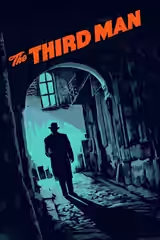
After High and Low, try A Separation (2011, Fi1m 93): Another moral crisis in which every practical decision makes somebody else’s life harder. Then Memories of Murder (2003, Fi1m 91): Patient police work, mounting frustration, and detectives who cannot escape their surroundings; and The Third Man (1949, Fi1m 92): A crime investigation that brings money and personal loyalty into uncomfortable proximity.

Cast

If you liked this, try…

  1. A Separation (2011, Fi1m 93)Another moral crisis in which every practical decision makes somebody else’s life harder.

  2. Memories of Murder (2003, Fi1m 91)Patient police work, mounting frustration, and detectives who cannot escape their surroundings.

  3. The Third Man (1949, Fi1m 92)A crime investigation that brings money and personal loyalty into uncomfortable proximity.

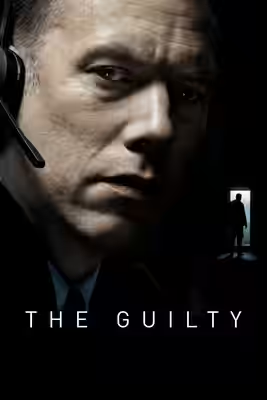
  4. The Guilty (2018) · not reviewed yetA confined thriller that makes listening and judging other people dangerously absorbing.

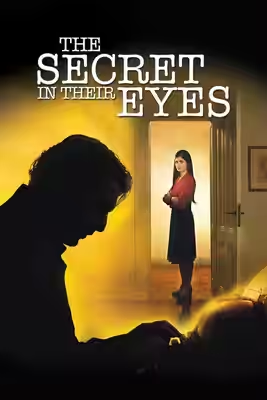
  5. The Secret in Their Eyes (2009, Fi1m 78)For the way an investigation keeps interfering with the lives around it.

Free account

Know what to watch tonight

Two lists that know where things are streaming, collections you can share, your own score beside ours, and Discover that remembers what you have seen.

  • Want to see, sorted by what is streaming now
  • Seen, with your score out of ten
  • No adverts, ever