Lance Oppenheim makes documentaries that look like feature films, about Americans acting out their own lives in worlds they have chosen, and has now made a feature film built the same way. We rate him; we would also like him to cut half an hour.
Fi1m perspective
Nobody in a Lance Oppenheim film sits in front of a bookshelf and answers questions. His subjects are lit, framed and scored like people in a drama, shot through anamorphic lenses with diffusion, and they behave accordingly: retirees in Florida, men who give away sperm through Facebook groups, the courtiers of a Texas Renaissance festival. He has said of the standard interview that "there's nothing more dishonest than the way those images are captured", and he has built a career on refusing it. What he films instead is what people do once they know the camera is on them, which is perform, and he treats the performance as the truth.
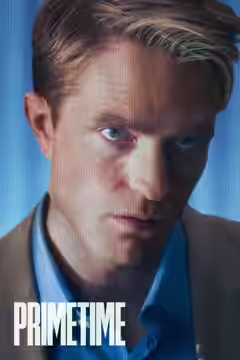
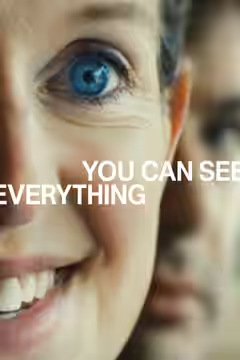
He grew up in Florida, and his first feature, Some Kind of Heaven (2020), shot as a student thesis and produced by Darren Aronofsky, follows four residents of The Villages, the Florida retirement community. Spermworld (2024) took the same interest to the unregulated sperm trade, where cringe comedy and pathos turn up in the same scene. Ren Faire (2024), three parts on a succession fight at the Texas Renaissance Festival, produced by the Safdies' Elara Pictures, is the one where everybody is already in costume. Then came two films in 2026: You Can See Everything, co-directed with Nathan Fielder, and Primetime, his first fiction, with Robert Pattinson as Chris Hansen of To Catch a Predator.
The look is built with the same people each time. David Bolen has been his cinematographer since Oppenheim was a teenager; Daniel Garber has cut three of the films; Ari Balouzian writes the music for all of them. Together they give each project its own grain and glow. In You Can See Everything this is what Oppenheim brings to Fielder: the willingness to let a shot sit and get beautiful while Fielder looks for the moment to interrupt it. For most of 174 minutes the two instincts help each other. For half an hour in the middle they do not, and we were bored, then faintly cross about being bored by a film that clever, because it was restating its question, whether a camera can tell when it is being lied to, rather than developing it.
The reservation is the one his admirers make. The diffusion, the music and the composed frames can smother a scene, and Spermworld has stretches where the style is doing the feeling on the subjects' behalf. In Primetime the same construction keeps the film on the surface of what the job does to the man doing it, a fair complaint against a film that set out to be a fever dream rather than a report. We would still watch anything he makes. What we have not yet seen is an Oppenheim film about someone who is not performing, and we are not sure he believes such a person exists.
Biography
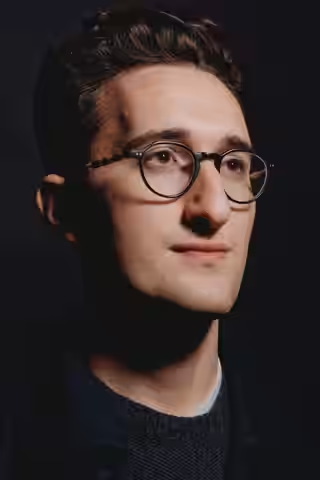
Lance Oppenheim is an American filmmaker and documentarian. He was born on 26 January 1996 in Hollywood, Florida, and graduated from Harvard University in 2019 with a degree in visual and environmental studies.
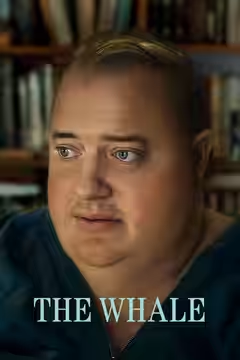
Oppenheim directed and produced the documentary feature Some Kind of Heaven (2021), which premiered at the 2020 Sundance Film Festival. His other work includes the documentaries Spermworld (2024) and You Can See Everything (2026, co-directed with Nathan Fielder), the series Ren Faire (2024), and the narrative feature Primetime (2026). He also appeared uncredited as Julian in The Whale (2022).
His short films have screened at festivals including Tribeca, and he was named to the Forbes 30 Under 30 list in 2023.