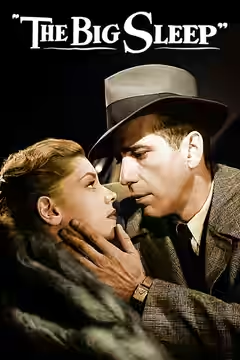
Lauren Bacall's trick was to make a conversation difficult and make the difficulty attractive: chin down, eyes up, a voice pitched lower than the man's. It worked best opposite Humphrey Bogart, and The Big Sleep is where to start.
Fi1m perspective
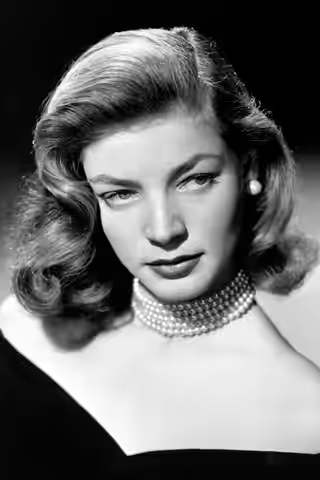
Chin down, eyes up. Lauren Bacall's habit of looking at a man from under her brow, in a voice pitched lower than his, is the thing people remember, and she was frank about where it came from: "I used to tremble from nerves so badly that the only way I could hold my head steady was to lower my chin practically to my chest and look up at Bogie. That was the beginning of The Look." What began as a way of not shaking read on screen as complete composure. That gap, between the nerves and the front, is what she played for the rest of her career.
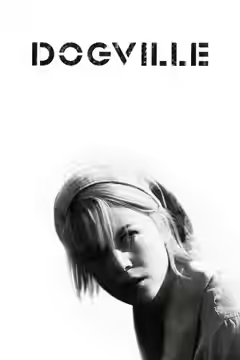
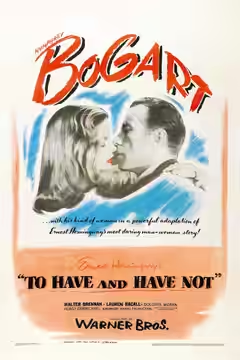
Howard Hawks cast her from modelling in To Have and Have Not (1944), and she made three more films with Humphrey Bogart through 1948. The Big Sleep (1946) is the better of the two films of hers we have reviewed, and the one we would send you to. When Hawks and Bogart were not on hand, as in Confidential Agent (1945), the reception was cooler, and some decided she was half of a pairing rather than a star in her own right. The 1950s answered that in part with comedy, How to Marry a Millionaire (1953) among them; the stage answered it more fully with Applause in 1970; and from Murder on the Orient Express (1974) onward she worked mostly as a supporting player, in Misery (1990), The Mirror Has Two Faces (1996) and, late and unexpectedly, in Lars von Trier's Dogville (2003).
What she did well she did in dialogue. Her women are sharp and practical and are hiding something, and the sharpness is how they hide it. In The Big Sleep she gives Bogart's detective an opponent who makes every exchange harder without ever making it dull, and neither of them looks sure of winning. We laughed at the two of them, at how rude they are to each other and how little it puts either one off, and we laughed because Hawks trusts them to make written lines sound as if they had just been thought of. He is the director who got the most out of her, and she made only two films with him.
The persona had a cost. It needed a partner worth sparring with and a script that handed her the lines; without both, she has a way of looking and a way of talking and not much to do with either. In Misery her part is small enough that our review did not stop for it, and that is a fair measure of a good deal of the later work: welcome, watchful, and rarely given enough.
Start with The Big Sleep, and do not worry about following the plot; nobody in it is following the plot either. Then To Have and Have Not, where the persona is being invented in front of the camera by a young woman trying to keep her head still.
Biography
Lauren Bacall was an American actor. Born Betty Joan Perske on 16 September 1924 in the Bronx, New York City, she began her career as a model before making her screen debut opposite Humphrey Bogart in To Have and Have Not (1944). She appeared with Bogart in several further films, including The Big Sleep (1946), Dark Passage (1947) and Key Largo (1948).
Bacall later took comedic roles in How to Marry a Millionaire (1953) and worked extensively on Broadway, winning Tony Awards for Applause (1970) and Woman of the Year (1981). Her later film credits include Murder on the Orient Express (1974), Misery (1990) as Marcia Sindell, The Mirror Has Two Faces (1996) and Dogville (2003). She received an Academy Honorary Award in 2009 and died on 12 August 2014.