Kathy Bates and James Caan make Rob Reiner’s confined thriller funny and frightening, often at once. The thoughts about authorship are thin, but the performances make a writer’s captivity painfully convincing.
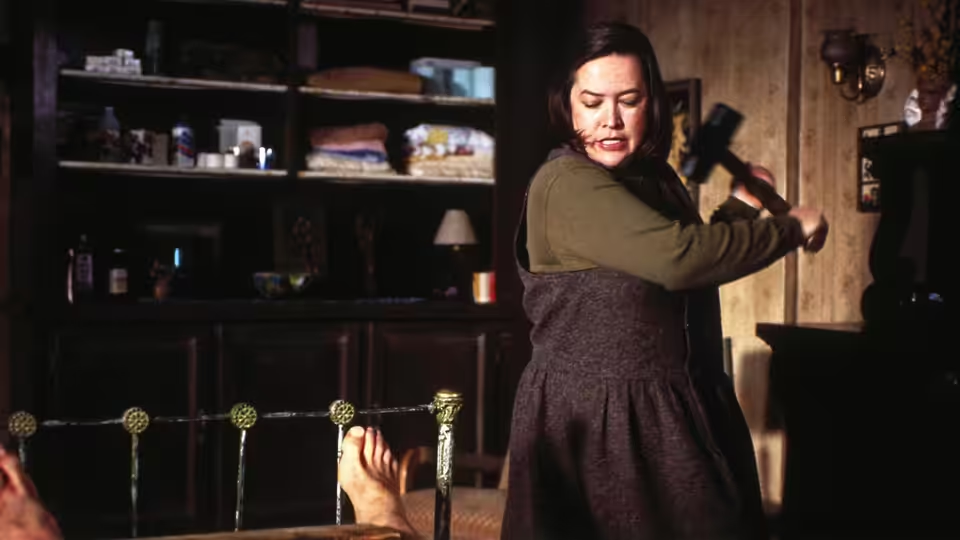
Rob Reiner’s Misery is a sharp, frightening thriller whose chief pleasure is watching two actors make a simple predicament increasingly difficult to bear. William Goldman adapts Stephen King’s novel without letting the questions about fame and writing hold up the suspense. Paul Sheldon, played by James Caan, is a writer held captive by Kathy Bates’s devoted reader, Annie Wilkes. That arrangement gives the film enough to work with, and for much of its 107 minutes we are grateful that it knows it.
Bates makes Annie’s affection convincing, which is where the trouble begins. She seems to take her concern for Paul seriously, and her performance makes the attentive admirer inseparable from the woman who expects obedience. We were frightened by her kindness, because Bates makes it feel like something Paul will have to repay on terms she sets. The humour comes from the same possessiveness: Annie can be ridiculous without becoming someone we feel safe laughing at.
Caan has the less conspicuous role and is just as necessary. His Paul has to assess Annie while being assessed by her, and Caan makes that unequal conversation interesting even when Bates has our attention. We can feel the effort involved in responding to someone whose devotion has made disagreement dangerous. He gives the predicament enough ordinary human frustration to keep it from becoming merely an exhibition of Annie’s behaviour.
Barry Sonnenfeld’s cinematography makes the confinement oppressive while keeping the actors’ responses clear; we need to read Paul as closely as he reads Annie. Norman Garwood’s production design helps the situation feel plausible, an important restraint when Annie already supplies so much alarm. We are never tempted to stop following the exchange and inspect the surroundings. Reiner keeps the emphasis on who can speak freely and who has to consider the consequences.
Robert Leighton’s editing is particularly good at maintaining the discomfort of their exchanges. It gives Bates enough room to be funny without allowing the joke to settle our nerves, and keeps Caan’s predicament present while she commands the scene. Marc Shaiman’s music supplies dependable suspense, although we occasionally wanted it to leave more to the actors. Caan already makes the strain of dealing with Annie clear.
There is a limit to what Reiner wants to do with this material. Goldman’s screenplay finds a nasty joke in a reader claiming ownership of a writer, then mostly concentrates on keeping that writer in trouble. A little more interest in Paul’s work might have made the relationship richer. Within the confined psychological thriller, though, the decision to concentrate on the actors is hard to dispute.
That reservation matters if the questions about writing are what bring us to the film. We recommend it for the uncomfortable pleasure of watching Bates and Caan negotiate a relationship in which only one person thinks affection is sufficient justification. Go for the performances, and allow for a director who sometimes insists on making sure the suspense has registered.