Leland Orser has spent three decades playing the man in the corner who is not as harmless as he looks, and he is good at it. The open question is what he would do with a part that let him stay calm.
Fi1m perspective
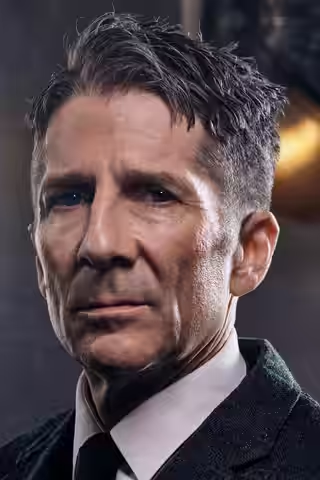
Leland Orser looks like someone you would trust with your coat, and that is the trick. He has a boyish, anxious face, and for thirty years directors have used it to hide something worse behind it. His men are nervous, then unstable, then dangerous, and the surprise is always the same: you were watching the wrong person. He set the pattern early, as a crazed man in a massage parlour in Se7en (1995), followed it as Purvis in Alien Resurrection (1997), and confirmed it as Richard Thompson in The Bone Collector (1999), where the boyishness had curdled into something vengeful.
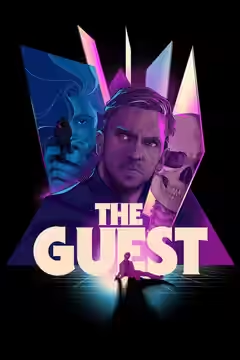
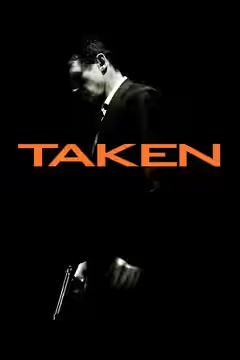
He came from the stage. The Secret Rapture in 1991 was the play; the same year he made his television debut on Gabriel's Fire, and guest parts followed on The X-Files and Law & Order: SVU. Film arrived in small doses in the mid-1990s, with Independence Day alongside Se7en, and then a run of supporting parts in bigger pictures, including Lieutenant DeWindt in Saving Private Ryan (1998). Television gave him his longest job, as Dr Lucien Dubenko on ER from 2004 to 2009, and the Taken films gave him his most visible one, as Sam Gilroy across the trilogy from 2008 to 2014, three times at Liam Neeson's shoulder.
Our one review of him does not do him many favours. In The Good German (2006), Steven Soderbergh's noir experiment, Orser plays Bernie Teitel, and Paul Attanasio's script gives him what it gives everyone: a room, and a speech in it, explaining to George Clooney's bystander hero which piece of paper matters. We will be honest. Somewhere in the second half we lost track of who wanted what, and by the end we could not have told you which room had been Teitel's. That is the film's fault more than his; we scored it 53 and the arm's-length feeling was general. But it is also what happens to an actor whose trade is a few unsettling minutes when the film around him is too cool to be unsettled.
The criticism that follows him is the obvious one: he is typecast as the unstable or compromised man, and The Bone Collector is the usual exhibit. His answer has been to look for parts that ask for more than one temperature. Faults (2014) is the one people point to, a performance that shifts tone inside a scene without announcing it. He has said of that work, "There's no tricks. It's very open, it's very stripped down, it's playing with the truth and without emotional truth no scene works." He has also stepped behind the camera, writing and directing Morning (2010), expanded from a short he made in 2007.
He is still working, in supporting parts in film and television into the 2020s, and still, mostly, the man you should have kept an eye on. We would like someone to cast him as the one sane person at the table and see whether the audience can stop waiting for him to crack.
Biography
Leland Jones Orser (born 6 August 1960) is an American actor. He was born in San Francisco, California, graduated from Connecticut College in 1982 and studied acting at Drama Studio London. He began his career as a stage actor and received a Helen Hayes Award nomination for Best Supporting Actor for his performance in The Secret Rapture (1991).
Orser made his television debut in 1991 and has appeared in numerous film and television roles. He is known for playing Dr Lucien Dubenko on the series ER (2004–09), Sam Gilroy in the Taken film trilogy (2008–14), and Bernie Teitel in The Good German (2006). Other film credits include Se7en (1995), Independence Day (1996), Alien Resurrection (1997), Saving Private Ryan (1998), Pearl Harbor (2001) and Daredevil (2003). He has also directed and written the film Morning (2010).
Orser married actress Jeanne Tripplehorn in 2000; they have one son. He was previously married to actress Roma Downey from 1987 to 1989.