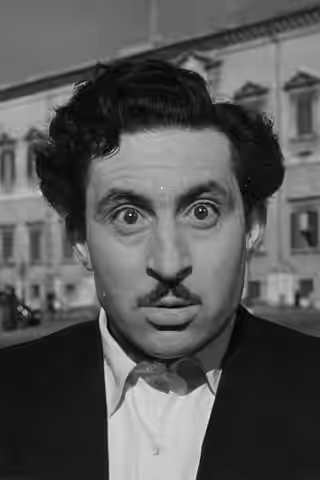
Leopoldo Trieste makes small authority look like hard work. His flustered priests and officials are funny without becoming disposable, and we value the sympathy he finds in people who would rather be taken seriously.
Fi1m perspective
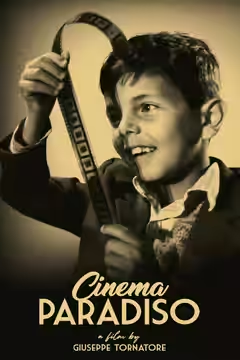
In Cinema Paradiso (1988), Leopoldo Trieste’s Father Adelfio censors the village’s films. The job gives him authority and gives the audience ample reason to find him tiresome. Trieste’s comic timing makes the priest funny enough to be welcome, even when his interference is not. We laughed at Father Adelfio’s censorship because Trieste makes such a serious business of deciding what other people may watch. It is a useful introduction to an actor who could find sympathy for flustered little men without asking us to admire their conduct.
Federico Fellini gave him his start as Ivan Cavalli in The White Sheik (1952), followed by the aspiring playwright Leopoldo Vannucci in I Vitelloni (1953). The put-upon man became a speciality, with resilience keeping the embarrassment from becoming cruel. Pietro Germi’s Divorce Italian Style (1961) and Seduced and Abandoned (1964) placed him in black comedies and ensembles that suited a distinctive supporting actor.
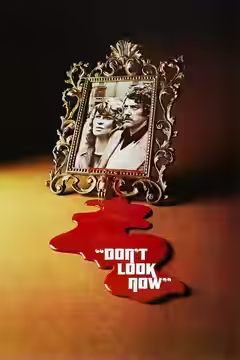
From the 1960s he also worked in international productions, including Roeg’s Don’t Look Now (1973), in which he plays the hotel manager. It is another modest position of responsibility, fitting an actor frequently cast as priests and officials. The film’s emotional force belongs to Donald Sutherland and Julie Christie’s convincing marriage, and we would not credit Trieste with work being done elsewhere. We recommend its frightening, deeply felt account of bereavement, but Father Adelfio gives a clearer sense of his particular comic skill.
Giuseppe Tornatore’s Cinema Paradiso sometimes presses too hard for tears, though Salvatore Cascio and Philippe Noiret make the central friendship persuasive enough to withstand it. Trieste’s comic contribution is a relief from that sweetness, and a reminder that the people interrupting a story can be part of its pleasure. His familiar fluster risks becoming predictable; the sympathy matters because it gives us something to enjoy beyond another embarrassed man. Start with the village priest, then go back to The White Sheik.
Biography
Leopoldo Trieste (3 May 1917 – 25 January 2003) was an Italian actor, screenwriter, playwright and occasional director. Born in Reggio Calabria, he began his screen career in the late 1940s and became a prolific character actor, appearing in more than 160 films over five decades.
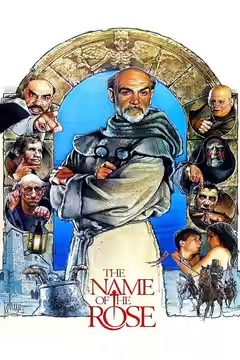
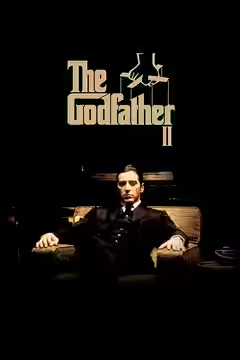
He is known for roles in Federico Fellini’s I Vitelloni (1953), Pietro Germi’s Divorce Italian Style (1961) and Seduced and Abandoned (1964), Francis Ford Coppola’s The Godfather Part II (1974) as Signor Roberto, Jean-Jacques Annaud’s The Name of the Rose (1986), and Giuseppe Tornatore’s Cinema Paradiso (1988) as Father Adelfio. Trieste also played the hotel manager in Nicolas Roeg’s Don't Look Now (1973). He received several Nastro d’Argento awards for best supporting actor and worked with directors including Mario Bava and Tinto Brass.