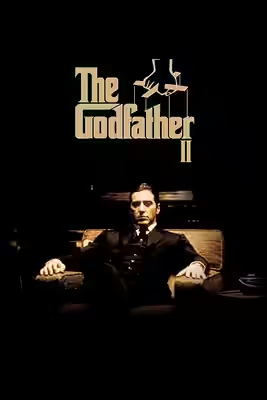
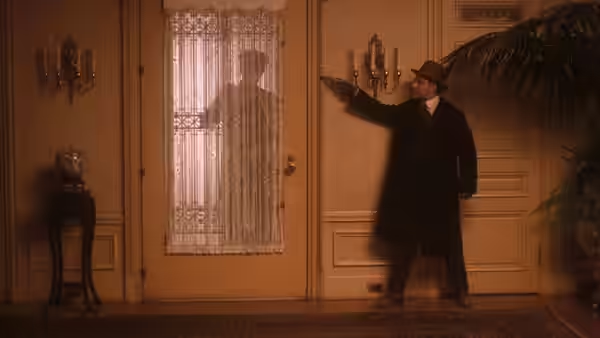
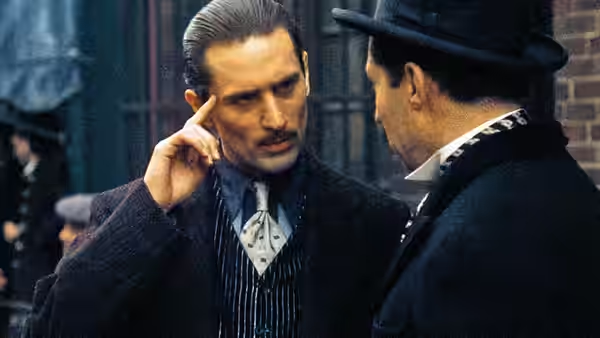
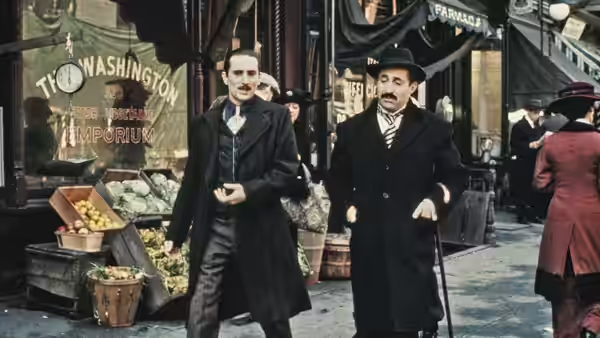
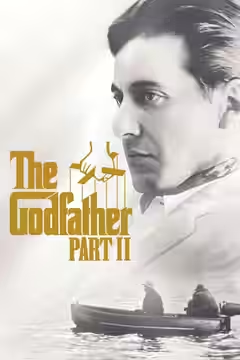
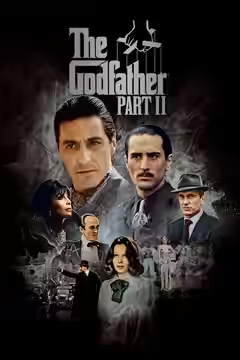
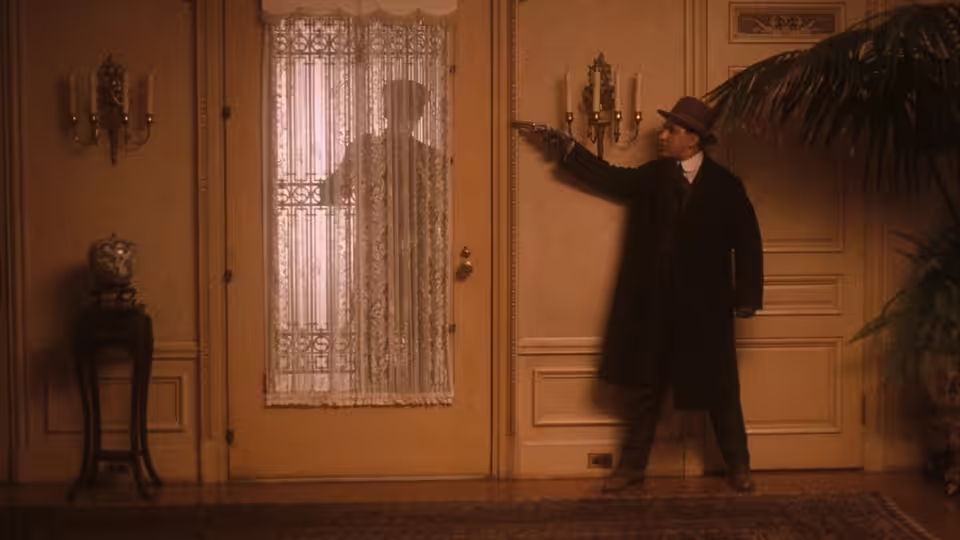
Vito Corleone (Robert De Niro) aiming a pistol at a lace-curtained door
Film review

The Godfather Part II

1974 · Directed by Francis Ford Coppola · 3h 22m · MPA R

In a sentenceAround Pacino barely moves his face, and somehow everyone else seems to be in trouble

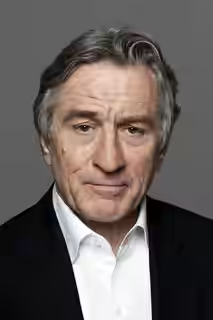
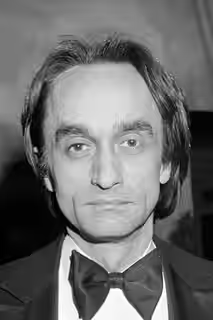
Francis Ford Coppola follows two generations of the Corleone family as their criminal empire expands. Around Pacino plays Michael Corleone, whose efforts to protect his authority draw him into political intrigue. Alongside his story runs that of the younger Vito Corleone, played by Robert De Niro, as he begins his rise. As the family’s reach grows, business, politics and private loyalties become harder to separate. Robert Duvall plays Tom Hagen, Diane Keaton plays Kay Corleone, John Cazale plays Fredo Corleone and Lee Strasberg plays Hyman Roth.

Plays from YouTube when you press play; nothing loads from them until then.

Fi1m review

Francis Ford Coppola’s Corleone family history deserves a whole evening and close attention. Around Pacino and Robert De Niro make its account of criminal power deeply upsetting, despite a few cumbersome stretches of political intrigue.

The Godfather Part II takes 202 minutes, and we would give it the evening again without much persuasion. Francis Ford Coppola follows Michael Corleone forward while returning to the younger Vito Corleone, asking how this family acquired its power and what living with it requires. It is a remarkable family drama, worth recommending well beyond an audience for crime films. Much of its force comes from watching someone wait for another person to finish speaking. Coppola makes the wait uncomfortable.

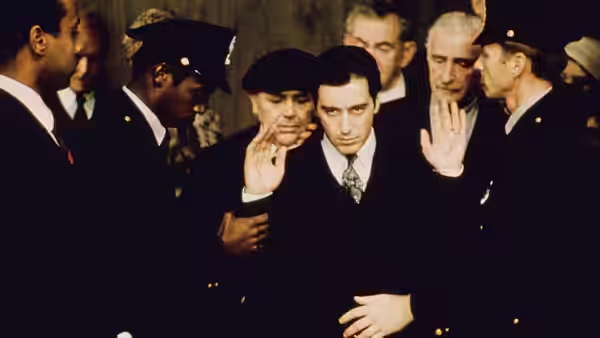
Around Pacino’s Michael gives other people almost nothing to work with. He makes us search his face for an answer while the person speaking seems to be doing the same. We felt shut out, then frightened by how little he offered. Pacino suggests that Michael is assessing every conversation for possible danger, including those that ought to allow him to relax. His reserve makes the other actors’ efforts to reach him painful to watch, because there is so little encouragement for them to continue.

Robert De Niro makes the younger Vito easier company. His attention to others seems less defensive, and we can understand why people might trust him. Coppola and Mario Puzo’s screenplay gives the immigrant story enough feeling for family protection to sound like a promise somebody would welcome. De Niro makes that promise persuasive without making the criminality harmless. Putting him beside Pacino gives us ample reason to care about the shifts in time, even once we have understood the comparison between the two men.

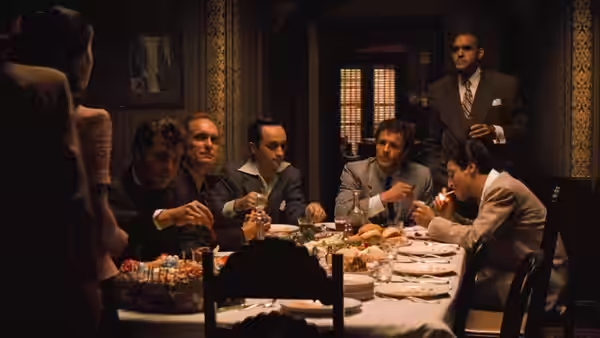
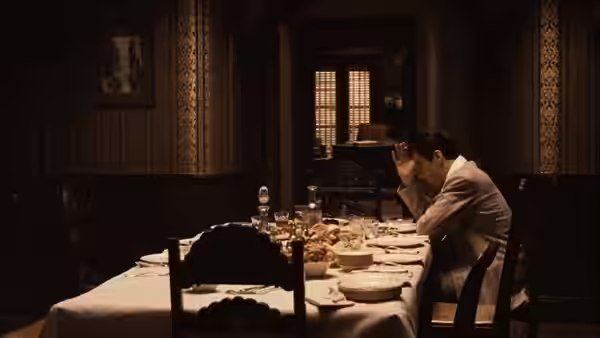
Gordon Willis’s cinematography keeps us studying faces without making them easy to read. Around Pacino, the sense of distance is especially useful: we can look hard at Michael and still feel no closer to him. Dean Tavoularis’s production design helps the two periods register clearly, so that we can follow a change of time without spending the next scene getting our bearings. We can enjoy the assurance of these surroundings and still find the people occupying them difficult company.

The editing by Barry Malkin, Richard Marks and Peter Zinner repeatedly interrupts one story to return us to the other. At its strongest, a switch changes how we feel about the man we have just left, because the next stretch puts his behaviour in a longer family history. Some returns to Michael take too long to recover their urgency, especially when the political intrigue needs attention. We can follow the negotiations and still wish they would get on with them. Nino Rota’s music gives the family a tenderness that Michael’s watchfulness seldom permits.

A crime film can get a long way simply by making powerful people pleasant company, and Coppola allows us some of that pleasure. We have time to appreciate the intelligence and patience with which these people conduct their business. The performances also make it difficult to ignore how much care goes into deciding what it is safe to say. A conversation can leave us more uneasy than a threat, because we have to work out for ourselves how frightened somebody is. Give it an uninterrupted evening, and expect the company to become harder to bear.
Critical consensus AI synthesised

80
Positive
8
Mixed
1
Negative
1

Most critics strongly favour The Godfather Part II, praising Coppola’s expansion of the family saga into a broader study of American power and corruption. Much of the admiration centres on the parallel accounts of Vito’s early life and Michael’s rule, which the favourable reviews find both ambitious and emotionally forceful. Pacino and De Niro draw particularly consistent praise, including from critics less persuaded by the storytelling, for performances that give the two generations distinct emotional weight.

The disagreements concern whether the dual timeline deepens the drama or interrupts it, with responses ranging from wholehearted admiration to outright rejection. RogerEbert.com finds the cross-cutting structurally troublesome and the characterisation simpler than it appears; The New York Times objects more sharply to the length, disjointed construction and lack of drive. Even among the favourable reviews, reservations recur about pacing, occasional clumsiness and the emotional distance created by Coppola’s broader political concerns.

Little White Lies
20 February 2014 · 5/5/5 · David Jenkins
100

The film is hailed as an astounding work of elegant, shocking and literate blockbuster filmmaking that masterfully contrasts Michael's cold isolation with Vito's rise, delivering a devastating portrait of power's costs.

Read the full review →
Time Out
18 February 2014 · ★★★★★ · Joshua Rothkopf
100

Coppola deepens the saga with Nixon-era paranoia and political intrigue while balancing it with nostalgic immigrant roots; the result is one of cinema's richest character descents.

Read the full review →
The New Yorker
16 December 1974 · Pauline Kael
95*

Coppola enlarges the first film's scope into an epic of American corruption and dynastic rise and decay, with the interweaving of Vito's ascent and Michael's decline proving emotionally overpowering. Kael singles out the performances, especially De Niro's young Vito, for their soulful continuity and depth.

Read the full review →
Empire
26 December 1974 · Kim Newman
90*

The critic praises the film's innovative structure that extends the Corleone saga both backwards and forwards in time while deepening the characterizations. They single out Al Pacino's electrifying performance as Michael, whose hollow gaze conveys the high personal cost of power, along with the strong supporting cast.

Read the full review →
Variety
9 December 1974 · A.D. Murphy
85*

Far from a mere spinoff, the film is an excellent epochal drama in its own right, handsomely produced and superbly directed with a topnotch script. Murphy highlights the strong box-office prospects and notes that it avoids glorifying criminality.

Read the full review →
Radio Times
· Adrian Turner
80*

The sequel expands the scope with De Niro's brilliant portrayal of young Vito and Pacino's monumental Michael, though some later sequences feel clumsy; it chillingly shows corruption overtaking immigrant idealism.

Read the full review →

Straight answers AI written, from our review

Is The Godfather Part II worth watching?
The Godfather Part II is worth watching for anyone prepared to give it a full, uninterrupted evening, and we scored it 92. Pacino and Robert De Niro make its account of a criminal family deeply upsetting, and it deserves an audience well beyond crime-film enthusiasts. Some stretches of political intrigue take too long to recover their urgency.
How long is The Godfather Part II, and what is it rated?
The Godfather Part II runs 3h 22m and is rated R by the MPA in the US. It is a drama and crime film.
Where can I watch The Godfather Part II in the US?
The Godfather Part II is streaming on Paramount+, The Roku Channel and Amazon Prime Video in the US, and it is also available to rent from Amazon Prime Video from $3.99. Availability is checked daily; the links above go straight to each service.
How violent or frightening is The Godfather Part II, and is it suitable for children?
The Godfather Part II carries a UK 15 certificate and is not suitable for children. It is a crime drama about a family whose power depends on violence, though much of its unease comes from watching people decide what is safe to say rather than from bloodshed. Older teenagers with the patience for 202 minutes of slow conversation should manage it.
How does The Godfather Part II compare to The Godfather?
The Godfather Part II is longer, colder and more ambitious than The Godfather, cutting between Michael Corleone's present and his father's early rise. The earlier film is the more straightforward story and the one we would recommend without hesitation to a newcomer. The sequel adds De Niro and a more political plot, some of which is cumbersome, and it leaves us far more shut out from Michael.
Is The Godfather Part II based on a true story or a book?
The Godfather Part II is based on Mario Puzo's novel, not on a true story, with a screenplay by Puzo and Francis Ford Coppola. Our review does not measure how closely it follows the book, and the film explains its two generations of Corleones clearly enough that reading it first is not necessary.
Do you need to have seen the other The Godfather films before The Godfather Part II?
The Godfather Part II is the second of three films and picks up Michael Corleone's story already in progress, so we would watch the earlier film first. Its flashbacks to the younger Vito explain themselves, but the weight of Michael's watchfulness depends on knowing how he came to head the family.
What should I watch after The Godfather Part II?
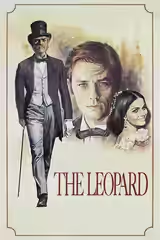
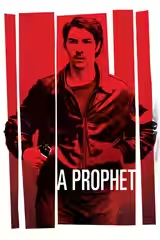
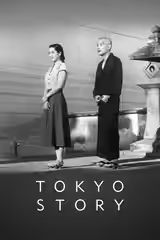
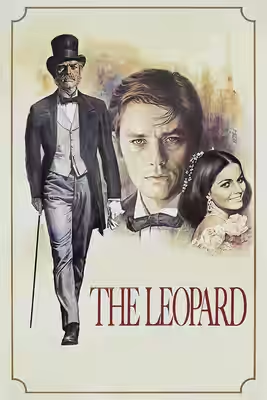
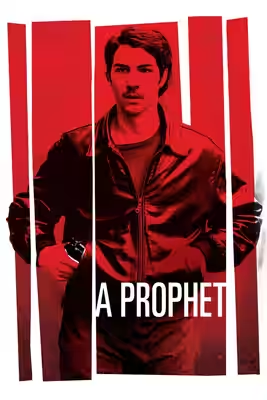
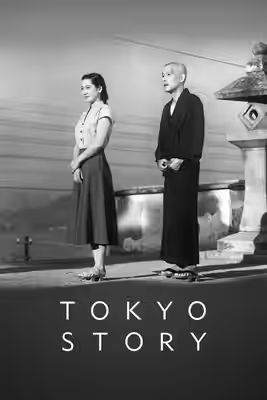
After The Godfather Part II, try The Leopard (1963, Fi1m 88): Another family measures its future while power changes hands around it. Then A Prophet (2009, Fi1m 86): A younger criminal learns to survive by studying who controls each conversation; and Tokyo Story (1953, Fi1m 92): For quieter family estrangement, with every courtesy making the distance more painful.
What order should I watch the The Godfather films in?
Release order is the safe choice for The Godfather, and it is the order our collection page lists them in. The Godfather Part II is number 2 of the 3 The Godfather titles on Fi1m; before it comes The Godfather and after it The Godfather Part III. The full order.

Part of · 2 of 3

The Godfather

3 films on Fi1m · 1972–1990 · average 83 · best The Godfather 93

All 3 in order

Cast

Awards

Academy Awards, 1975

Nominated
Best Actor
Nominated
Best Costume Design
Nominated
Best Supporting Actress
Won
Best Director
Won
Best Original Dramatic Score
Won
Best Picture
Won
Best Production Design
Won
Best Supporting Actor
Won
Best Writing, Adapted Screenplay

If you liked this, try…

  1. The Leopard (1963, Fi1m 88)Another family measures its future while power changes hands around it.

  2. A Prophet (2009, Fi1m 86)A younger criminal learns to survive by studying who controls each conversation.

  3. Tokyo Story (1953, Fi1m 92)For quieter family estrangement, with every courtesy making the distance more painful.

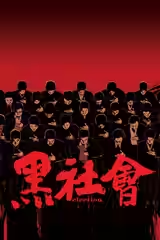
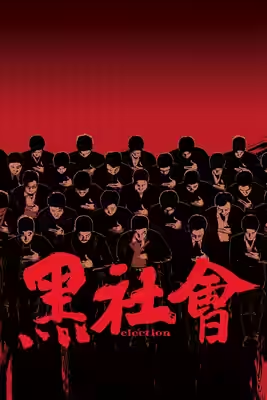
  4. Election (2005) · not reviewed yetAnother criminal organisation discovers how much violence can fit inside a leadership contest.

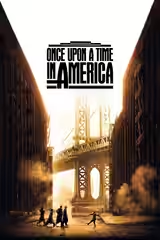
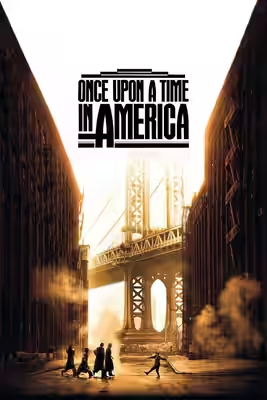
  5. Once Upon a Time in America (1984, Fi1m 81)Criminal friendship revisited across decades, with memory making the loyalties harder to judge.

Free account

Know what to watch tonight

Two lists that know where things are streaming, collections you can share, your own score beside ours, and Discover that remembers what you have seen.

  • Want to see, sorted by what is streaming now
  • Seen, with your score out of ten
  • No adverts, ever