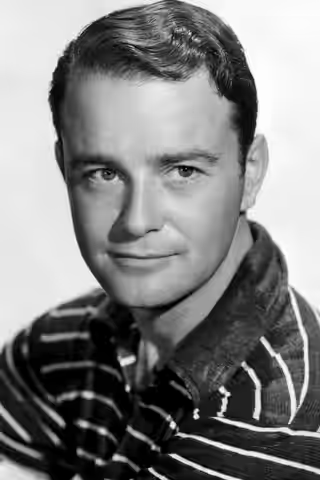
Lew Ayres played good men for sixty years, doctors mostly, and played them with a sincerity so even that it could hold a scene steady or send it to sleep. The talent was real; the parts that used all of it were few.
Fi1m perspective
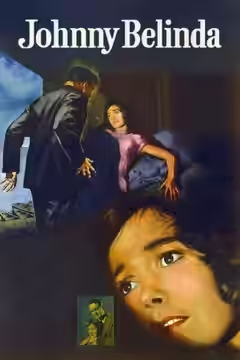
Watch his hands in Johnny Belinda (1948). Robert Richardson, the new doctor, sits across a table from a deaf young woman and makes the shapes for words, and Jane Wyman watches them arrive. The scene belongs to her, as the film does. Ayres's job is to be the man whose hands are worth watching, and he does it by not doing very much: patient, plain, a little slow. It is his whole method in one scene.
He was a star before he was a character actor. He came up fast, a supporting part opposite Greta Garbo in The Kiss (1929) and then Paul Bäumer in All Quiet on the Western Front (1930), the schoolboy who goes to war and comes back unable to explain it. The stardom did not hold. The thirties brought a run of minor pictures at Universal and elsewhere before Holiday (1938), as Ned Seton, got the studios interested again and led to nine Dr Kildare films for MGM between 1938 and 1942; Lionel Barrymore, with whom he made nine films, was the partnership of those years. Then in 1942 he declared himself a conscientious objector, said "I wanted to save lives, not take them", and went to the South Pacific as a medic. The public and the studios did not forgive him quickly, and the parts thinned.
What he had was sincerity, and the trouble with sincerity is that it does not vary. His Richardson in Johnny Belinda is decent, patient and slightly wooden, and we said so; the film needs him to be good and he settles for being good rather than interesting. Set against Wyman, who is doing something new with every glance, he can look like part of the set. It is not a failure of effort. It is the limit of a style that leaves the feeling to the audience and sometimes gives them nothing to attach it to.
And then, late, a glimpse of what the style could do with some weight behind it. In Battle for the Planet of the Apes (1973), a poor film, he has one scene as Mandemus, who keeps the armoury, and lectures a room of apes and men about guns with such gravity that we sat up, and then felt slightly foolish for wanting more of an old man talking about rifles in a film about apes. We wanted it all the same. For two minutes the film had a conscience, and it was him.
He worked mainly in small parts on film and television from the fifties, science fiction among them, and kept at it into the late eighties. Start with All Quiet on the Western Front for the young man and Johnny Belinda for the doctor, and keep an eye out for him in things that do not deserve him, where he is usually the one person taking the matter seriously.
Biography
Lew Ayres, also credited as Lewis Frederick Ayres III, was an American actor. He was born in Minneapolis, Minnesota, on 28 December 1908 and died in Los Angeles, California, on 30 December 1996.
Ayres began his film career in the late 1920s. He played Paul Bäumer in All Quiet on the Western Front (1930) and appeared in the Dr Kildare series. During the Second World War he served as a conscientious objector in the US Army Medical Corps. He received an Academy Award nomination for Best Actor for his role in Johnny Belinda (1948).
Later credits include Battle for the Planet of the Apes (1973), in which he played Mandemus, and numerous television appearances such as episodes of The A-Team, Little House on the Prairie, Columbo, Damien: Omen II (1978) and Salem's Lot (1979).