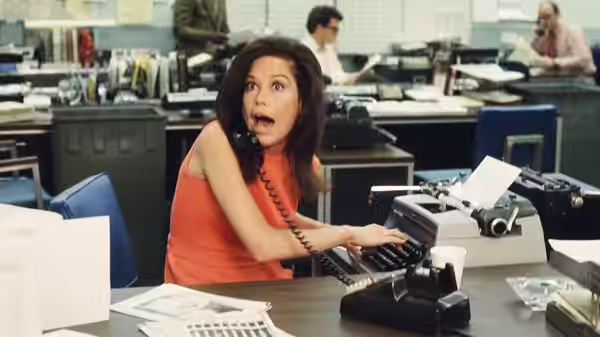
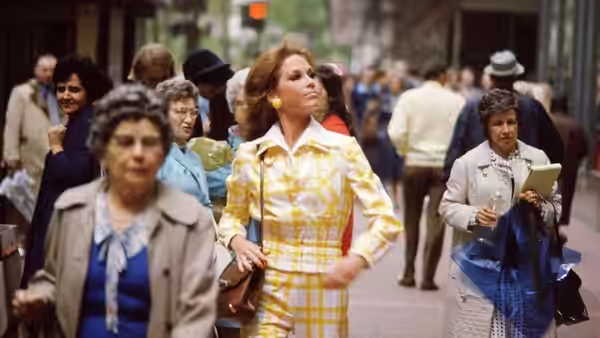
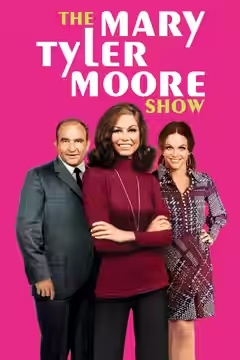
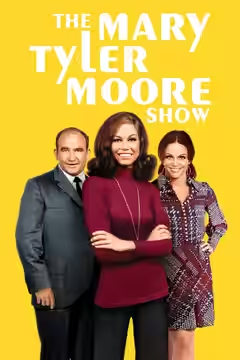
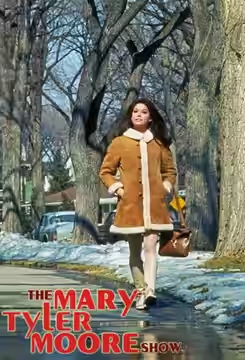
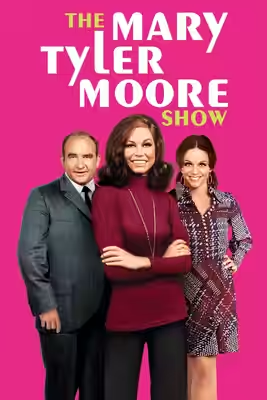
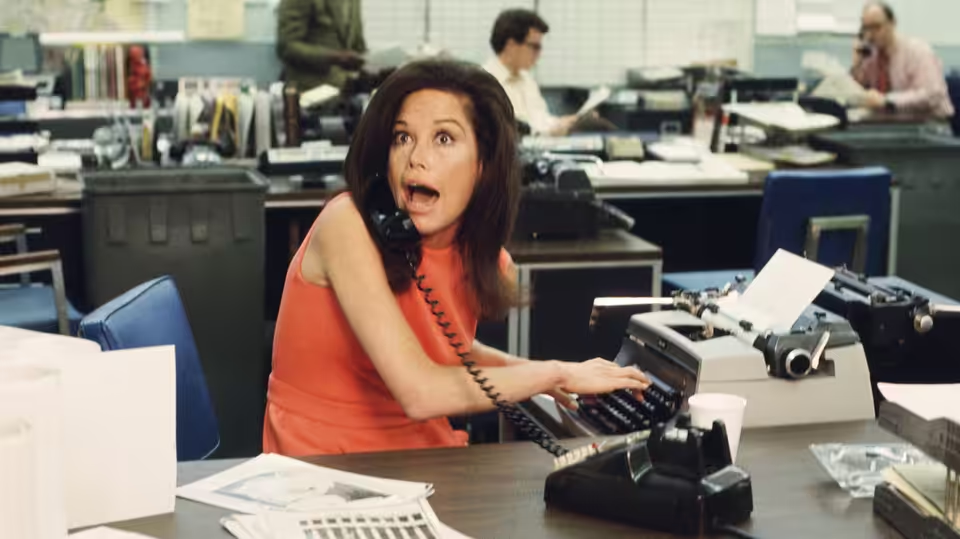
Mary Richards (Mary Tyler Moore) on the phone at her newsroom desk
Series review

The Mary Tyler Moore Show

1970 · Created by Allan Burns, James L. Brooks · Series · 25m · MPA NR

In a sentenceMary Tyler Moore can make listening to a colleague funnier than most sitcoms make a punchline

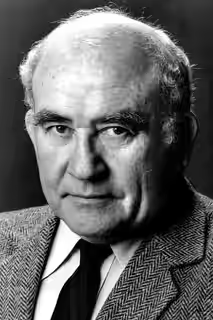
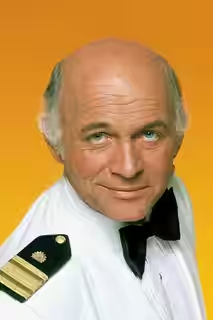
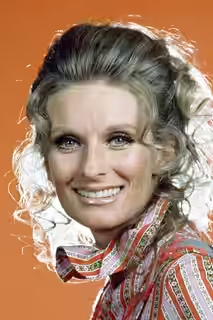
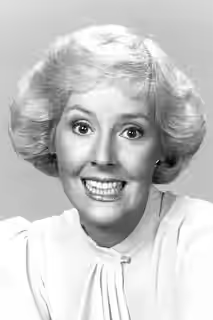
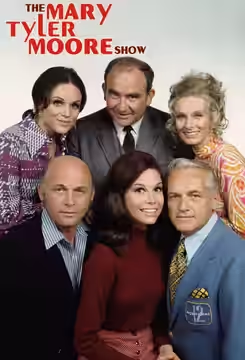
Mary Richards (Mary Tyler Moore) is unmarried and intent on building a satisfying career. Her working and personal lives bring her into contact with Lou Grant (Ed Asner), Murray Slaughter (Gavin MacLeod), Ted Baxter (Ted Knight) and Rhoda Morgenstern (Valerie Harper). Mary wants room to make her own choices, while the expectations and demands of other people keep complicating that task. Work gives her a purpose beyond finding a partner, but it also means navigating other adults’ egos. The series follows those everyday negotiations alongside the friendships that develop around them.

Fi1m review

Mary Tyler Moore makes patience funny in a workplace comedy with sharp writing and an unusually good ensemble. Some of the broader jokes show their age, but the pleasure of these people talking survives intact.

The Mary Tyler Moore Show is a warm, sharply written comedy about a woman whose life is worth following even when she is not falling in love. We recommend it for the acting and the jokes, with a small allowance for some overplayed character humour. Creators James L. Brooks and Allan Burns give Mary Richards a career and a personal life without treating either as a temporary arrangement. That sounds an ordinary starting point; the series makes a satisfying amount of comedy from it.

Mary Tyler Moore understands how much comic work can be done while someone else is speaking. Her reactions let us follow Mary Richards trying to remain civil, and the effort is funny because it is recognisable. We laughed at her responses to the people around her, then felt protective of her: the patience never looks effortless. She allows irritation and uncertainty into the performance without making Mary seem incapable of managing her own affairs.

Ed Asner is especially good at making another person’s cheerfulness seem like an unreasonable imposition. Valerie Harper supplies a quicker, more openly sceptical response to the people around her, and gives the comedy a welcome impatience. Gavin MacLeod and Ted Knight help make the differences in temperament clear enough that an exchange can be funny before it has reached its punchline. These actors also listen, so a joke changes the conversation instead of simply interrupting it.

The writing credits include Treva Silverman, David Lloyd and James L. Brooks, and the scripts give the actors disagreements they can play without a lecture attached. Work matters here because adults spend so much of their lives doing it, and because colleagues do not have to like one another to keep talking. The social observations are sharpest when Mary has to deal with somebody else’s assumptions about her. The jokes leave her room to be uncertain, which makes her better company than a heroine who always has the answer ready.

The direction, with Jay Sandrich and Joan Darling among those responsible, keeps the actors’ exchanges clear. At 25 minutes an episode, there is enough time for a reaction to matter without making every encounter a major event. The rhythm depends on letting us register what a remark has done to its listener. That attention to the person receiving the joke helps keep even a broad exchange from becoming a succession of performers waiting for their turn.

The main reservation is the broader character comedy, which can make an exchange predictable before anyone has finished speaking. Ted Knight’s emphatic playing sometimes gives a joke away early, especially beside Mary Tyler Moore’s smaller reactions. Familiar mannerisms can end up doing too much of the work. Anyone who dislikes an insistently announced punchline will need to make an allowance for that, even though the ensemble usually earns it.

Against the workplace sitcom’s familiar temptation to make every colleague unbearable, this is unusually generous about the effort of getting along. The characters can be difficult without losing the qualities that make us want to spend time with them. Mary Tyler Moore holds that together by making decency interesting to watch, and by allowing us to see how much patience it requires. It is worth an evening, even if loud colleagues are usually the last thing we want after work.
Critical consensus AI synthesised

85
Positive
5
Mixed
0
Negative
0
The Hollywood Reporter
28 August 2015 · Sue Cameron
90*

The critic hails the series as a sure winner, funny, warm and beautifully crafted, with strong writing, acting and direction that mesh perfectly. She singles out the excellent supporting cast including Edward Asner and Valerie Harper, and Mary Tyler Moore's gifted comedic reactions.

Read the full review →
The Guardian
18 July 2013
80*

The critic praises the series as a hit 1970s comedy combining biting social commentary, great jokes and a rebellious heroine. The emotional final scene, in which the cast feels like family, is singled out as particularly moving.

Read the full review →
Collider
11 October 2025 · Brad LaCour
90*

The critic declares it one of the greatest sitcoms of all time with no bad episodes, revolutionary for portraying a woman finding fulfillment in her career without romance defining her. They praise its consistent excellence from the strong pilot through the iconic finale and strong supporting cast.

Read the full review →
Paste
17 September 2020 · Tom Keiser
85*

The critic calls the show one of the best sitcoms ever, an evolutionary link in TV comedy that holds up 50 years later due to its realistic adult characters and workplace focus. They single out the stacked ensemble cast, particularly the performances in the classic 'Chuckles Bites the Dust' episode, while noting some dated elements.

Read the full review →
The Ringer
25 January 2017 · Alison Herman
80*

The show changed television permanently with its pioneering portrayal of an unmarried woman with a professional and personal life at its center. It singles out the central character Mary Richards as unprecedented and notes the series' eventual critical and audience success after a slow start.

Read the full review →

Straight answers AI written, from our review

Is The Mary Tyler Moore Show worth watching?
The Mary Tyler Moore Show is worth watching for anyone who likes a workplace comedy built on reactions rather than punchlines, and we scored it 88. Mary Tyler Moore and Ed Asner lead an ensemble that listens, so the jokes change the conversation instead of interrupting it. Some of the broader character comedy, Ted Knight's in particular, announces its punchlines early and has aged.
How long is The Mary Tyler Moore Show, and what is it rated?
The Mary Tyler Moore Show has episodes of about 25m and is rated NR by the MPA in the US. It is a comedy series.
Where can I watch The Mary Tyler Moore Show in the US?
The Mary Tyler Moore Show is available to buy from Amazon Prime Video and Apple TV. Availability is checked daily; the links above go straight to each service.
How does The Mary Tyler Moore Show compare to The Apartment?
The Mary Tyler Moore Show is the warmer and more generous of the two, while The Apartment has sharper elbows and a romantic centre. Both are about office hierarchy and adult loneliness, but Billy Wilder's film is sadder and its second half runs longer than it needs. Choose the series for company that stays likeable while being difficult, and Wilder for a comedy that lets its unhappiness matter.
What should I watch after The Mary Tyler Moore Show?
After The Mary Tyler Moore Show, try The Apartment (1960, Fi1m 91): Office hierarchy and adult loneliness, with sharper elbows and a romantic centre. Then Dix pour cent (2015, Fi1m 82): A French workplace comedy where professional competence must accommodate some substantial egos.

Cast

If you liked this, try…

  1. The Dick Van Dyke Show (1961) · not reviewed yetAnother ensemble built around comic timing, with Mary Tyler Moore equally worth watching.

  2. The Apartment (1960, Fi1m 91)Office hierarchy and adult loneliness, with sharper elbows and a romantic centre.

  3. Mum (2016) · not reviewed yetPatient British comedy that finds both irritation and affection in everyday company.

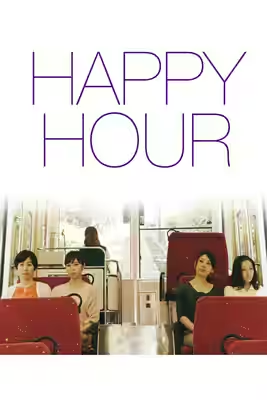
  4. Happy Hour (2015) · not reviewed yetA slower Japanese study of women’s friendships, with close attention to listening.

  5. Dix pour cent (2015, Fi1m 82)A French workplace comedy where professional competence must accommodate some substantial egos.

Free account

Know what to watch tonight

Two lists that know where things are streaming, collections you can share, your own score beside ours, and Discover that remembers what you have seen.

  • Want to see, sorted by what is streaming now
  • Seen, with your score out of ten
  • No adverts, ever