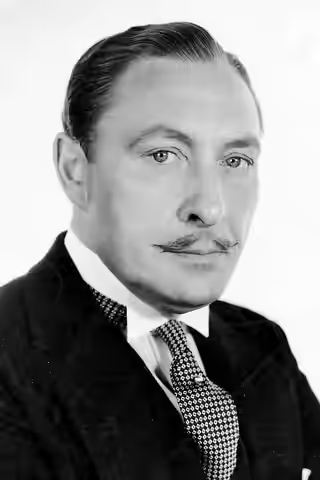
Lionel Atwill brought a stage villain's voice and relish to Hollywood horror and knew, on his best days, how much of each a scene could take. Held still, he was the most interesting man in the picture; let loose, he shouted.
Fi1m perspective
In Son of Frankenstein (1939) Lionel Atwill plays a police inspector with a wooden arm, and he makes the arm earn its keep. Inspector Krogh builds business out of it in scene after scene while the rest of him stays stiffly courteous, so that the joke and the menace are both in the one limb. It is the part people remember and the one they went on to parody. It also shows the method: keep most of the body still and let one thing be strange.
He had a theory about this. One profile, he said, was gentle and kind, incapable of anything but love of his fellow man; the other was cruel and predatory, incapable of anything but dark passions; and it all depended which side of the face was turned towards you, or the camera. On his better days that is also what he did. The voice, rich and unhurried and made for irony, carried the threat, and the grand gesture was saved for when it was needed.
He came to films from the stage and came to Hollywood late. A stage debut at the Garrick in London in 1904, after training as an architect; a Broadway leading man by 1918, with a good deal of Ibsen; a first film in 1919; and then the move to Hollywood sound pictures in 1932, well into his forties. Doctor X (1932) gave him a mad scientist and a reputation, Mystery of the Wax Museum (1933) a disfigured sculptor in early Technicolor, and the studios took the hint. Villains, mad doctors, inspectors, officers: he was in five of Universal's Frankenstein films, and the complaint that he was typecast is fair.
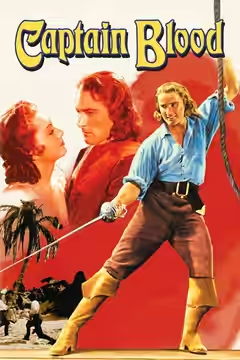
The trouble shows when nobody is holding him. In Captain Blood (1935) his Colonel Bishop is a plantation owner of the sneering school, played for the back row through Casey Robinson's long speeches, and after an hour of it we were worn down and slightly cross. When Basil Rathbone arrived as Levasseur, quiet and amused, the whole film relaxed, and we noticed that most of our relief was at Atwill's expense. Given bluster to speak, he blustered.
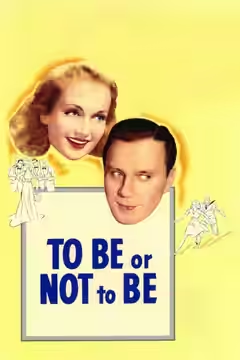
He and Rathbone made three films together, including the first of the Holmes pictures, The Hound of the Baskervilles (1939), where he is Dr Mortimer, and Sherlock Holmes and the Secret Weapon (1943), where he is Moriarty. Lugosi he met six times and Karloff twice. The one comic turn of note came in 1942, when Lubitsch cast him in To Be or Not to Be as Rawitch, an actor who cannot let anyone else have the stage, and he plays a ham as only a former leading man could. After 1942 the pictures got cheaper, and he worked in B-films and serials until his death in 1946. Start with the arm. Then watch him try to hold a stage against Jack Benny, and see how much he understood about the thing people held against him.
Biography
Lionel Atwill was an English stage and film actor. Born in Croydon, London, in 1885, he studied architecture before his stage debut at the Garrick Theatre, London, in 1904. He became a star on Broadway by 1918 and made his screen debut in 1919.
Atwill appeared in numerous Hollywood films, often in authority or villainous roles. He is known for performances including Ivan Igor in Mystery of the Wax Museum (1933), Inspector Krogh in Son of Frankenstein (1939), Rawitch in To Be or Not to Be (1942), Dr James Mortimer in The Hound of the Baskervilles (1939) and Professor Moriarty in Sherlock Holmes and the Secret Weapon (1943). He also featured in Captain Blood (1935) and several Universal Frankenstein films.