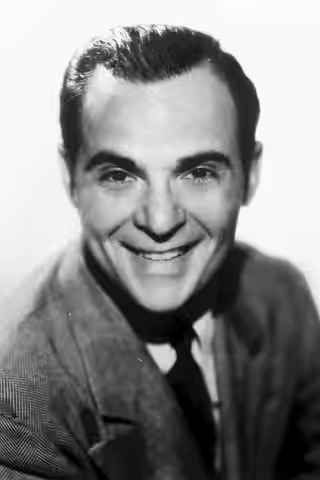
For six decades Marc Lawrence was the hired face of American screen villainy: the henchman, the bookie, the mob heavy a crime film reached for without a second thought. He did it in well over a hundred pictures and rarely needed more than a look.
Fi1m perspective
Marc Lawrence had the kind of face directors cast before he had said a word. Pitted, dark-eyed, heavy about the brow, with a New York accent that put him on a street corner the moment he opened his mouth. He knew it, and said so without complaint: "Being a tough guy is easy." Give them the hard look, tell them to get over here, and nobody bothers you. For the better part of sixty years, nobody did.
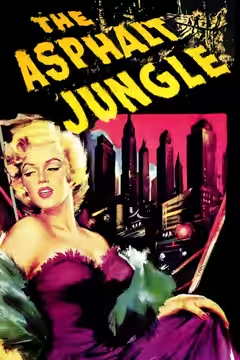
He came to Columbia in the early 1930s from the stage and had made more than a hundred films by 1951, nearly all of them as the man standing behind the man with the gun. The two that lasted are both John Huston's: Ziggy in Key Largo (1948), and Cobby, the sweating, cringing bookie of The Asphalt Jungle (1950), a part that let him play fear instead of dealing it out. He could do other things when asked. The Shepherd of the Hills (1941) gave him a bewildered mountain boy and he was good in it, but such parts were rare, and the gangsters kept coming.
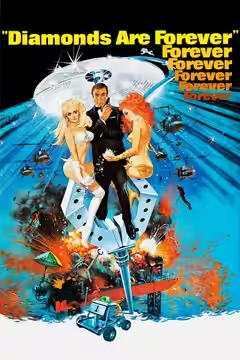
By the time we meet him in the films we have reviewed he is a veteran doing exactly what he had always done, and the pleasure is in how little he needs to do. In Diamonds Are Forever (1971) he is a syndicate heavy. In The Man with the Golden Gun (1974) he is Rodney, the hired thug let loose in Scaramanga's funhouse before the titles and stalked by Christopher Lee through mirrors, wax gangsters and a swinging saloon door. We felt sorrier for him than the film meant us to. Here was a man who had spent forty years as the menace, reduced in a few minutes to a target, and Lawrence plays the panic straight, which is a good part of why that sequence unsettles when the rest of the film does not. Two years later he is Erhard in Marathon Man (1976), one of Laurence Olivier's men, and our review did not single him out, which is roughly the job description.
The obvious complaint is that he was the same man in a hundred pictures, and it is true. The obvious defence is that the pictures needed him, and a heavy who can be read from the back of the cinema is a useful thing for a crime film to own. He tried directing in the 1960s, Nightmare in the Sun (1965) was received poorly, and he went back to what he knew and kept at it: the Old Timer in From Dusk Till Dawn (1996) is the same face, older, still not to be argued with. If you want to see what he did, watch the first ten minutes of the 1974 Bond film and then the whole of The Asphalt Jungle. In one he is the target and in the other the coward, and he is unmistakable in both.
Biography
Marc Lawrence was an American actor and director. Born Max Goldsmith in New York City, he attended the City College of New York and received a scholarship to Eva Le Gallienne's repertory theatre company in 1930, where he appeared in stage productions alongside John Garfield.
He made his film debut in the early 1930s and became known for character roles as gangsters and other underworld figures, appearing in over 200 film, television and stage productions. His credits include Diamonds Are Forever (1971), The Man with the Golden Gun (1974) and Marathon Man (1976). He also directed episodes of television series and feature films.
Lawrence was called before the House Un-American Activities Committee, admitted past membership of the Communist Party and named others; he was blacklisted and worked in Europe before returning to the United States. He was married twice and had two children.