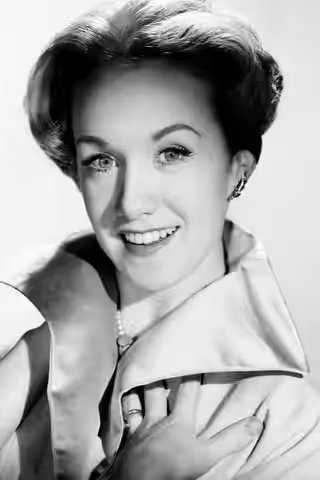
Marni Nixon's job was to go unnoticed, and she did it well enough that the singing in three of Hollywood's biggest musicals belongs to a soprano who was never on screen. Listen for the join between speech and song; we could not find it.
Fi1m perspective
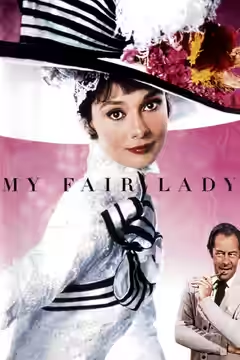
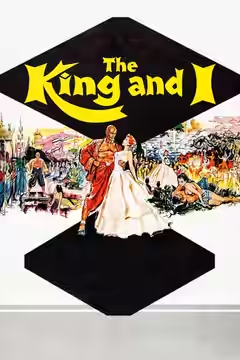
Audrey Hepburn opens her mouth in My Fair Lady (1964) and Eliza Doolittle sings, first Cockney and later refined, and the voice is not Hepburn's. It is Marni Nixon's, fitted to Hepburn's speaking voice in both accents so closely that the film never has to cover the seam. The same is true of Deborah Kerr in The King and I (1956) and Natalie Wood in West Side Story (1961). Nixon was a ghost singer, a classically trained soprano hired to give stars who could not sing the voice their parts required, and from the late 1940s through the 1960s she was the best in the business at it.
What made her good was not the top notes. Plenty of sopranos have those. Nixon studied the speaking voice, the accent and the physical manner of the woman she was singing for, so that the song came out of the same body the dialogue did. She put it more bluntly than we would: "It's fascinating, getting inside the actresses you're singing for. It's like cutting off the top of their heads and seeing what's underneath." The studios wanted none of this known. She signed contracts promising secrecy, went uncredited on West Side Story, and spent decades without public recognition for work half the country could hum. Kerr, to her credit, said publicly who had sung for her. Nixon herself later argued for ghost singers to be named and paid royalties.
We sat through My Fair Lady recently, knowing, and listened for the moment Hepburn stopped and Nixon started. We never caught it, and by the second song we had stopped trying and were watching Eliza again. That is the whole craft. The instant you hear the singer, the actress is gone.
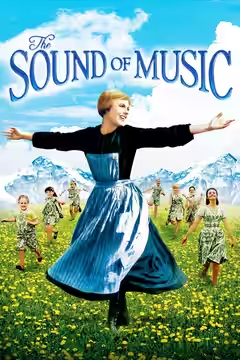
She did appear on screen, as Sister Sophia in The Sound of Music (1965), her first prominent visible role, singing for once with her own face attached. Much later she supplied the singing voice of Grandmother Fa in Mulan (1998), where we found the songs ordinary and said nothing about her in particular, which for a ghost singer is a review in itself. The rest of a long working life went on stage, in concert halls, in classrooms and on television, and the film work sits in the middle of it as a strange, half-hidden achievement: some of the most familiar singing in American cinema, and for years nobody was allowed to say whose it was.
If you want to hear her, you already have. Put on The King and I and watch Kerr's face while Nixon sings, and see how completely the two of them agree.
Biography
Marni Nixon (born Margaret Nixon McEathron) was an American soprano and actress, best known as a ghost singer who provided the singing voices for leading actresses in several classic Hollywood musical films.
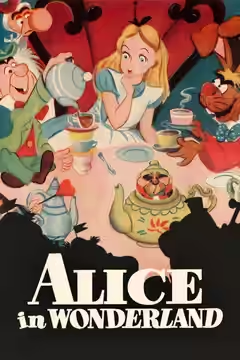
She dubbed Deborah Kerr in The King and I (1956) and An Affair to Remember (1957), Natalie Wood in West Side Story (1961), and Audrey Hepburn in My Fair Lady (1964). Nixon also appeared on screen as Sister Sophia in The Sound of Music (1965) and provided the singing voice of Grandmother Fa in the animated film Mulan (1998), as well as voices in Mary Poppins (1964) and Alice in Wonderland (1951).
Born in Altadena, California, in 1930, she trained in opera and performed in concerts, on Broadway and in regional theatre before her death in 2016.