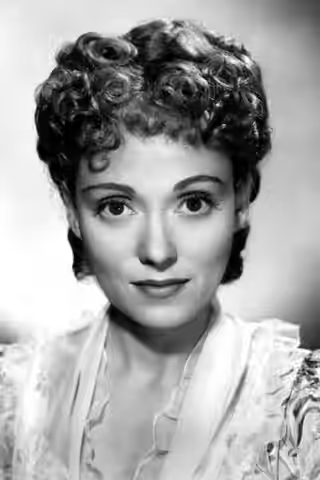
Martha Scott spent four decades being the sensible woman in someone else's story, and was best at it when the story was small. Emily Webb in Our Town is why she is remembered; the mothers in the epics are why she is recognised.
Fi1m perspective
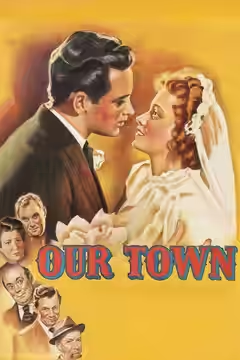
In Our Town (1940) a girl leans out of a bedroom window to help the boy next door with his algebra, and she will not simply hand over the answer. Martha Scott plays Emily Webb as a schoolgirl and is plainly not one; she was in her late twenties and had been playing the part on Broadway since 1938. The film does not mind and neither, after a minute, do we. What she has at that window is the thing she kept for the rest of her career: she looks at whoever she is talking to as if she had decided in advance to be fair to them.
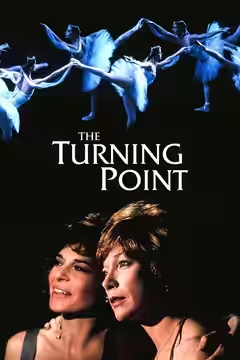
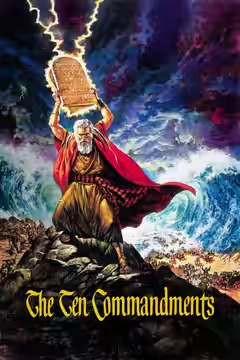
It was her first film, and it fixed her. The year after, Cheers for Miss Bishop (1941) gave her a teacher to play across a whole working life, and from then on the studios saw a woman who could be trusted with age before she had any. The parts that followed through the 1950s and into the 1970s were wives and mothers: Ellie Hilliard in The Desperate Hours (1955), Yochabel in The Ten Commandments (1956), Miriam in Ben-Hur (1959), Adelaide the ballet company manager in The Turning Point (1977). Twice she was mother to Charlton Heston while still in her forties, and she took it with the dryness it deserved. "I played his mother twice and his wife twice," she said in 1988, meaning the wives were on stage. Later there was a good deal of television, and the Plumstead Playhouse, a production company she started with Henry Fonda and Robert Ryan.
The sincerity is real and it is the whole method. Scott does not do anything clever with a line; she says it as though it were true and lets the camera decide. In Our Town that is exactly right, because Wilder's play is built on people saying ordinary things plainly, and for an hour we were moved by her more than we had expected to be, watching her give Holden his algebra with conditions and knowing what the town would eventually ask of her. Then the film changes the play's ending, in a way we will not describe, and the change takes the weight off her part at the moment it should be carrying most of it. We felt that as an actor being let down rather than a character.
The epics are the other side of the same coin. In Ben-Hur we found nothing to say about her, and that is not carelessness on our part; Miriam is there to be wept over, not played, and Scott gives the part its dignity and no more because there is no more in it. The complaint that followed her for years, that she kept being cast in damp, sentimental roles as women older than herself, is fair as far as the parts go. The performances are never damp. The scripts are.
See Our Town for the first hour and for the window, and The Desperate Hours if you want to know what she could do with a small part in a tight room. The mothers can wait. They are, after all, mostly waiting themselves.
Biography
Martha Scott (1912–2003) was an American actress. She originated the role of Emily Webb in Thornton Wilder's Our Town on Broadway in 1938 and recreated it in the 1940 film adaptation, for which she received an Academy Award nomination for Best Actress.
Scott appeared in major films including Cecil B. DeMille's The Ten Commandments (1956), in which she played Yochabel, and William Wyler's Ben-Hur (1959), as Miriam. She frequently played Charlton Heston's mother on screen and his wife on stage. Her later work included roles in Airport 1975 (1974) and numerous television series such as Columbo, Murder, She Wrote, Magnum, P.I. and Dallas.