A Londoner who spent six decades being cast as somebody else's foreigner: viziers, gangsters, officials, a priest. Benson had a hard face and a good ear, the films seldom gave him more than a scene, and he was the most intelligent man in it.
Fi1m perspective
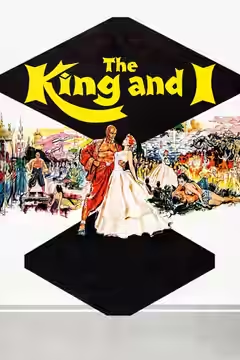
The Kralahome stands at the edge of Walter Lang's The King and I (1956) with his arms folded, watching an Englishwoman correct the court, and he is the only person in the frame who looks as if he has already thought this through. That is the Benson face: heavy brow, mouth set, a man who knows more than the script will let him say. Our review called him the only courtier allowed to be intelligent and said Ernest Lehman's screenplay had no use for him, and that pairing describes most of his career.
He came to the film from the London stage, where he had played the Kralahome from 1953 and later the King himself. Before that there was the Army, where he organised entertainments and co-founded a repertory company in Alexandria with Arthur Lowe, and before that the East End, which is worth mentioning only because he then spent six decades being cast as everybody's foreigner. More than a hundred film and television parts followed, most of them on the wrong side of the law and most of them in a good suit: the worldly villain, the type Conrad Veidt had held and Herbert Lom was holding at the same time. On ITC television he played corrupt officials and ruthless policemen more or less on rotation. From 1960 to 1985 he also ran his own company making educational and training films.
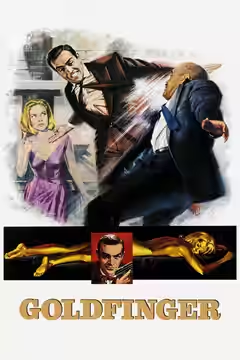
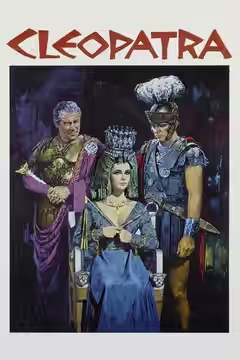
In Goldfinger (1964) he is Mr Solo, the gangster who would rather take his share than stay for the plan. It is a small part and our review did not single it out, but it shows the trick: Benson never played a heavy as a fool. Solo is the one man at that table doing arithmetic. The same year he was Maurice in A Shot in the Dark with Peter Sellers, which is the evidence that the hard face could be turned to comedy. Ramos in Cleopatra (1963), Father Spiletto in The Omen (1976) and the Vogon Captain in the BBC's The Hitchhiker's Guide to the Galaxy (1981) fill out the record; we have not reviewed them and will not pretend to weigh them.
What does not work is mostly what he was never asked to do. In the second hour of The King and I we kept finding him at the back of the frame during the giggling scenes, waiting for a scene of his own, and it never comes, and we minded that more than we minded the film's slowness. He was typecast, and he knew the trade well enough to have views on it: of the stage production he said that "despite the reputation which Yul Brynner continues to enjoy, the more intelligent as well as intelligible performance came from Herbert Lom, notwithstanding a good deal less swagger". Intelligence over swagger was his own preference too, and it is why he is easy to miss and worth looking for.
Start with the Kralahome, then Solo, and watch what he does while other people are talking.
Biography
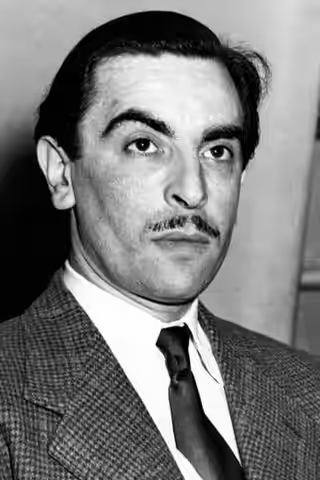
Martin Benson (10 August 1918 – 28 February 2010) was an English character actor who appeared in films, theatre and television. Born in the East End of London, he served in the Royal Artillery during the Second World War and, while stationed in Egypt, co-founded the Mercury Theatre repertory company in Alexandria with Arthur Lowe.
Benson is remembered for his stage and screen role as Kralahome in The King and I (1956). His many film credits include Ramos in Cleopatra (1963), Maurice in A Shot in the Dark (1964), Mr. Solo in Goldfinger (1964), Father Spiletto in The Omen (1976), and a role in Angela's Ashes (1999). He also appeared regularly on British television and ran Martin Benson Films, which produced educational and training films.