Mary Steenburgen makes everyone else in the scene comfortable, and for more than forty years directors have cast her accordingly: mothers, wives, the person holding the ensemble together. She is at her most interesting when the warmth is a disguise, as in Philadelphia.
Fi1m perspective
Mary Steenburgen's first job in most of her scenes is to put the other people at ease. Directors noticed early, and they have kept casting her as the mother, the wife, the one who steadies an ensemble while the leads get on with the plot. She is good at it, and she brings the same charm to parts that do not deserve it. The interesting question is what happens when a film asks her to use that warmth for something less kind.
The career began oddly. Jack Nicholson found her and put her in Goin' South (1978), and two years later Melvin and Howard (1980), as Lynda Dummar, made her name. The 1980s and 1990s were supporting work, steadily done: Clara Clayton in Back to the Future Part III (1990), Belinda Conine in Philadelphia (1993), one of two films she made with Jonathan Demme. Since then it has been comedies and television, three films alongside Ted Danson, and a late sideline in songwriting. The parts are almost always supporting, and she has built a long career on them.
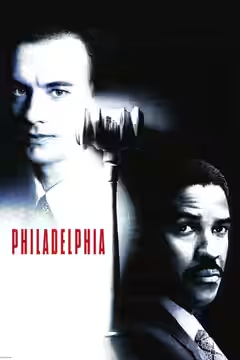
Philadelphia is where we would send anyone who thinks they know what she does. As Belinda Conine, the counsel on the other side of the case, she plays a woman doing a job rather than a villain doing a turn, and it unsettled us more than open hostility would have: the film wants us to know which side we are on, and she keeps declining to make that easy. Ron Nyswaner's screenplay hands out attitudes rather neatly, and she and Jason Robards do most of the work of making theirs look like the attitudes of actual people. It is a small part. It is also one of the reasons the courtroom stretches hold, in a film whose screenplay leaves too little room for the lives beyond the case. She has said, "I love to play horrible, evil, mean people." On this evidence she should be allowed to more often.
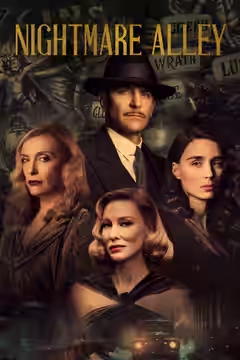
The recent work is thinner. As Mrs Kimball in Nightmare Alley (2021) she is one face among many in a film that spends a superb first hour in the tents and then moves to the city and repeats itself, and we came out unable to say much about what she had done in it, which is del Toro's fault more than hers. A supporting actor is at the mercy of the scenes she is given, and here there are few.
She has also said she wishes people would not underestimate her. A director who took that seriously and gave her a whole film's worth of being quietly awful would be doing the rest of us a favour.
Biography
Mary Steenburgen is an American actress. She was born Mary Nell Steenburgen on 8 February 1953 in Newport, Arkansas.
She studied at New York's Neighborhood Playhouse in the 1970s and made her film debut in Goin' South (1978). Steenburgen received the Academy Award for Best Supporting Actress for her role in Melvin and Howard (1980). Her other film credits include Time After Time (1979), Back to the Future Part III (1990), What's Eating Gilbert Grape (1993), Philadelphia (1993) as Belinda Conine, Elf (2003), Step Brothers (2008), The Proposal (2009) and Nightmare Alley (2021). She has also appeared in television series including Orange Is the New Black.